This tale dives deep into eerie folklore, spectral apparitions, and haunting mysteries. Readers may encounter unsettling imagery, vivid supernatural descriptions, and chilling pseudoscientific musings that blur reality and myth. Reader discretion advised.
STEAMBOAT DISPATCH
The Ghostly Emma: A Tale from the Depths
submitted by the East Bellmont Correspondent, October 31, 1890
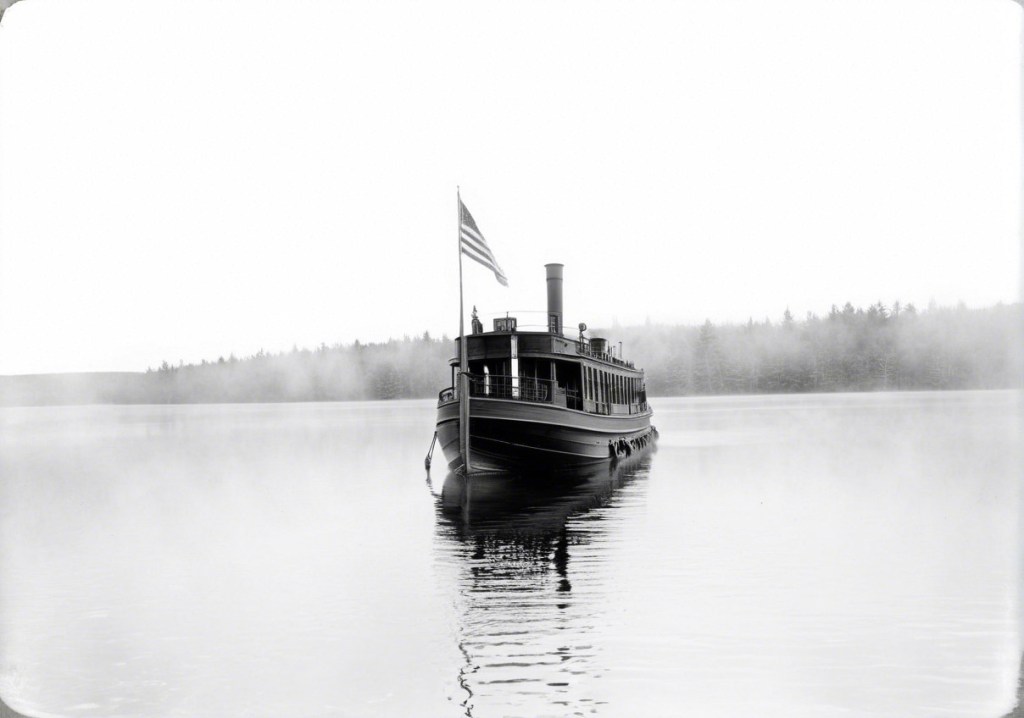
In the still of night, when the moon clings to the horizon as if embarrassed by the shyness of her pale reflection, a most curious occurrence happens upon the serene waters of Chateaugay Lake. It was in the year of our Lord 1887 that the good folk of the lake, ever vigilant in their peaceful summer lives, were startled by a sight so otherworldly, so beyond the grasp of common sense, that it echoed like a whisper in the darkened halls of Shakespeare’s Hamlet: “There are more things in heaven and earth, Horatio, than are dreamt of in your philosophy.” Yet, if truth be told, this event was not of the divine, nor of the spectral in the traditional sense; it was, as some have speculated with both humor and fear, the very specter of the steamboat Emma, risen from the lake’s murky depths.
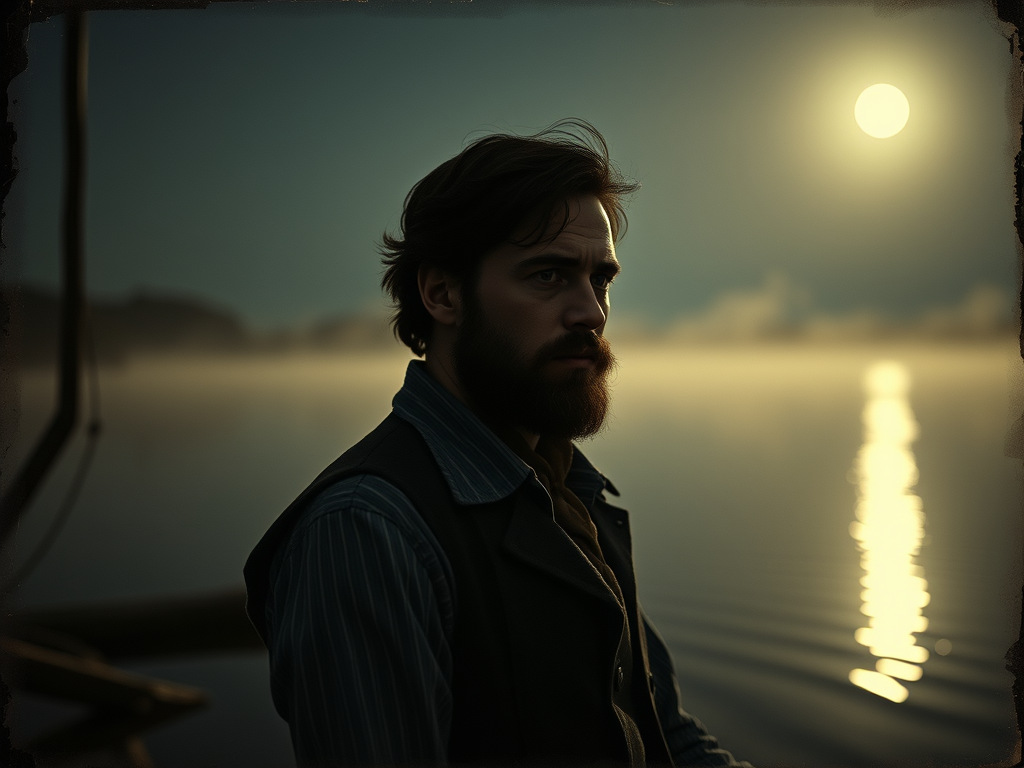
Now, mind you, gentle reader, I must preface this tale with the utmost seriousness, for many a credible witness—nay, some with reputable degrees from esteemed institutions, and others of notable local renown—have attested to the strange happenings on the water. This is not some fanciful hoax, nor the musings of fishermen after too much rye, no. You have Jack Davis, for one, a man of steady reputation, whose hands have steadied the wheel of many a vessel on these very waters. He was the first to sight the great ghostly steamboat, adrift on a windless evening, its timbered bow slicing through the mists like a phantom ship lost to time itself.
“It was a sight,” said Jack, his hands shaking only slightly as he recounted the incident over ale, “like a dream. It wasn’t the Emma, no, not quite—but it was a steamboat, sure enough, all aglow in a mist, and, by all the saints, I thought I heard the old captain’s whistle!”
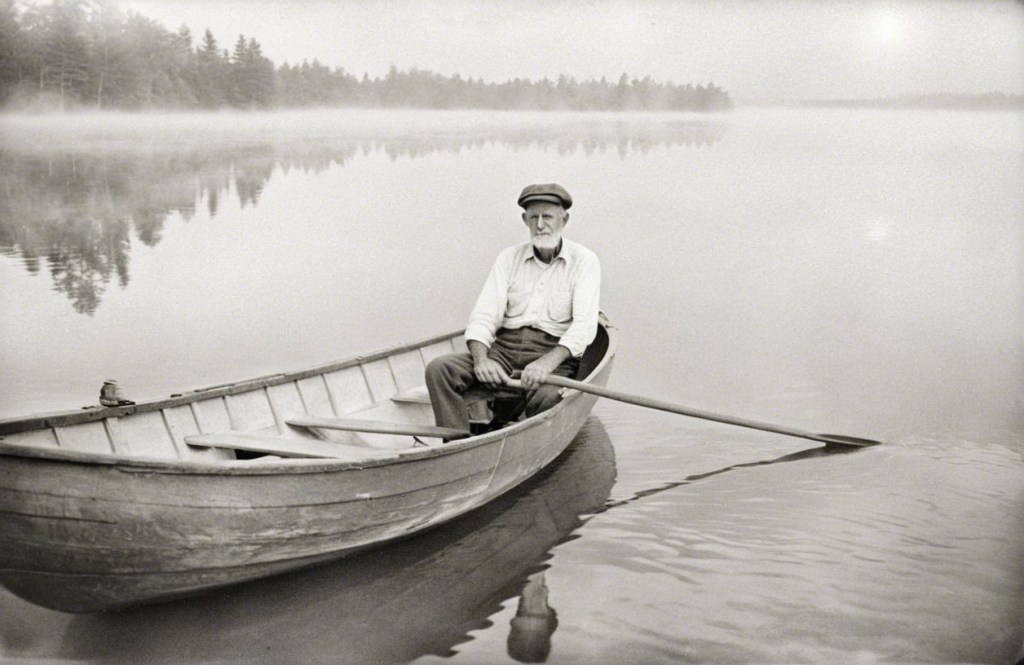
The word spread like wildfire, as such things often do. Andrew Baker, a man of science and local curiosity, declared with some authority that the incident was no mere apparition but rather a scientific marvel. Perhaps, he proposed, an underground current had risen from the very depths of the lake, causing a ghostly echo of the Emma to appear, as if the vessel were trapped in a limbo of sorts, unable to escape the deep. He mentioned, almost casually, that such phenomena were not unknown in the annals of great lakes, recalling, no doubt, tales of shipwrecks and lost souls.
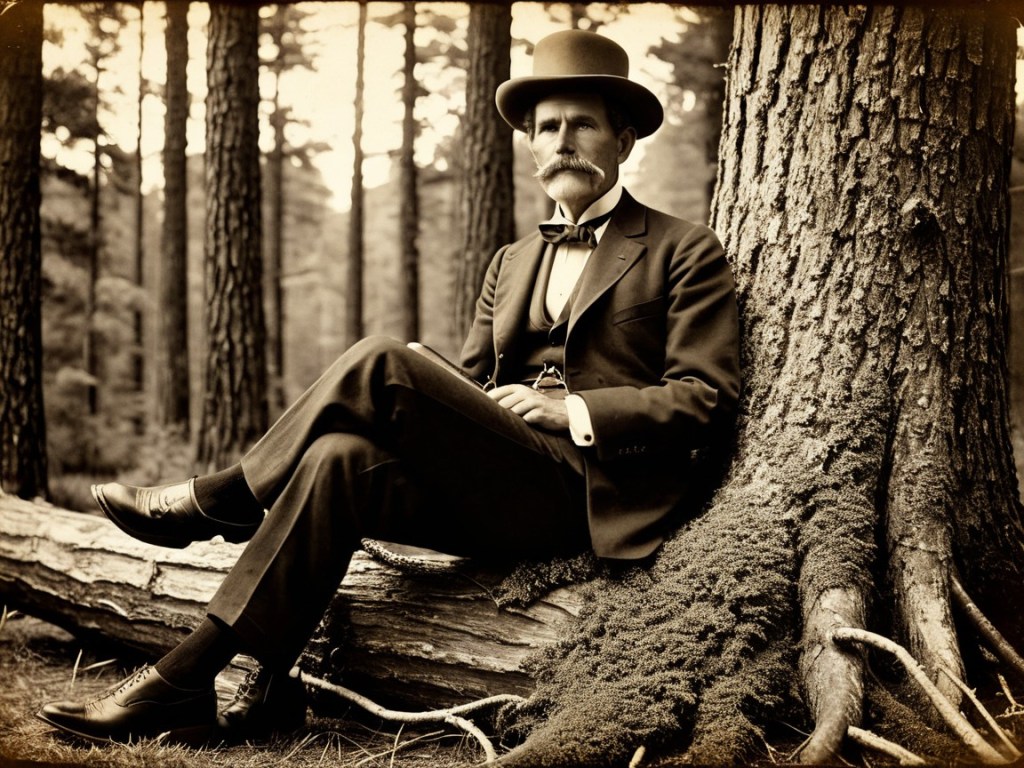
But let us not allow our imaginations to grow too unruly. Eugene Miller, the local philosopher, a man known for pondering the great mysteries of the universe while sitting on a log, offered his own theory—one more grounded in metaphysics. “It is not the Emma, my friends,” said Old Veritas, as the locals have taken to calling him, “but rather a manifestation of the lake’s ancient spirit, a reminder that all things, even steamboats, have a beginning, middle, and an end.” His theory, he claimed, was inspired by the works of Jules Verne, whose Nautilus had once made waves among intellectuals with talk of the ocean’s unfathomable caverns and the creatures that dwelled therein.
And, of course, where there are local theories, there are local skeptics. Richard “Uncle Dick” Shutts, a man whose patience was as thin as his beard was long, scoffed at all the talk. “A ghostly steamboat? Bah!” he said, his voice thick with regional disdain. “I tell ye, lads, it’s no more than the fog playing tricks on those who’ve spent too much time under the sun’s heat. Now, if ye’re looking for spirits, I suggest ye turn to the bottle. At least that won’t disappear when you blink.”
It is not only the varied explanations that make this incident so remarkable; it is the manner in which they are woven together, each one a thread of possible truth, each one as entertaining as it is speculative. For those who witnessed it—the fishermen, the curious, and the occasional wandering scholar—it has become a shared legend, something to be debated in taverns and on quiet summer nights by the lake’s edge.
But what of the vessel, the ghostly Emma? Was it truly an apparition of some long-lost steamboat, or something more? Was it a warning from the lake itself? Perhaps it was nothing more than an elaborate jest played by the spirits of the water, a trick to remind us of our own impermanence. Or perhaps—just perhaps—it is a thing of deeper mystery, tied to ancient currents or hidden channels beneath the lake’s surface, remnants of a forgotten age that refuse to be forgotten.
To this day, no one can say for certain what it was that haunted Chateaugay Lake on that fateful night in 1887. And perhaps it is best that way. For in this place, as in the rest of the world, there are more things between heaven and earth than we could ever dream. So, we shall raise our glasses and toast to the ghostly Emma—whether she be a steamboat, a figment of our collective imagination, or something altogether more mysterious. And we shall leave it at that.
And so ends our tale.

What mysteries of Chateaugay Lake haunt you?