
Presented by the Chateaugay Lake Historical Society*
In the twilight years of the 19th century, as the Adirondacks transformed from a rugged wilderness into a playground for the wealthy, a shadowy organization known as the Chateaugay Lake Steamboat Pirate Syndicate emerged. This clandestine group, comprised of local opportunists and savvy criminals, recognized the potential for immense profit in the burgeoning tourism industry.
Origins and Key Figures
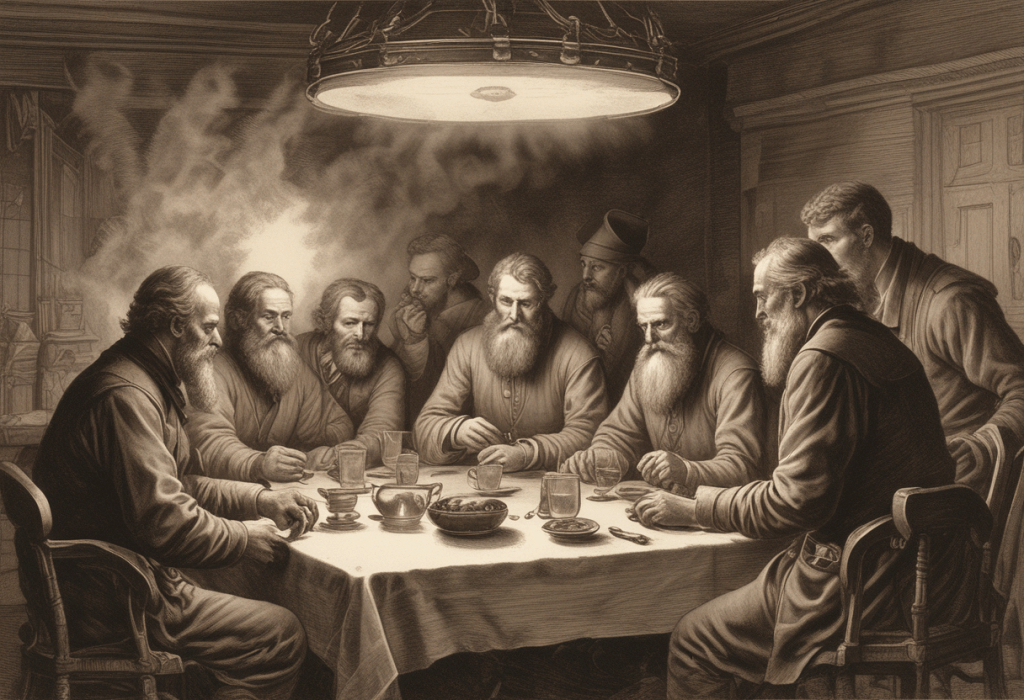
The syndicate’s roots can be traced back to 1878, when three individuals met at the newly constructed Merrill House on the shores of Chateaugay Lake:
- Captain Silas Bellows – A charismatic steamboat operator with a checkered past
- Abigail Merrill – The shrewd and ambitious proprietress of the Merrill House
- “Gentleman” Jack Harper – A suave confidence man from New York City
These three formed the core of what would become an extensive network of criminals and corrupt officials spanning the entire Adirondack region.
The Great Camp Scheme
The syndicate’s masterstroke was the invention and promotion of the “Adirondack Great Camp” concept. They recognized that wealthy urbanites were seeking an “authentic” wilderness experience, but with the comforts of luxury. The syndicate began constructing elaborate camps, using a combination of local craftsmen as well as local “Adirondack” materials.
These camps served multiple purposes:
- Legitimate rental properties for unsuspecting tourists
- Venues for high-stakes gambling operations
- Fronts for bootlegging activities (especially during Prohibition)
- Locations for blackmail operations targeting wealthy and powerful guests
The Legend of Loon Lake Lodge
Perhaps the most infamous of the syndicate’s properties was Chateaugay Lake’s Loon Lake Lodge, rumored to have a secret underground complex where compromising photographs were developed and incriminating documents were stored. The lodge mysteriously burned down in 1907, taking many of the syndicate’s secrets with it.
Steamboat Operations
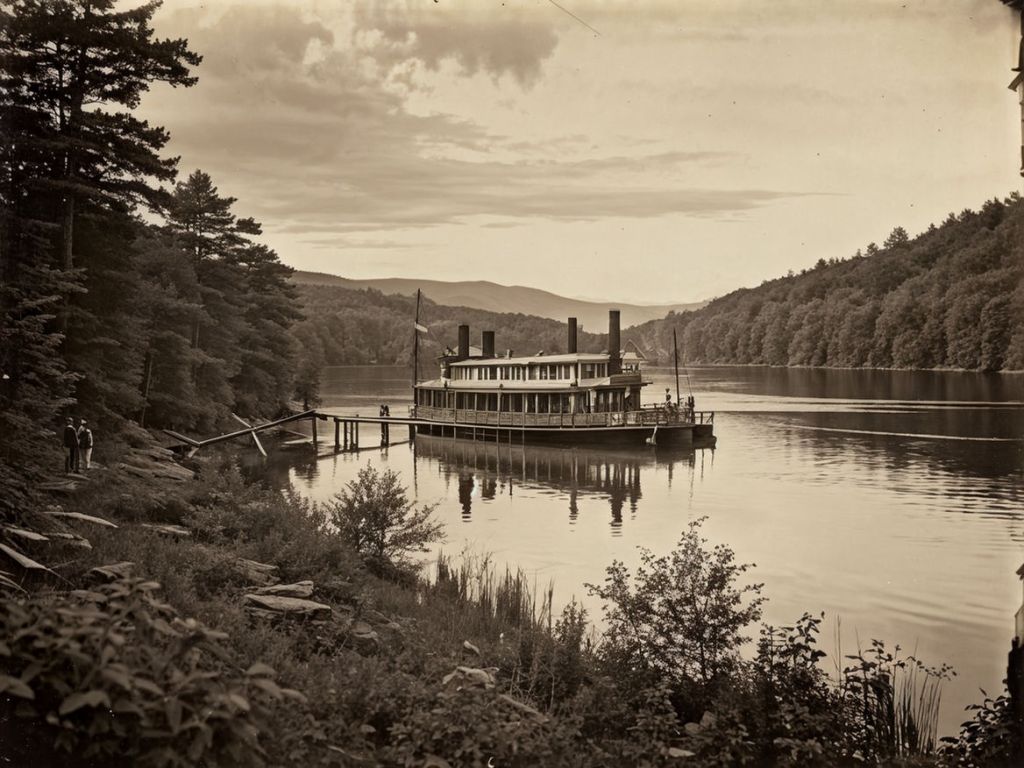
The syndicate’s control of Chateaugay Lake’s steamboat services was crucial to their operation. They used the boats to:
- Transport wealthy marks to and from their camps
- Run floating casinos, often rigged in the syndicate’s favor
- Smuggle illegal goods, including alcohol during Prohibition
- Dispose of evidence (and occasionally, it was whispered, bodies) in the depths of the lake

Network of Corruption
The syndicate’s influence extended far beyond the shores of Chateaugay Lake. They cultivated a vast network of collaborators, including:
- Railroad executives who provided inside information on wealthy passengers
- Local law enforcement officials who turned a blind eye to illegal activities
- Politicians in Albany who ensured favorable legislation and blocked investigations
- Newspaper editors who suppressed negative stories and promoted the Adirondacks as a safe, luxurious destination
Legacy
While the Chateaugay Lake Steamboat Pirate Syndicate’s criminal activities eventually came to light in the late 1920s, leading to numerous arrests and the organization’s downfall, their impact on Adirondack culture was lasting. The Great Camp style they popularized became a legitimate architectural movement, and the image of the Adirondacks as a rustic yet luxurious retreat persists to this day.
Ironically, the very mystique and allure that the syndicate cultivated to lure in their victims became the authentic draw of the Adirondacks for generations of vacationers to come.
*Note: While this article is based on historical facts about the development of tourism in the Adirondacks, the specific details about the “Chateaugay Lake Steamboat Pirate Syndicate” are fictional and created for entertainment purposes. Always consult primary historical sources for accurate information about this period in Adirondack history.

What mysteries of Chateaugay Lake haunt you?