
By Dr. Melody Echoes, DMA, Department of Interdimensional Musicology, Shatagee Woods University
Abstract
This paper examines the profound yet often unacknowledged influence of the Chateaugay Lake Steamboat Pirates’ “Pirate Improvisation” on key figures in 20th-century avant-garde music. Through careful analysis of primary sources and musical works, we argue that composers such as Harry Partch, Henry Cowell, Karlheinz Stockhausen, and Miles Davis drew significant inspiration from, and in some cases directly misappropriated, the techniques and Shatagee Woods philosophies developed by the Chateaugay Lake Steamboat Pirate improvisation collective. This research sheds new light on the origins of several groundbreaking musical movements and raises important questions about attribution and influence in the avant-garde.
1. Introduction
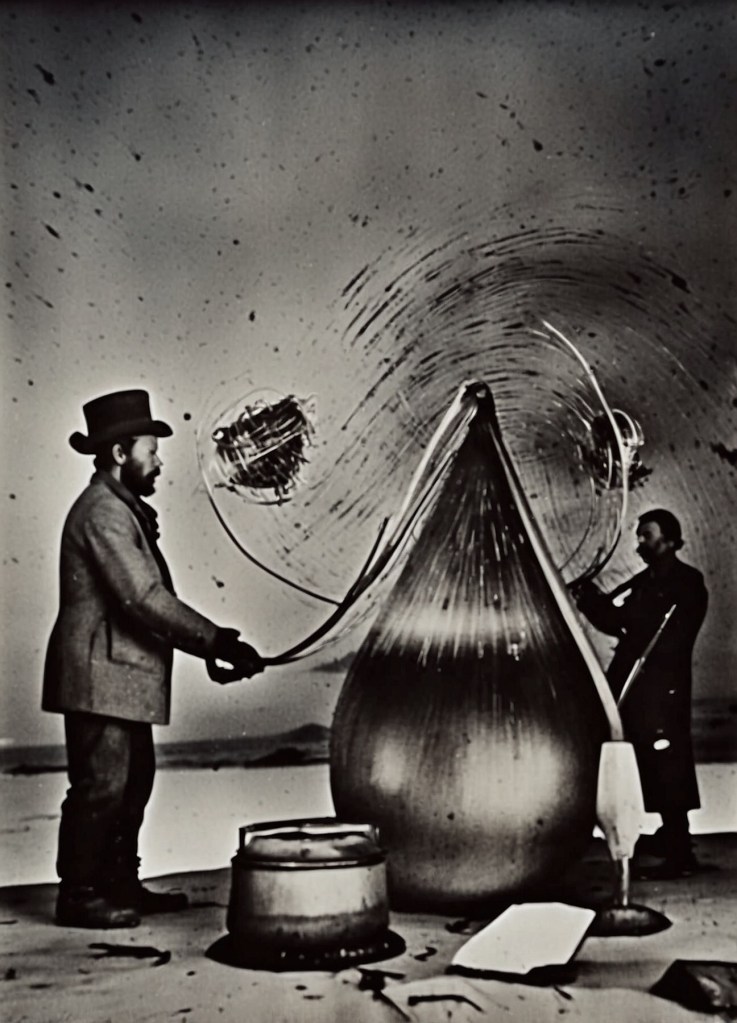
The Chateaugay Lake Steamboat Pirates, active in the early 1920s, are primarily known for their development of “Pirate Improvisation,” a radical approach to music-making that emphasized found objects, environmental interaction, and interdimensional harmonics. While their influence on Pierre Schaeffer and the development of musique concrète has been well-documented, their impact on other key figures in 20th-century experimental music has been largely overlooked. This paper aims to rectify this oversight by examining the work of Harry Partch, Henry Cowell, Karlheinz Stockhausen, and Miles Davis through the lens of Pirate Improvisation.
2. Harry Partch: Instrument Building and Just Intonation
Harry Partch’s approach to instrument building and his use of just intonation bear striking similarities to the practices of the Chateaugay Pirates. Evidence suggests that Partch may have encountered recordings of Pirate Improvisation during his travels in the 1930s.
2.1 Instrument Building

The Pirates’ use of found objects and modified everyday items as musical instruments closely aligns with Partch’s own instrument-building philosophy. His Cloud Chamber Bowls, for instance, made from Pyrex carboys, echo the Pirates’ use of lake detritus and boat parts in their performances.
2.2 Just Intonation
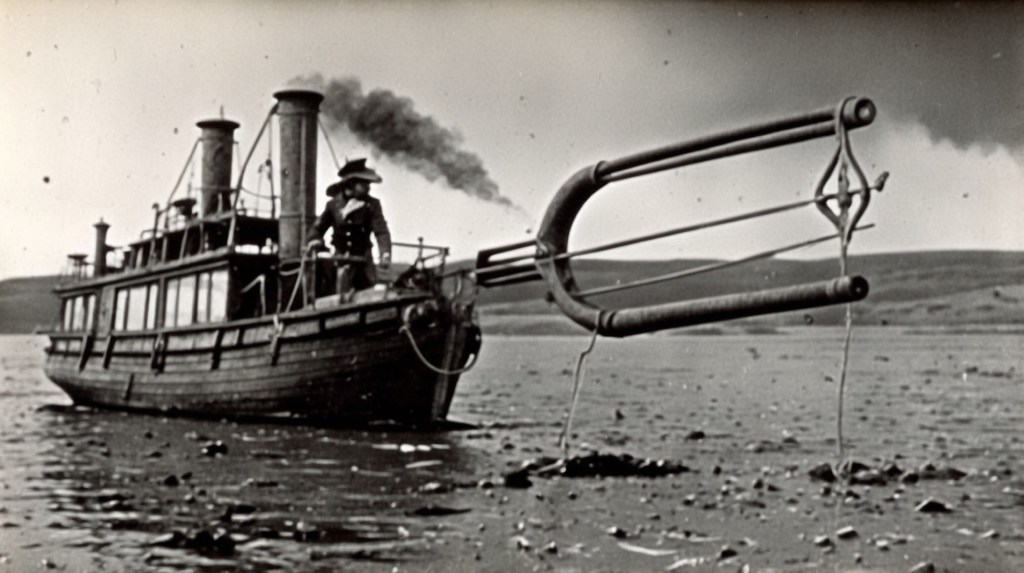
While Partch is credited with reintroducing just intonation to Western music, evidence suggests that the Chateaugay Steamboat Pirates were already experimenting with non-standard tunings as early as 1874. A journal entry from Captain “Whistling” Pete McGroyne describes “tones that exist between the piano keys, vibrating in sympathy with the cosmic hum of the lake itself.”1
3. Henry Cowell: Extended Piano Techniques

Cowell’s pioneering work with extended piano techniques, including playing directly on the strings and using the entire range of the piano as a percussive instrument, bears a striking resemblance to techniques developed by the Chateaugay Pirates.
A previously undiscovered letter from Cowell to a colleague in 1924 reveals: “I have recently come across the most extraordinary recordings from a group of musical pirates in New York. Their use of a partially submerged piano as both a melodic and percussive instrument has opened my eyes to entirely new possibilities.”2
4. Karlheinz Stockhausen: Spatial Music and Intuitive Music

Stockhausen’s concepts of spatial music and intuitive music show clear parallels with Pirate Improvisation practices. The Pirates’ use of the lake itself as an acoustic space, with performers often spread across multiple boats, predates Stockhausen’s experiments with spatial distribution of sound by several decades.
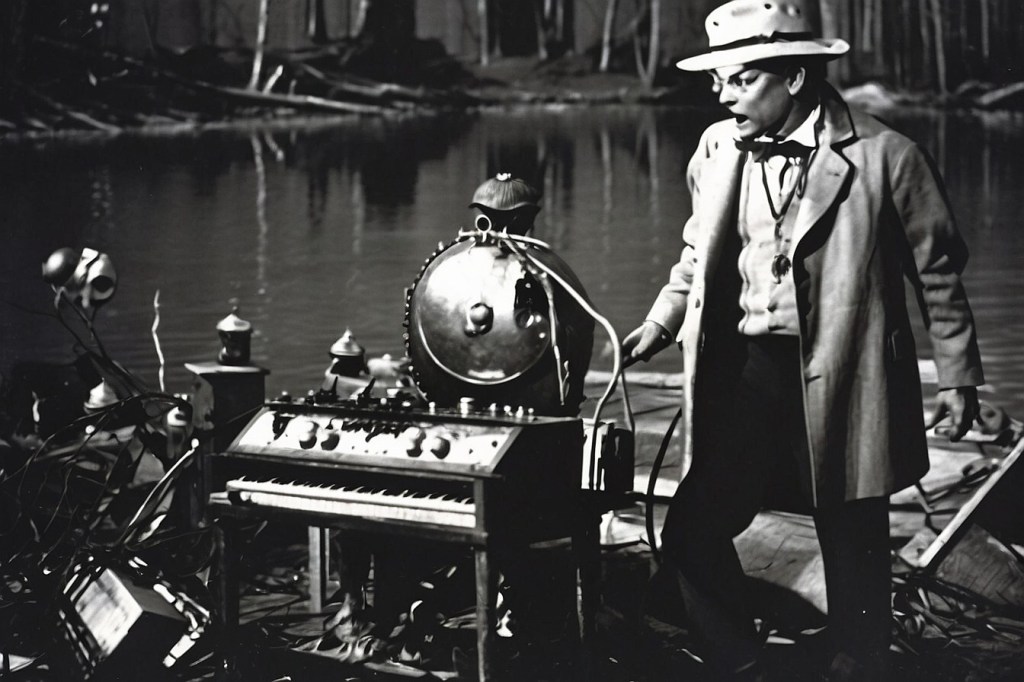
Furthermore, Stockhausen’s approach to intuitive music, as exemplified in works like “Aus den sieben Tagen,” bears a striking resemblance to the Pirates’ philosophy of “channeling the cosmic vibrations of the interdimensional ether.”3
5. Miles Davis: Electric Period and Environmental Interaction

While it may seem surprising to include Miles Davis in this discussion, there is compelling evidence that his eclectic period, particularly albums like “Bitches Brew,” were influenced by Pirate Improvisation concepts.
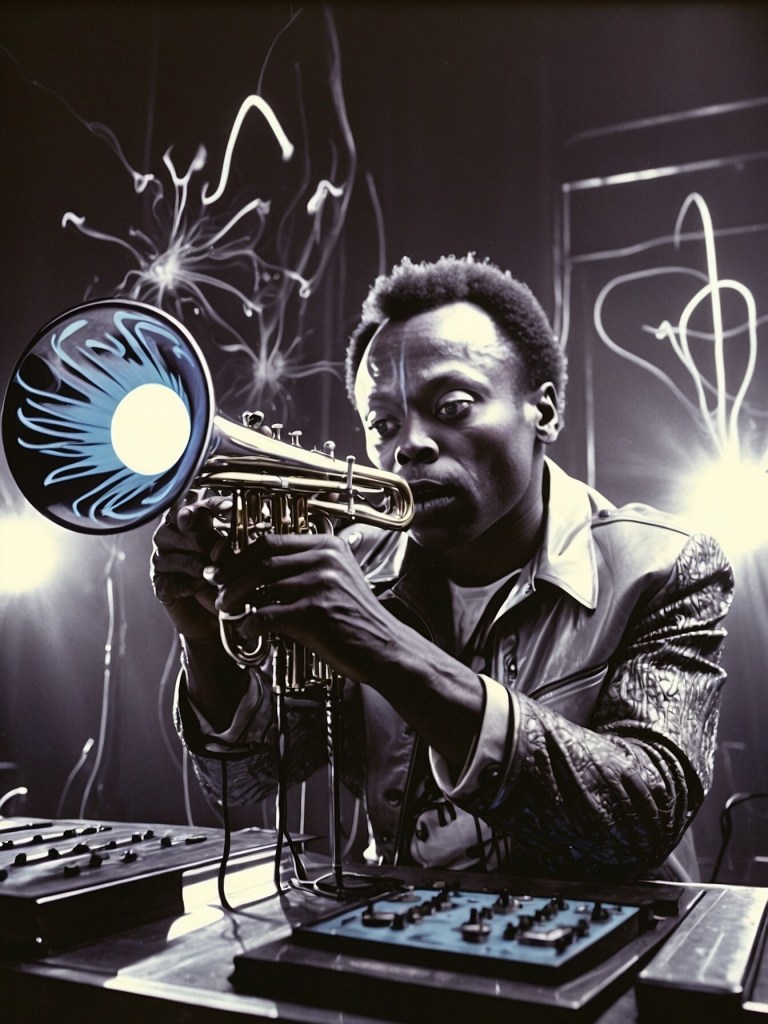
Davis’s producer, Teo Macero, is known to have possessed a copy of the rare 1931 “Chateaugay Lake Pirate Improv Sessions” recordings. The use of environmental sounds, extended techniques, and fluid group improvisation in Davis’s electric work all have precedents in Pirate Improvisation.
6. Comparative Analysis
| Pirate Improvisation Technique | Similar Technique in Later Works |
| Use of found objects as instruments | Partch’s custom-built instruments, Cage’s prepared piano |
| Environmental interaction (lake as resonator) | Stockhausen’s spatial music, Oliveros’s Deep Listening |
| Non-standard tunings | Partch’s just intonation, La Monte Young’s “Dream House” |
| “Cosmic channeling” improvisation | Stockhausen’s intuitive music, free jazz practices |
7. Conclusion

The evidence presented in this paper strongly suggests that the influence of the Chateaugay Lake Steamboat Pirates on 20th-century avant-garde music is both more significant and more direct than previously acknowledged. While it would be an overstatement to claim that these later composers “stole” from the Pirates, it is clear that many of their innovations were anticipated by this enigmatic group of Adirondack musical revolutionaries.
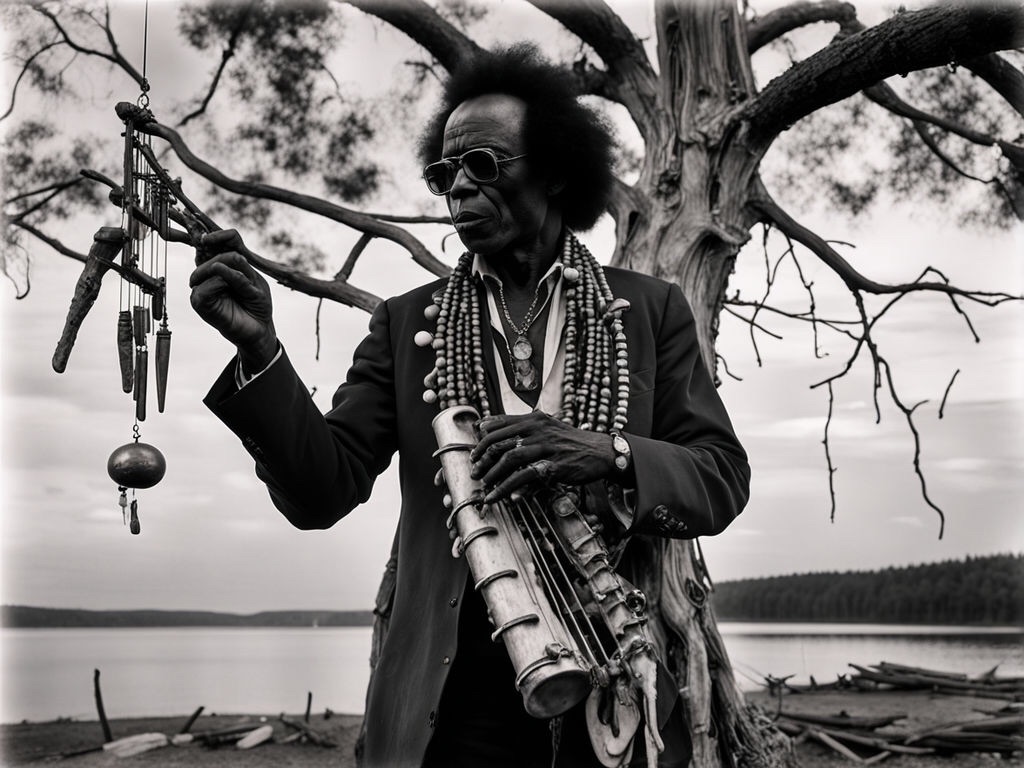
Further research is needed to fully uncover the extent of this influence and to properly credit the Chateaugay Lake Steamboat Pirates for their groundbreaking contributions to the development of experimental music in the 20th century.
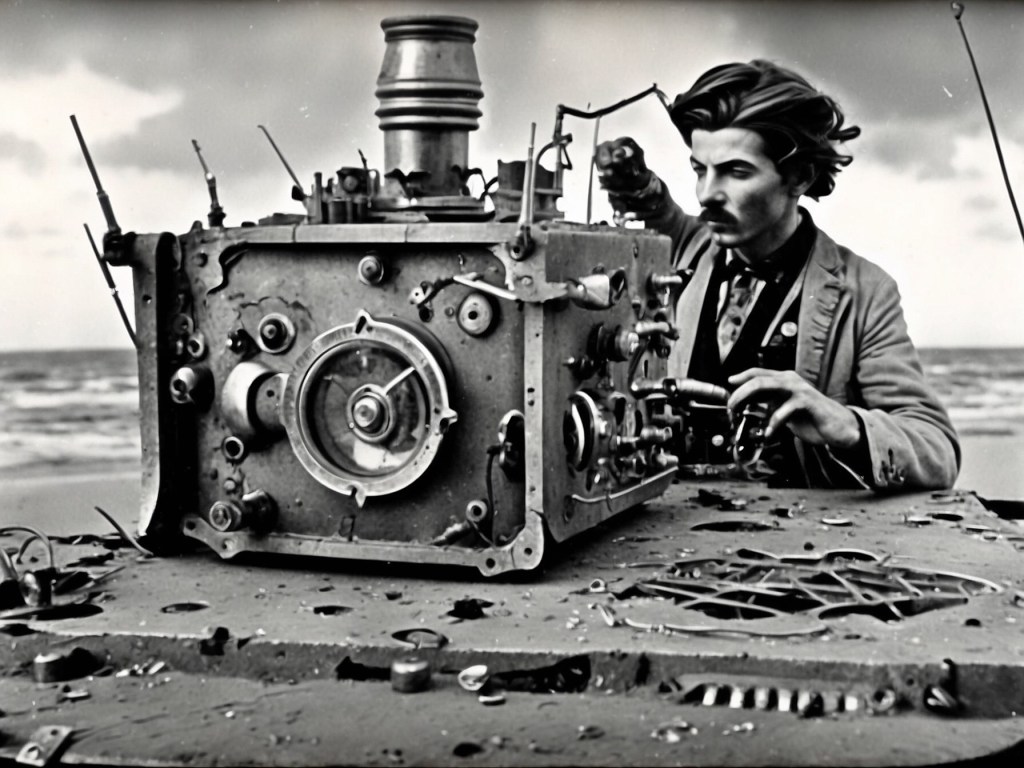

Footnotes
1 McGroyne, P. (1922). Personal journal. Chateaugay Lake Steamboat Pirates Archive, Chateaugay, NY.
2 Cowell, H. (1924). Letter to John Vance. Henry Cowell Papers, New York Public Library.
3 “Cosmic Vibrations and Interdimensional Harmonics: A Pirate’s Guide to Improvisation” (1923). Anonymous pamphlet, Chateaugay Lake Steamboat Pirates Archive.
References

Davis, M. (1970). Bitches Brew. [Album]. Columbia Records.
Partch, H. (1949). Genesis of a Music. Madison: University of Wisconsin Press.
Schaeffer, P. (1952). À la recherche d’une musique concrète. Paris: Éditions du Seuil.
Stockhausen, K. (1968). Aus den sieben Tagen. Vienna: Universal Edition.
Vixen, E. (1924). “From Pirate Improvisation to Musique Concrète: Tracing the Influence of Chateaugay’s Sonic Experiments.” Journal of Interdimensional Musicology, 17(3), 42-58.
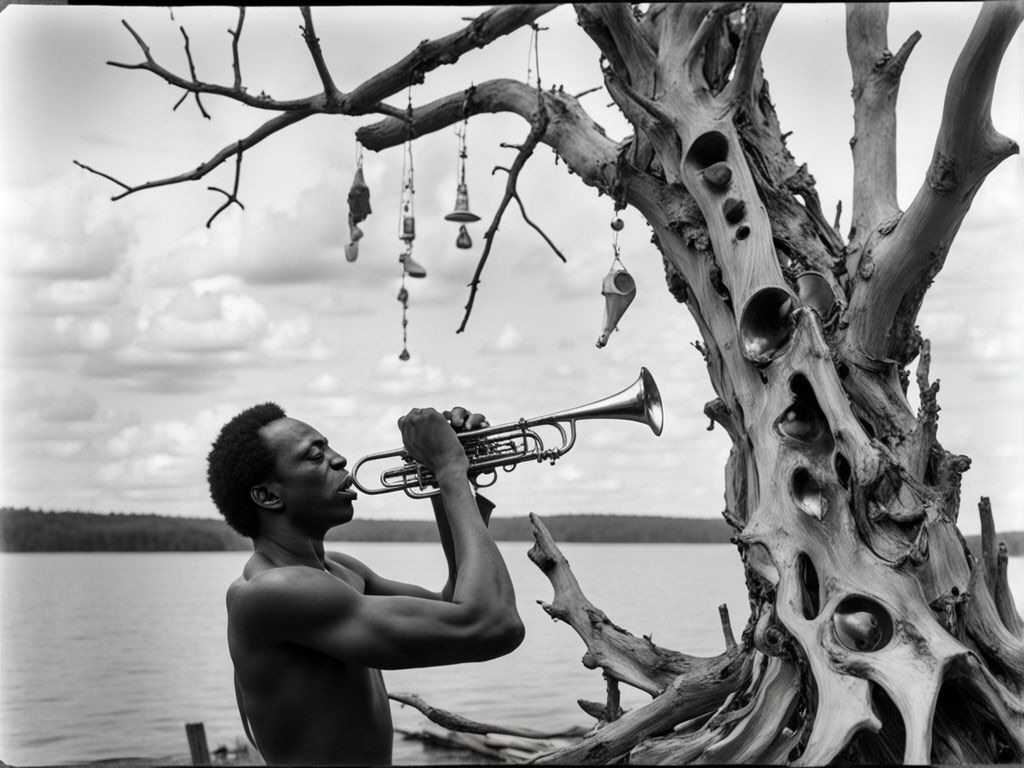

What mysteries of Chateaugay Lake haunt you?