Incident #9: The Plattsburgh Bog Core Concert
Date: August 29, 1923
Location: Plattsburgh Town Hall
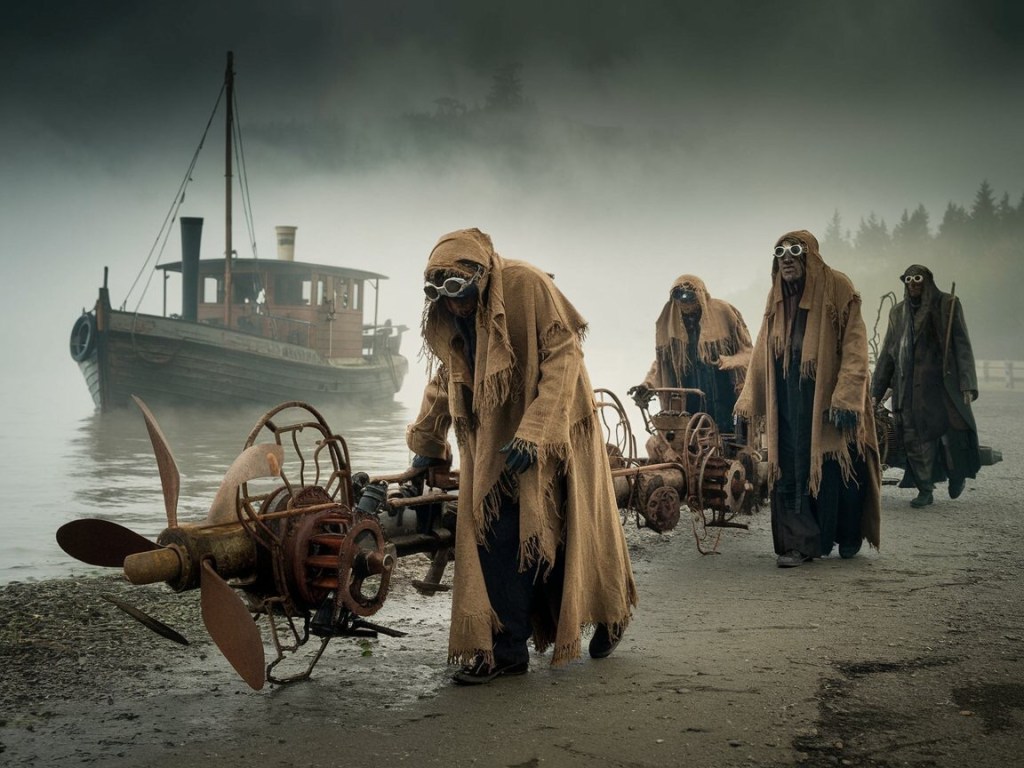
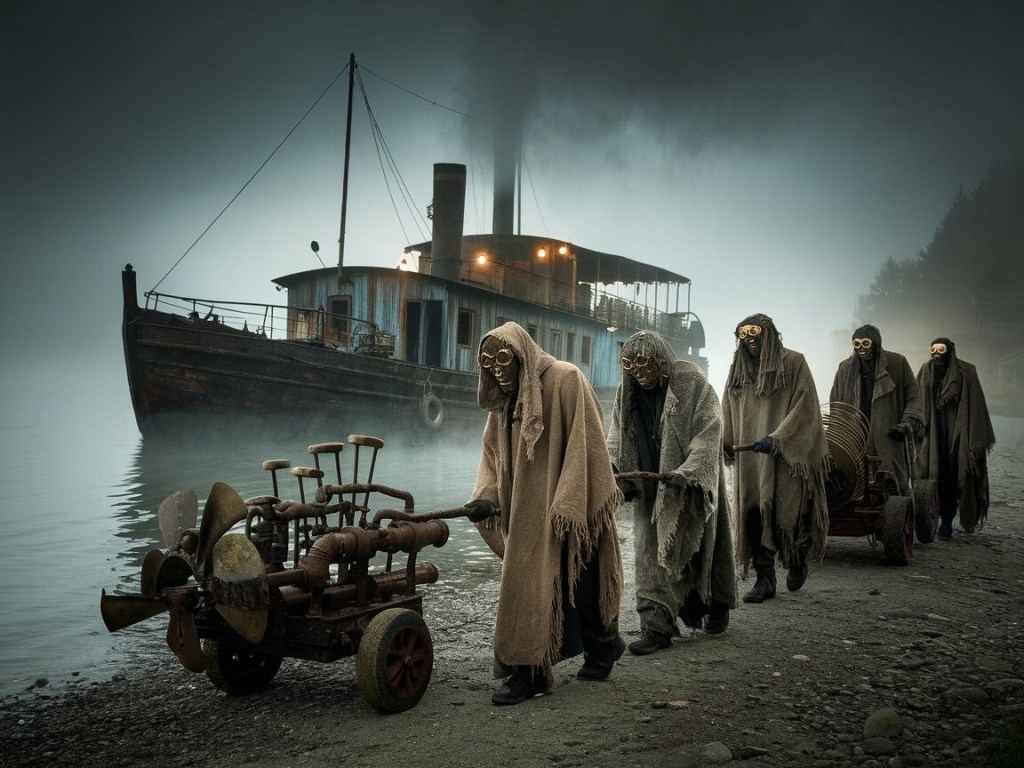
It began with the fog. Thick as smoke and heavy as guilt, the mist rolled off Chateaugay Lake, swallowing the roads leading into Plattsburgh. In the haze, a rickety steamboat appeared, chugging along the shoreline, its ghostly outline barely visible. Aboard were five figures wrapped in burlap robes, their faces obscured by mismatched goggles and scraps of brass. The Sedge Wren Syncopators, they called themselves—a group rumored to have been expelled from every town within fifty miles for their “performances.” Their instruments—contraptions of rusted drain pipes, steamboat propellers, and scavenged oarlocks—clanked and wheezed as they disembarked, pulling their gear behind them in a twisted, rusted parade.
The Plattsburgh Town Hall (August 29, 1923, 7:00 PM)

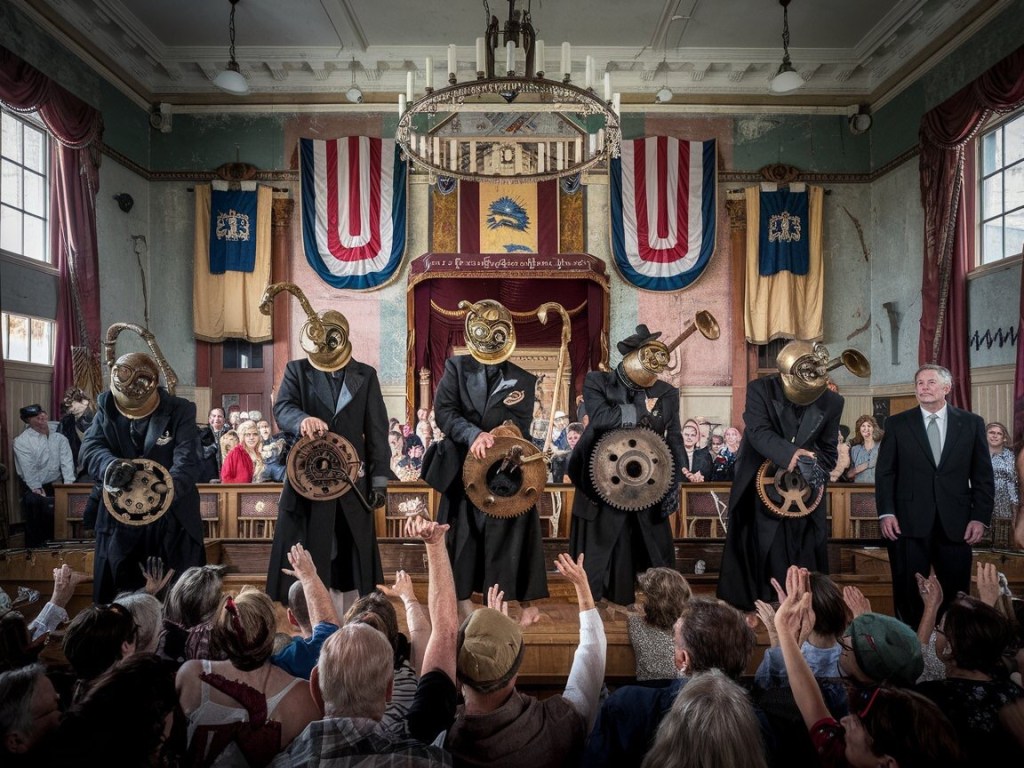
The town hall, a sturdy brick building adorned with fading patriotic banners, was filled to capacity. The usual chatter of the town’s concerns—road repairs, school funds, the annual harvest festival—was interrupted by a sudden, alien clang. The doors burst open, and the Sedge Wren Syncopators shuffled in, dragging their bizarre instruments. The crowd fell silent as they took the stage without announcement, setting up with a deliberate, mechanical rhythm, as if rehearsed countless times in some unseen, unfathomable rehearsal hall. The mayor, a rotund man with a pencil mustache, hesitated to intervene. His mouth opened to object, but the sound was drowned out by the first screeching blast of a homemade horn, fashioned from a repurposed steam whistle.
The concert began.
Resonance and Levitation (August 29, 1923, 7:15 PM)
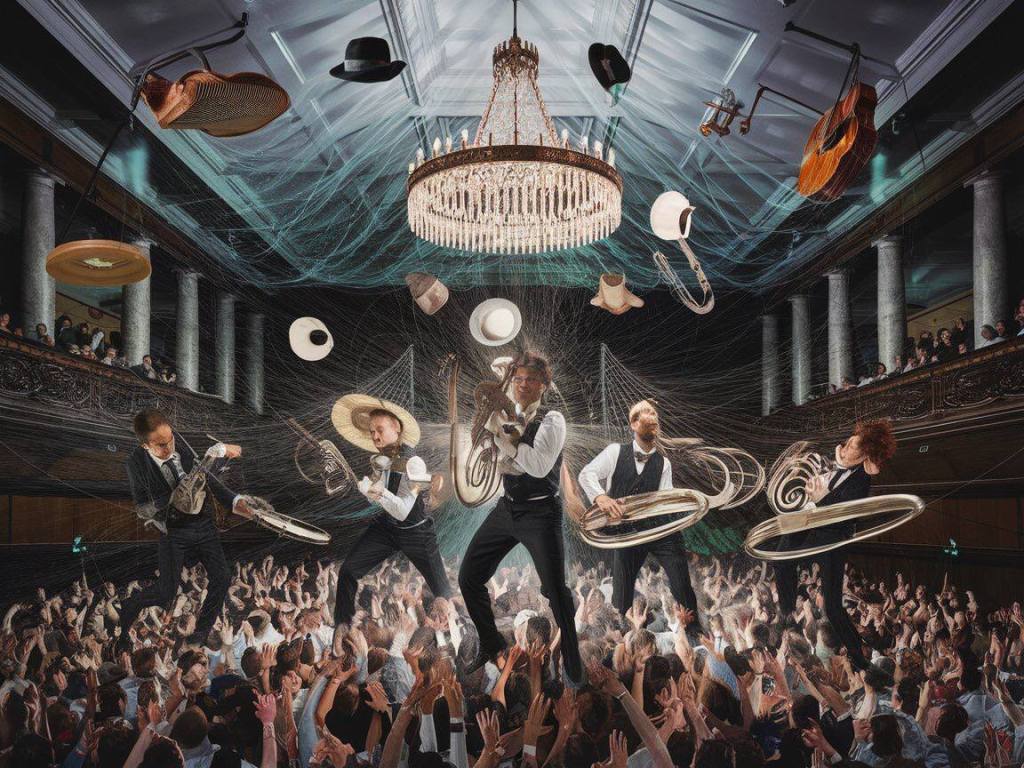
The sound that erupted was unlike anything the townspeople had ever heard. A low, groaning note rumbled from the pipes, shaking the foundation of the building. As the Sedge Wren Syncopators played, the dissonance built—a chaotic symphony of screeches, hisses, and metallic clatters that echoed off the walls in unnatural, impossible directions. Glass shattered. The chandelier overhead swung wildly before detaching and spinning in mid-air. All around, objects levitated: chairs, pocket watches, even the mayor’s hat. Some floated lazily as if submerged in water; others shot upward with the speed of bullets.
The air buzzed with a frequency that seemed to stretch reality itself. Attendees found themselves pinned in place, unable to move, their bodies vibrating in time with the music. Eyes widened in terror as they watched the Sedge Wren Syncopators, utterly unfazed, playing on with wild abandon.
The Aftermath (August 30, 1923, Dawn)
When the Sedge Wren Syncopators finally ceased their performance, the levitating objects dropped to the floor with a deafening crash. The group packed up their instruments and left without a word, ignoring the stunned crowd and the wreckage around them. Outside, they vanished into the fog as quickly as they had appeared. Plattsburgh was left in chaos. The town hall, now a disheveled wreck, had windows shattered outward and tables splintered into jagged heaps.
The true horror, however, began the following morning. As residents awoke, they found their homes overrun with animated objects. A teapot whistled a ghostly tune and hopped across the kitchen. Clocks reversed their hands, spinning backwards at alarming speed. Brooms swept floors of their own accord, sometimes with aggressive, hostile intent. The town’s butcher reported his knives aligning in mid-air, gleaming dangerously, before embedding themselves in the walls with the force of a rifle shot.
Interdimensional Surge (September 1, 1923)
Reports flowed in from every corner of Plattsburgh. Mirrors flickered with glimpses of unfamiliar landscapes—dense, alien jungles and cities that twisted like mazes. Shadows moved independently of their sources, dragging behind like reluctant prisoners. Conversations echoed back distorted, often in languages no one could recognize.
Each day the activity grew more pronounced; even the mundane objects carried an air of menace. A child’s toy box expelled its contents in a cyclone of flying dolls and stuffed animals, each of them shrieking in high-pitched, discordant notes reminiscent of the Syncopators’ performance.
Local authorities, baffled and terrified, attempted to contain the phenomenon. Yet every effort to control the animated objects only seemed to agitate them further. Objects would shudder and hum whenever approached, as if they sensed human presence and resented it. The townsfolk began to speak of “the curse,” a palpable weight that hung over Plattsburgh, trapping it between dimensions.
The Resonant Collapse (September 5, 1923)
As suddenly as it had begun, the surge of interdimensional activity began to wane. By September 5, most of the animated objects had fallen inert, collapsing like marionettes with their strings cut. The mirrors returned to their ordinary reflections, and the eerie echoes that had haunted the town faded into silence. Still, some vestiges of the incident remained. The town’s silverware, in particular, seemed to retain a faint spark of sentience. Forks and spoons would occasionally twitch or rearrange themselves on tables, seemingly at random. In rare instances, residents reported cutlery spinning on its own, hovering inches above the dinner table as if testing the limits of its newfound, inexplicable freedom.
Rewind: The Syncopators’ Departure (August 30, 1923, Midnight)
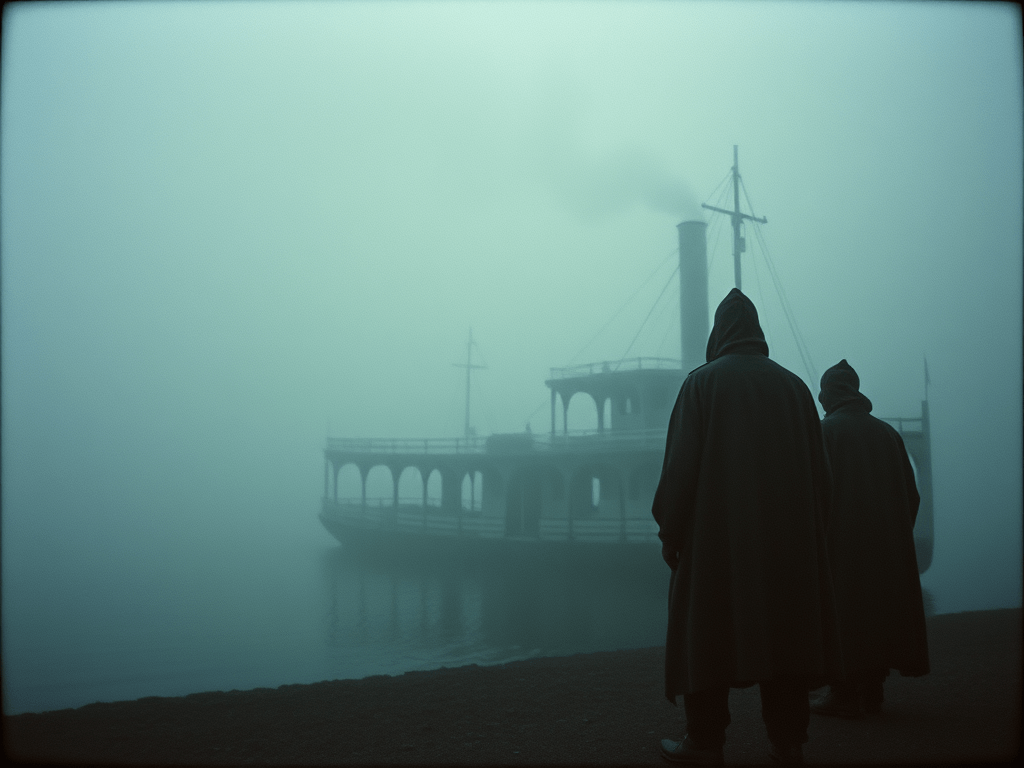
Through the fog, the steamboat carrying the Sedge Wren Syncopators chugged along Chateaugay Lake. In their possession, tucked beneath tarps and rusted gears, were jars of shimmering, pale blue crystals—tiny, pulsing slivers of the unknown. The Syncopators had not simply played music; they had tuned into something much deeper, channeling forces beyond human understanding. Their cacophony was no mere accident; it was a deliberate opening, a key turned in the lock of reality.
The Syncopators spoke not a word to one another as the boat drifted back into the swirling mists, swallowed by the lake’s endless, rippling expanse. The Sedge Wren Syncopators knew they would be remembered only as a bizarre footnote, the perpetrators of Incident #9: The Plattsburgh Bog Core Concert. But for them, it was just another performance—an experiment in resonance and chaos, one of many in a long line of disruptions.
As Plattsburgh returned to its uneasy quiet, the Sedge Wren Syncopators’ music still lingered in the corners of the town’s collective mind, like an unresolved chord, waiting to be struck again.


What mysteries of Chateaugay Lake haunt you?