Letter to the Editor of Tsah-Tah-Kwa’kiak Life

Dear Sirs,
I hope this letter finds you in good spirits, with the paddlewheel turning steady and the ink flowing freely! I read last week’s article from Tsah-Tah-Kwa’kiak Life with quite some interest, considering their ambitious dive into our local lore of the so-called “Indian Lead Mine.” Of course, Capt. E.E. Thomas’ retelling has long been a fireside favorite among the old-timers, but let’s set a few things straight while we’re on the subject, shall we?
Now, don’t get me wrong—Capt. Thomas was a fine man in his day, no doubt about that. A rugged feller who could probably chop down a tree with one hand while whittling a canoe with the other. But when it comes to that lead mine of his, well, the waters seem a bit murky, if you catch my drift. He speaks of Nathaniel Collins as though Nat stumbled upon some mystical Indian tribe by accident, yet anyone who’s spent more than a week on Lower Chateaugay knows Collins wasn’t just “fishing” when he met that Indian girl. The story’s been handed down, as my own grandfather used to say, over one too many campfires—each teller adding a new twist like a poker hand at the town tavern.
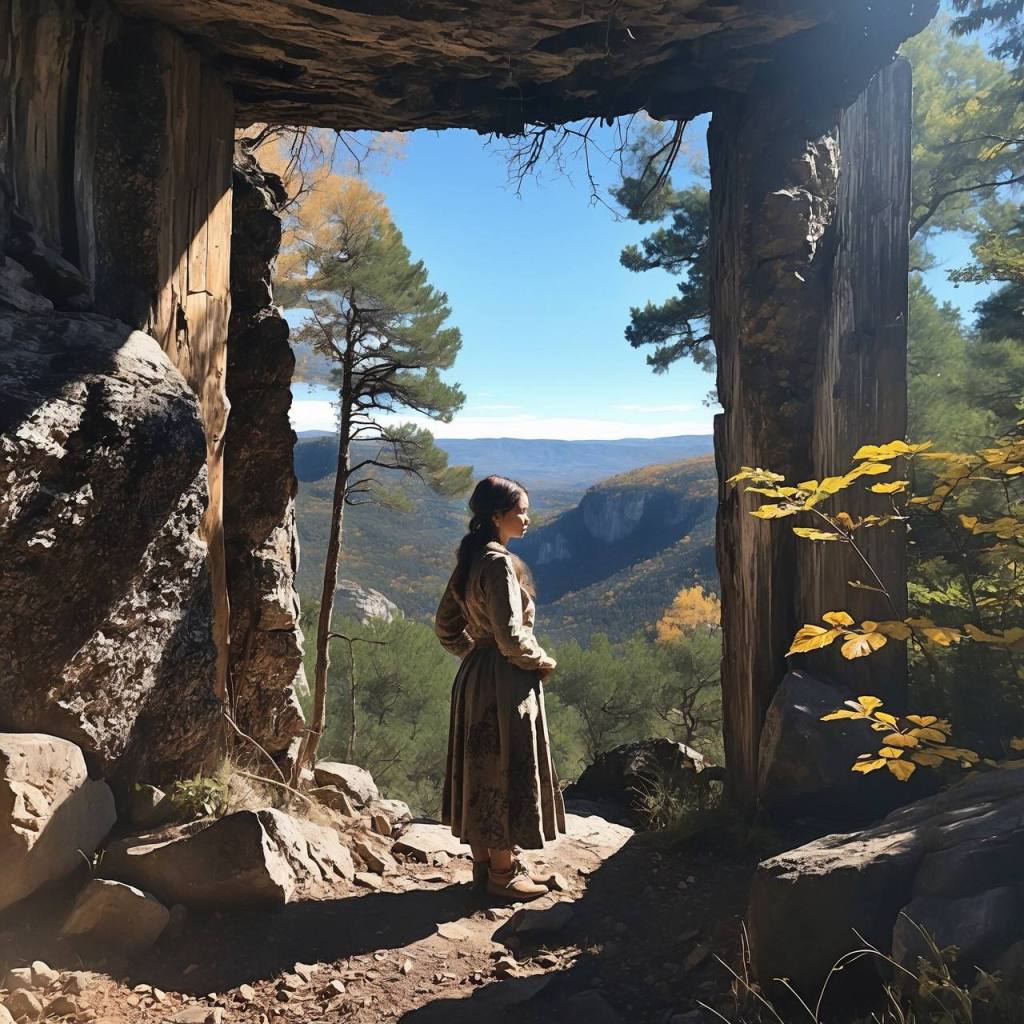
That Indian lead mine? Well, my father once told me it wasn’t just any old mine, and it wasn’t just any “pretty Indian girl” who gave Nat the slip. It was the Abenaki girl—daughter of a powerful chief who had a sharper eye than Collins ever did. And you can bet your last bullet mold that she had no intention of letting him, or anyone else, wander too close to their sacred ground. You see, that mine was more than a simple hole in the ground filled with lead—it was tied to their very existence, their way of life. That’s why no white man ever found it, not because Collins couldn’t track a squirrel in the morning fog, but because it was never meant to be found.
What really irked me, though, is how Capt. Thomas glosses over Mose Sangamore. Now there’s a name that should’ve been spelled out in bigger letters, not relegated to a footnote. Mose wasn’t just some woodsman dragging boards across Lyon Mountain for his cabin. No, no—Mose was a legend in his own right, a man who wrestled panthers (and I mean that quite literally) while keeping an eye on the real treasure under those hills. Some folks whispered that Mose knew more about the mountain’s secrets than he’d ever let on—and that he wasn’t too keen on sharing them with either Collins or the likes of Capt. Thomas.
But here’s the kicker, and what the folks at Tsah-Tah-Kwa’kiak Life might’ve missed: it wasn’t just the Indian lead mine that kept folks awake at night, it was the strange occurrences around it. The light Collins saw on Lyon Mountain? My great-uncle swore up and down that those were no ordinary campfires. And the “lead” the Indians carted off? Some say it wasn’t lead at all, but something far stranger—something that drew even the bravest men back to those woods, time and again, no matter how many times they came up empty-handed.
So, with all due respect to Capt. Thomas and his 11 missing pages of “legendary notes” (I can’t help but wonder if they disappeared conveniently or mysteriously?), I’d say there’s a lot more to the story than was told. If you really want to dig into the truth about that lead mine, you’ll need to talk to the right folks—the old timers who still remember the whispers in the wind and the shadows on the mountain. I, for one, would be happy to share a few stories that might fill in the gaps.
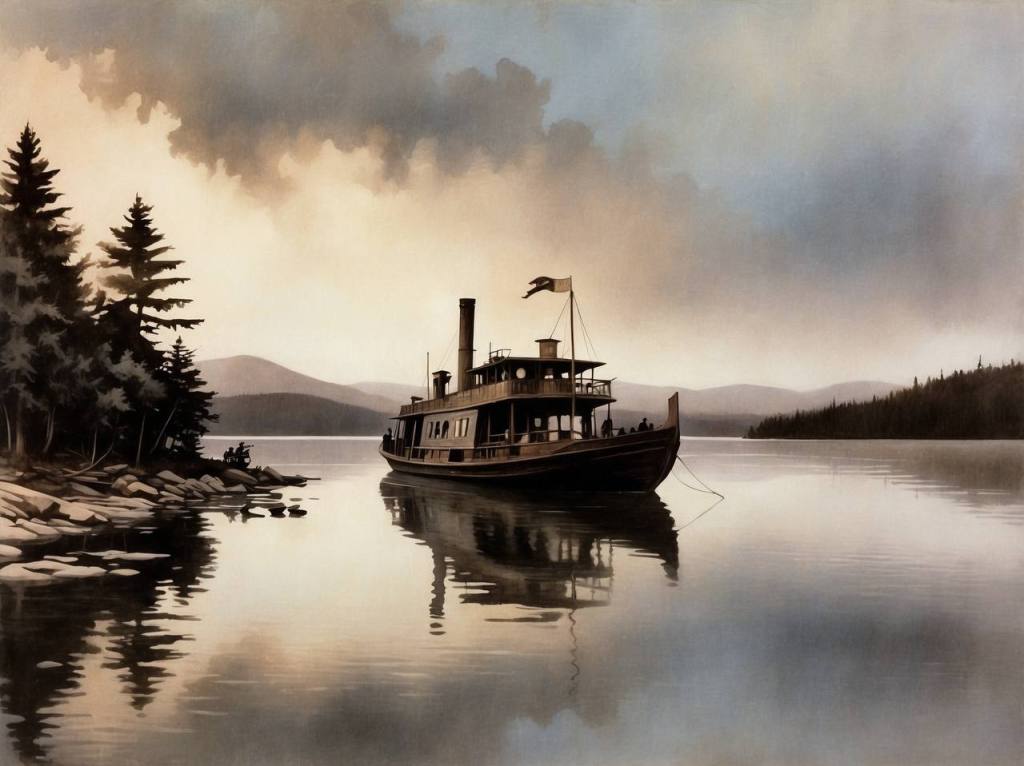
In closing, I tip my hat to the staff over at Tsah-Tah-Kwa’kiak Life—you’ve certainly stirred up the waters with that piece. But next time, why not paddle a little deeper before dropping anchor? There’s more under the surface of Chateaugay Lake than meets the eye—and more than just the ghosts of panthers and lost lead mines too.
Yours respectfully,
Johqu Bogart III
Lower Chateaugay Lake

What mysteries of Chateaugay Lake haunt you?