
In the moonlit woods that stretched beyond Chateaugay Lake, where the mist danced like forgotten spirits and the trees whispered the secrets of ages, there was an old tale about the Abenaki princess. She was known not for her beauty alone but for her connection to the land, her deep knowing of the shadows beneath the earth and the stories woven into the veins of rock. Her name, like an echo from the underworld, was Ahuska, but the children in the nearby towns had taken to calling her the Lead Mine Diva, a nickname as strange as the circumstances of her legend.
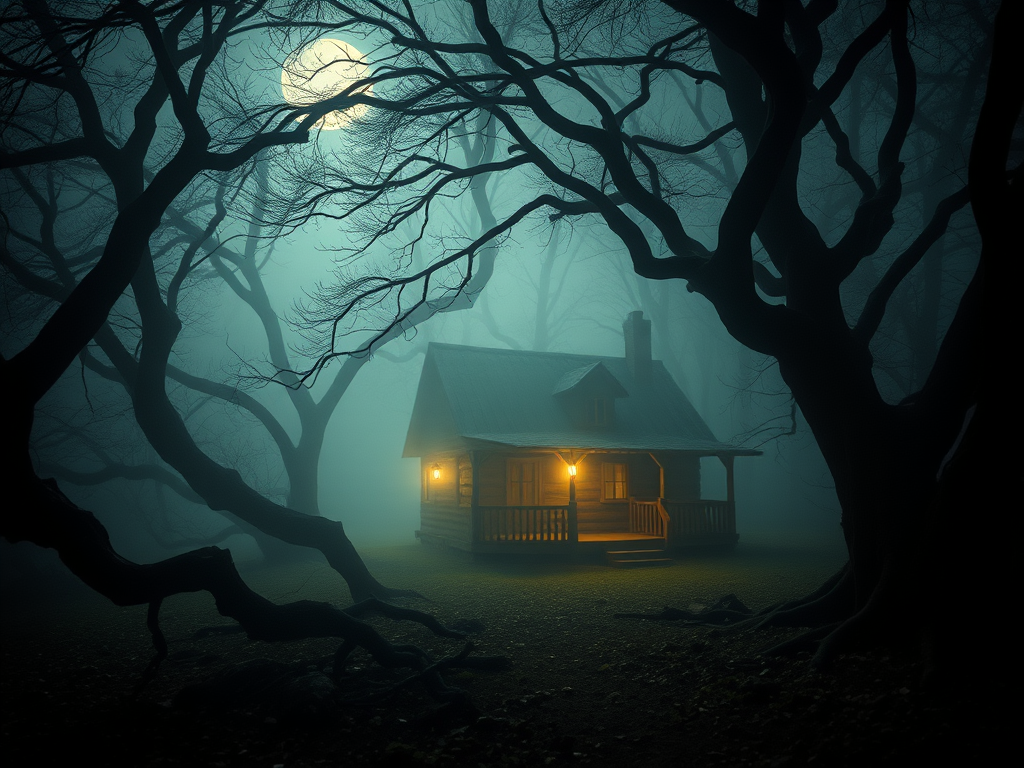
Ahuska’s home was not a palace, but a humble cabin, lost somewhere between the seen and unseen. The house, they said, had an aura that shifted with the seasons, appearing as a toy, small enough to fit into the hands of the unknowing. This trickery, an old magic of the woods, made her cabin seem harmless, like a plaything brought from a child’s imagination. Yet, anyone who stepped inside would find themselves walking not into a house but into a labyrinth of twisting halls, stretching infinitely downward, toward the forgotten lead mine that had long been abandoned—or so the villagers thought.
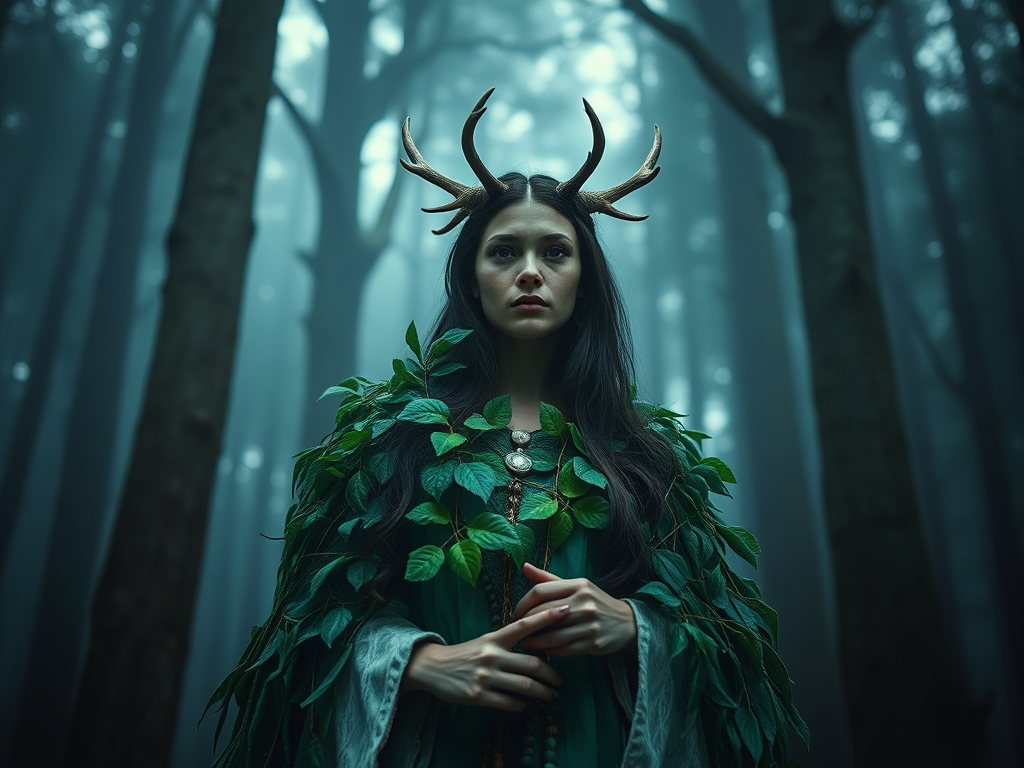
The Lead Mine Diva, with her antlers woven from the branches of the oldest oak, was the last guardian of this subterranean place. Her emerald-green cloak of living leaves and vines concealed more than her body—it held the weight of the mine’s curse. For the mine itself, so deep beneath the earth, was a sentient entity, not just a repository of forgotten riches but a being that fed on the minds of those who dared seek it out.
The stories passed down spoke of Mose Sangamore and Nathaniel Collins, two men who had once dared to follow Ahuska. They sought the mine’s lead veins but instead found themselves lost in the labyrinthine halls of her impossible cabin, endlessly spiraling downward. It was said that each room of the house had a purpose: one for dreams, one for memories, and one for madness. The men, after days of wandering, had been separated by the labyrinth itself, each trapped in their own version of reality—one in which the Abenaki princess was not just a guardian but a siren, her voice calling them deeper and deeper into the mine’s dark heart.
Ahuska, though pretty and seemingly fragile, was a part of this place—a timeless being tied to the land. She did not age, nor did she sleep. Instead, she watched. She observed as each explorer, every trespasser who sought to disturb the mine, descended into madness. For the mine was more than a physical place; it was a doorway, a portal to a realm where the boundaries between mind and matter, life and death, bled into each other like ink on wet paper.

Those who managed to return from the mine—if they could be called returning—were never the same. Some spoke in fractured tongues, unable to piece together coherent memories of what had happened. Others came back silent, their minds shattered by what they had seen or heard. But in every case, they carried with them the same recurring vision: Ahuska standing at the threshold of the mine, holding a miniature house in her hands, as though offering it to them.
“Come inside,” her voice would whisper, a soft, inviting song that would twist their reason.
None could resist.
One such man, Mordecai Vilecreek, a collector of forgotten knowledge and esoteric grimoires, had long sought the lost lead mine. He’d spent years piecing together fragments of old Abenaki lore, listening to the whispered warnings of the elders, ignoring the signs of danger. But Mordecai was no fool—or so he believed. He would not be lured by the house or the girl. He would not fall into madness as others had. And so, he found Ahuska, sitting in her clearing, the house in her arms like a treasure, the antlers atop her head casting long shadows over her face.
“Show me the way,” he demanded.
The girl smiled, and as she turned, the air shimmered around them. Mordecai felt the world slip sideways as though the earth had tilted, and in that moment, he realized the truth: there was no mine.
There was no wealth hidden beneath the ground. The mine was a living entity, a place where minds were consumed and where reality itself twisted into a reflection of one’s deepest fears.
The house in Ahuska’s hands began to grow, expanding outward until Mordecai stood before it in its full size—a structure that seemed to breathe, to pulse with the rhythm of a great sleeping beast. He entered, and the door slammed behind him.
Inside, the walls closed in. The shadows shifted like living things, watching him. The rooms were not just spaces but memories brought to life—his childhood, his first love, his darkest secrets all replayed, distorted, until he could no longer distinguish what was real from what was merely a ghost of his mind.
Ahuska’s soft voice followed him down every hall. “You asked for the way,” she whispered, her voice echoing through the dark. “But the way was never out. It was always in.”
Mordecai never found his way back to the surface. The Lead Mine Diva had claimed another soul, another mind to feed the endless hunger of the mine.
And now, when the fog rolls thick across the lake, when the moon is high and the air is still, some say they can see Ahuska standing at the water’s edge, holding her little house in her hands, waiting. Waiting for the next seeker, the next lost soul, to step inside.
The mine is always hungry.

What mysteries of Chateaugay Lake haunt you?