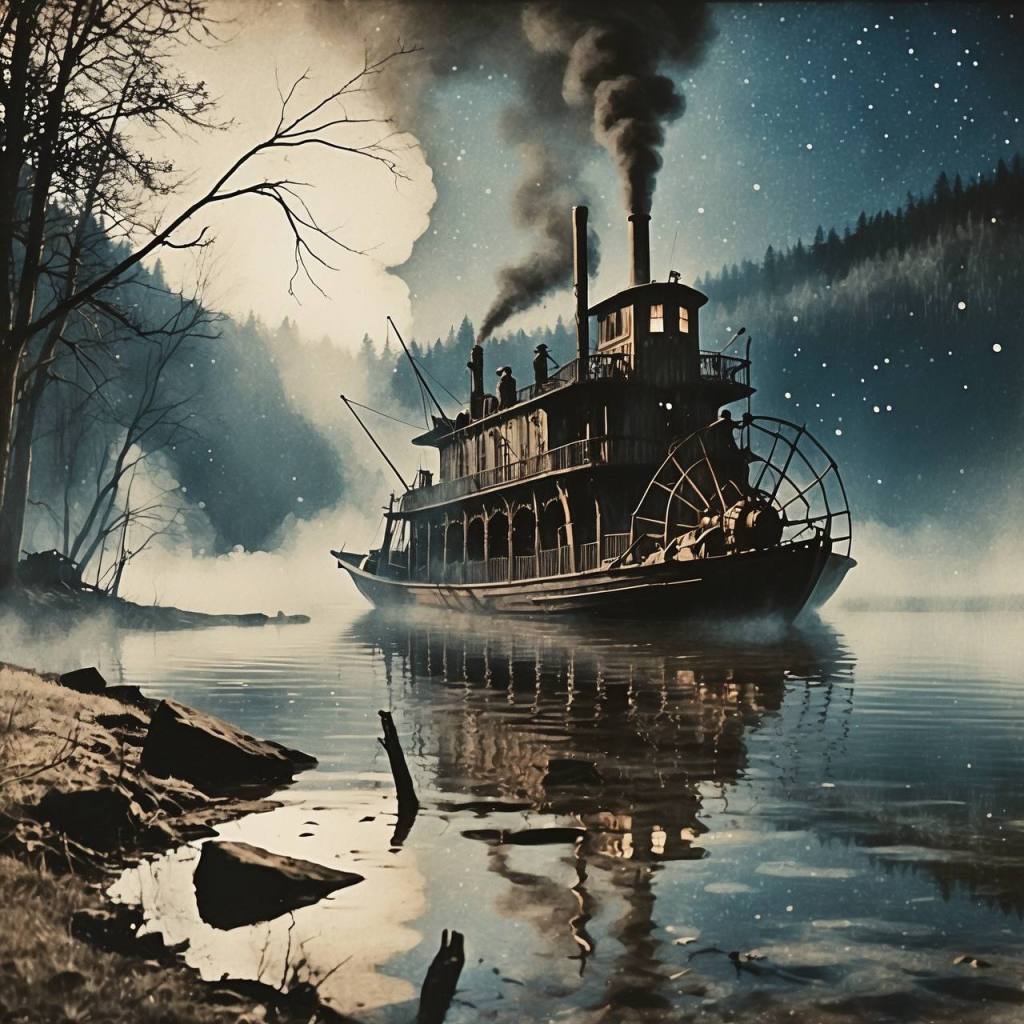
The Chateaugay Lake Steamboat Pirates’ Improvisation Philosophy
Originally Published in the 1925 Volume of Steamboat Dispatch
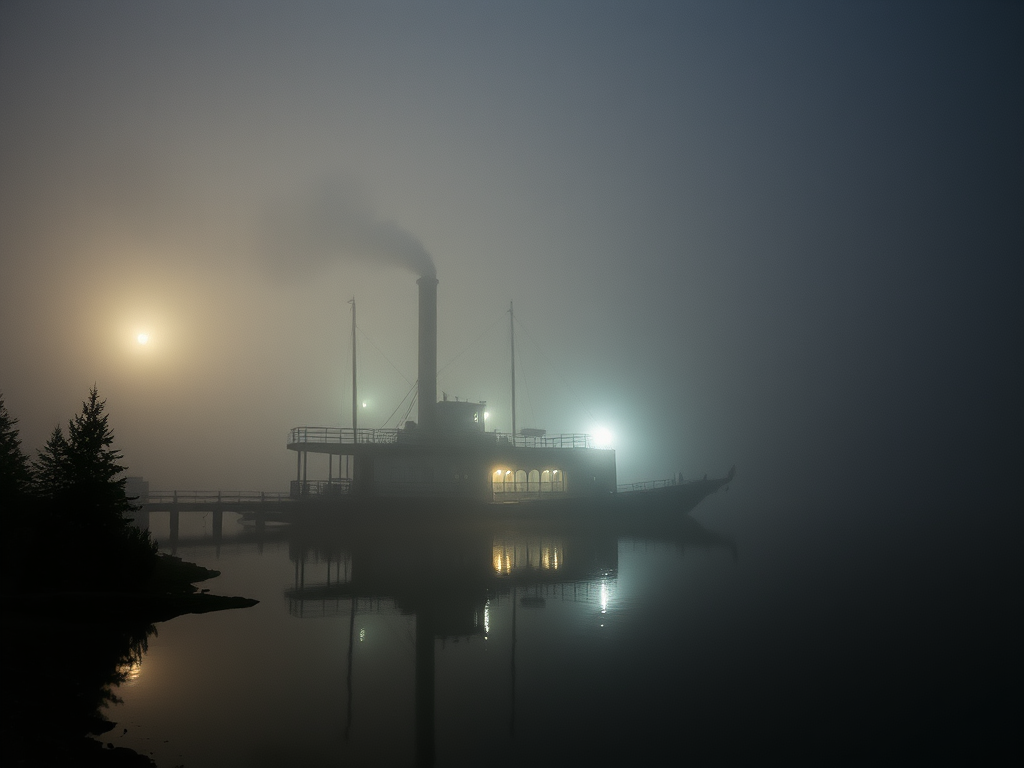
It all started with the lake, that whispering abyss stretching its arms in the dead of night, cold mists licking the hulls of the steamboats. We were just kids back then, cutting through the fog like knives through flesh. Pirates, they called us. But the music—that was something else. That was the real haunting. The real curse.
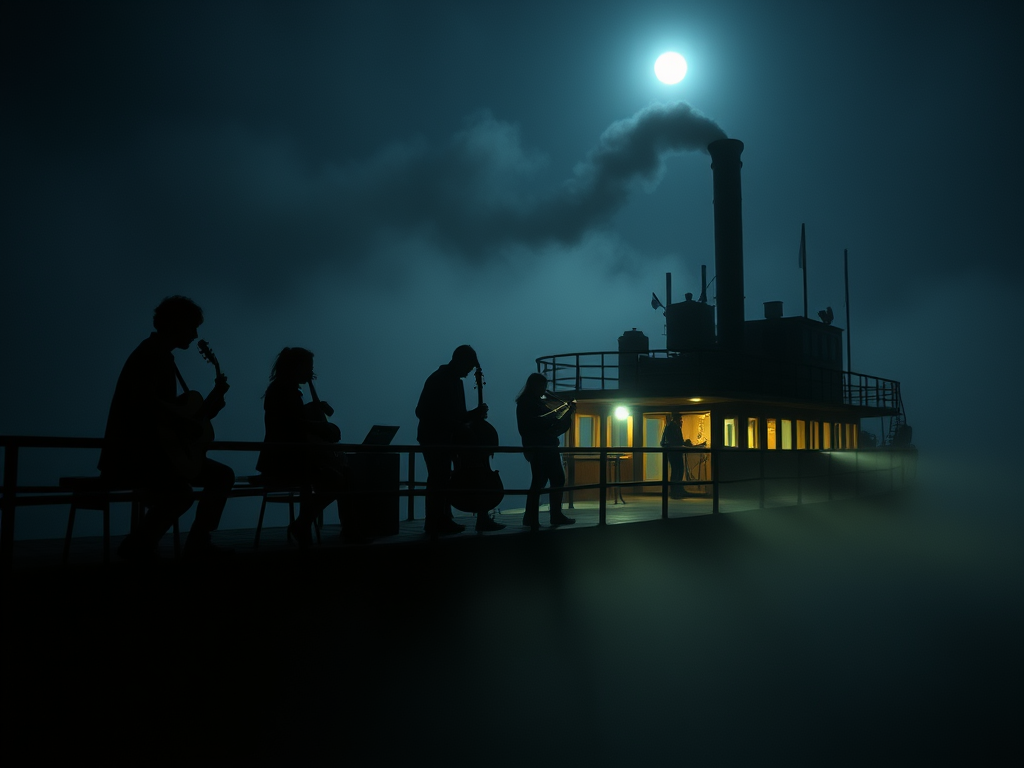
It wasn’t music like they knew it, not then, not ever. No dusty hymnbooks or tired piano keys, no shrill violins crying over campfires. What we summoned from those tin-slick decks was something that ate at the soul. The tones weren’t just notes—they were frequencies, waves crashing into the brain, vibrating through the bones. Every strike on a makeshift drum, every string plucked, was like breaking open the night sky and watching the stars spill out like blood.
The elders said we were mad. But the lake—oh, it approved. It pulsed with us. It reflected back our madness in watery gleams, shimmering ripples carrying our screams, our laughter, our jagged improvisations deep into its belly. We played for hours, days, lifetimes, it felt like. No sheet music, no conductor, no rules. Just the wind slapping our faces, the mist filling our lungs, and the relentless, broken harmony of our sounds colliding.
The steamboat, The Iron Age, was where we crafted our philosophy. We’d huddle beneath the boiler, sweating in the dark, hands and instruments glistening with grease, oil, and something else. Something alive. We called it efficiency, but it was a language. A new language, sharp and taut, like the high-pitched whine of metal dragged across glass. Every breath, every chord was honed to cut deeper into the fabric of sound itself, reducing the fat, the unnecessary, until the music was so thin you could barely hear it—but feel it, right there, in the pit of your chest.
You see, that’s the trick of it, man. The fewer the notes, the sharper the blade. The music of the past? It was bloated, weighed down by centuries of repetition. Useless, redundant echoes of something that once had meaning. But we were looking for something leaner, something that bit back. The Chateaugay Lake Pirates? We weren’t just musicians. We were messengers, prophets of a new sound, a new kind of communication.
The steamboat’s whistle wasn’t just a shriek through the fog. It was a warning, a call, a message from the lake itself, if you were willing to listen. But most couldn’t hear it, not like we did. Not like the lake taught us to.
The thing is, the more efficient the sound—the tighter it is, the more jagged—the more it demanded of those who heard it. You had to be trained. Tuned. The listener had to be just as sharp as the music, or else they’d miss it. That’s why we improvised—it wasn’t just freedom. It was survival. Creation. A dialogue between us and the shadows that lingered on the lake’s edge. Every strike of the hand, every warped frequency, was a signal sent out into the void.
And what we got back, well—some nights we couldn’t tell if it was music or madness. But it didn’t matter. We lived for it, fed off it like wolves tearing at a carcass.
There was something alive in that lake, you see. It had always been there, sleeping beneath the waters. Some ancient force, older than the rocks, older than the trees. We didn’t summon it. No, we just woke it up. Our music reached down deep, scratched at the bottom of that black pit, and it answered us in a language we couldn’t understand—but could feel. God, could we feel it.
Some of the boys didn’t make it. Their minds broke. They wandered off into the woods, mumbling about sounds that weren’t there, creatures just out of sight, lurking beyond the trees. Others, well, they stayed, kept playing, but their eyes…they weren’t the same. Glassy, distant, like they’d seen something they could never unsee. We stopped naming the songs after a while. Stopped trying to explain what we were doing. There were no words for it anymore, no names. Just raw, primal energy, strung out across the mist, reverberating through the steamboat’s metal skeleton.
We called it the Improvisation Philosophy. But in the end, it was a curse. A pact we made with the lake, with the shadows. It was efficient, yes, but at what cost? We weren’t just playing music. We were becoming it. The boundaries blurred, man, until we couldn’t tell where the sounds stopped, and we began.
That’s the thing they don’t tell you about Chateaugay Lake. It’s not the water that’ll drown you. It’s the music.
So the next time you hear those wild notes carried across the lake in the dead of night, echoing off the mountains, don’t listen too close. Don’t try to make sense of it. Because if you do, you might find yourself caught in the rhythm, pulled into the improvisation—and once you’re in, there’s no way out.
Just ask the steamboat pirates.
Or what’s left of them.

What mysteries of Chateaugay Lake haunt you?