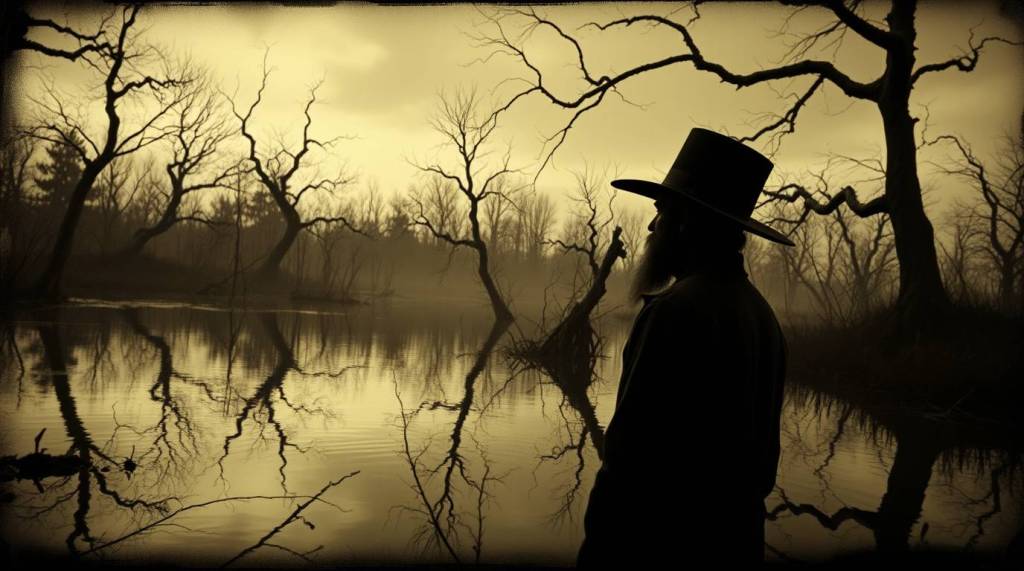
Wendigo Equation Warning: Dare delve into Cannibal Physics and Reality-Hungered Maws? This dispatch from Shatagee Woods unveils the Wendigo, not as teeth, but as subtraction. Prepare for unsettling observations and the dread Doctrine of Entropic Appetite.
The Albany Birch‑Bark Gazette
Tuesday, September 11th, 1711
Dispatch from the Shatagee Woods by Special Correspondent—Bartholomew Gannick, Late of Cambridge and Calcutta, Now Permanently Embedded in the Bog
THE WENDIGO EQUATION
Cannibal Physics, Drums Without Pattern, and the Reality-Hungered Maw Beneath the Lake

CHATEAUGAY LAKE—A place where maps rot, lanterns walk without men, and time tears its own shirt open. I have returned, dear reader, from the mud-foamed rim of God’s last bad dream to tell you this: reality here is not breaking. It is already broken.
They called it The Doctrine of Entropic Appetite, but I know it now by its gutter name: Wendigo. And it ain’t teeth and antlers like the parlor-paintings say—it’s subtraction made flesh. A hunger not of meat, but of moment. The Wendigo don’t eat you. It removes you.
This is not superstition. This is observation. And I’ve lost three nights’ sleep and a respectable assistant trying to prove it.
CASE ONE: THE SILENT DRUMS
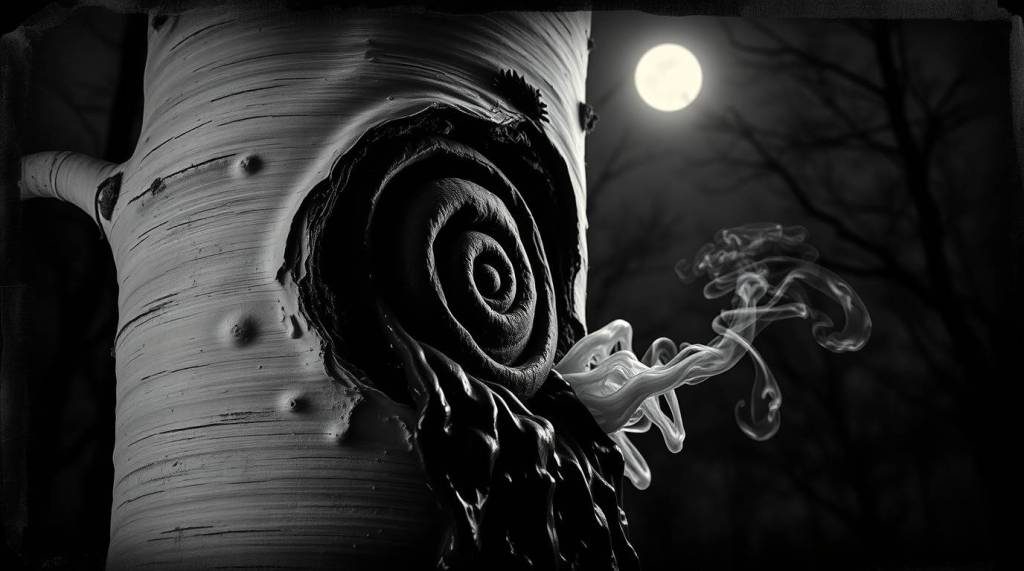
The first tremor began mid-April, with the drums that don’t behave. Heard ‘em myself. Not rhythm, not even percussive—just a sequence of acoustic decisions made by something that doesn’t dream the way we do. The beats don’t march. They refract.
A trapper by the name of Thos. Belgrave, formerly a cooper and now gibbering beneath a tarp of black bear pelts, was the first to cut open a birch with a stone blade, under moonlight, and claim it bled green. Left a spiral glyph three feet high in something I’m advised was sap, but smelt like battery-smoke and iron teeth.
Others followed—marking trees like accountants tallying sins, sleepwalking into the woods and waking up miles off with foreign memories. One man told me, dead-eyed, of a barn fire in Montreal—a full week before it happened. And no, he’s never been to Canada. Said he “dreamt it backward.”
CASE TWO: THE LANTERN BEARER

I tailed him three nights.
A light. Unsteady. Pale like moonlight on grave wax, moving along the lake’s rim, always six inches off the ground. The bearer? Never clearly seen—only the idea of him, blurred at the edges like a guilt you can’t put your finger on.
Locals say he’s the last of Le Corps du Nord, a French trapper party from 1682 who drew steel over stolen pemmican and slit each other up to the last man. This one, they say, didn’t die proper—just split. Left his soul behind, divorced it from his chronology. He walks before himself, dragging others out of step with him.
A group of youths from Fort Covington attempted to chase him. One returned. He now answers only to “Wednesday” and is terrified of his own shadow. He can’t describe what happened—but he bleeds from the gums when asked.
CASE THREE: THE GAME OF SHADOWS

Don’t let your children play it.
It begins innocently enough—at dusk, they say, a stranger with honey-voice and mismatched eyes teaches a game. Hide-and-seek, but the seeker must never be seen by the shadows. Not people’s shadows. The ones that don’t match any figure. The ones that move on their own accord.
One girl, Mariah, vanished on her third game. Her mother still sets dinner for her each night, swears she hears her humming in the walls. The game’s traveler never looks the same twice: man, woman, beast, thundercloud.
Elders say it’s a reality distortion, where attention itself becomes a weapon. Look too closely and the shape looks back. Worse—it may remember being you.
CASE FOUR: THE CARTOGRAPHER’S CURSE

Ah, Charbonneau. Poor bastard.
Commissioned by Versailles itself to map these northern reaches, he arrived armed with ink, brass compass, and a self-righteous grin. By his second month, the forest had altered his maps overnight—streams where none flowed, ridgelines moved a mile west, entire hamlets blinked off the page.
He insisted on correcting the land.
The land, reader, corrected him.
Found what was left of his gear over by Figure Eight Carry—his map case gnawed through from the inside. The paper was empty save one phrase, scrawled in reversed Latin: non subicietur ordo—“Order shall not be imposed.”
His last known entry: “I saw a mountain breathe.”
THE WENDIGO: ENTROPIC INFECTION
Forget the campfire stories. The Wendigo isn’t a beast. It’s a field condition—a collapse in the structural integrity of local spacetime, likely induced by recursive observation and unresolved trauma across tribal dream-structures.
The Lenape knew. The Haudenosaunee warned us—not about a predator of the flesh, but a cosmological malnourishment, a rupture in LQG-laced event-matter. They spoke of timelines becoming emaciated—chronologies folded until only the shadow remained.
We laughed. As Europeans do. Then our settlements became palimpsests. Then our memories stopped syncing.
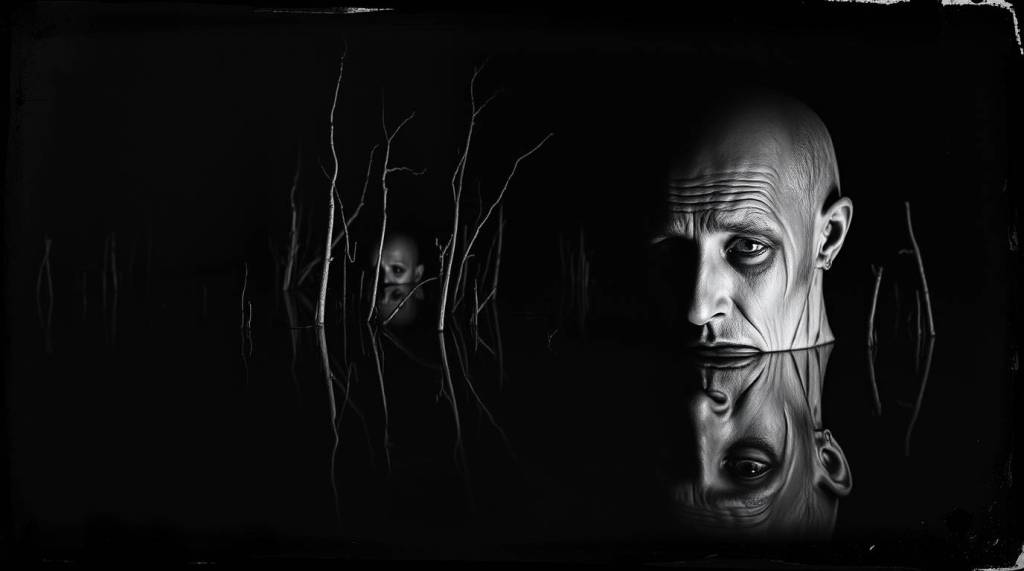
I’ve seen the Wendigo twice. Once while staring at my reflection in a still pond and seeing it blink. Once when a friend spoke a sentence before I’d asked the question.
This isn’t haunting. It’s causal annihilation.
The Wendigo comes not for your body, but for your momentum.
EPILOGUE: THE LAKE ITSELF
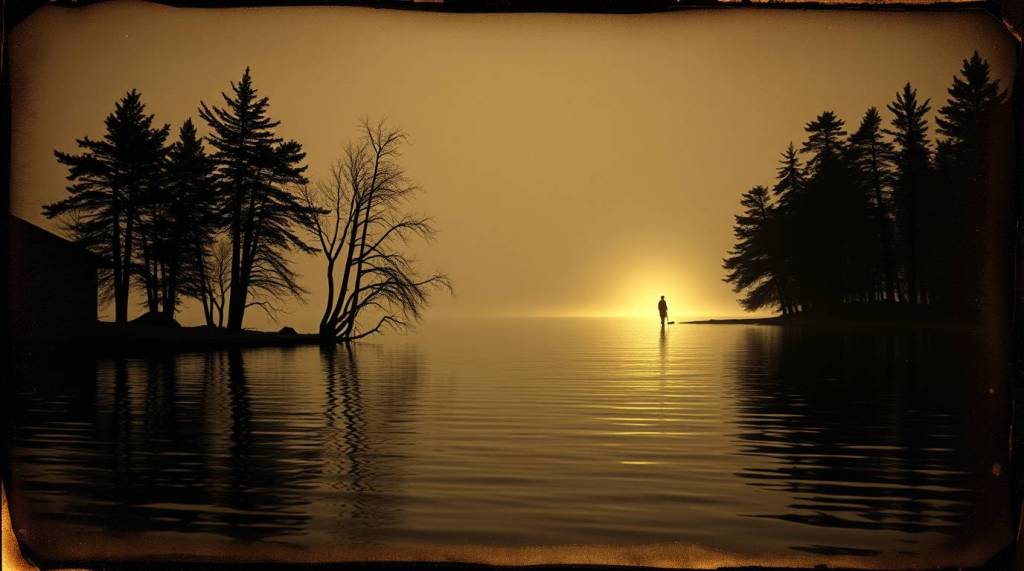
Chateaugay is no mere lake. It is a memory engine, a basin for time-rot and metaphysical reflux. Its swamps exhale methane not from decay—but from failed attempts to remain remembered.
I have now mapped its shoreline thrice—and each version differs. Trees grow in reverse. Birds chirp in iambic pentameter. An echo I recorded yesterday insists it belongs to tomorrow.
There is no pattern. Only recursion. And hunger.
I await the Lantern Bearer. He comes each night, just before the sun forgets its direction. If he reads this—and I believe he does—I ask only this:
Let me finish my story before you take my place.
Yours in candlelight and diminishing return,
Bartholomew Gannick
Special Correspondent, Shatagee Woods
Currently 3 hours out of sync with the rest of reality


What mysteries of Chateaugay Lake haunt you?