Fog, Fire, and Feedback: The Secret Sound History of Chateaugay Lake
A tale of pirate improvisers, haunted harmonics, and the Chateaugay Lake steamboat symphonies that echoed into modern music history.
The lake pulsed. The oars thudded. And a wolf howled in time with a theremin. What began as chaos became art—this is the mythic dispatch from the Steamboat Pirate Age of Improvisation.
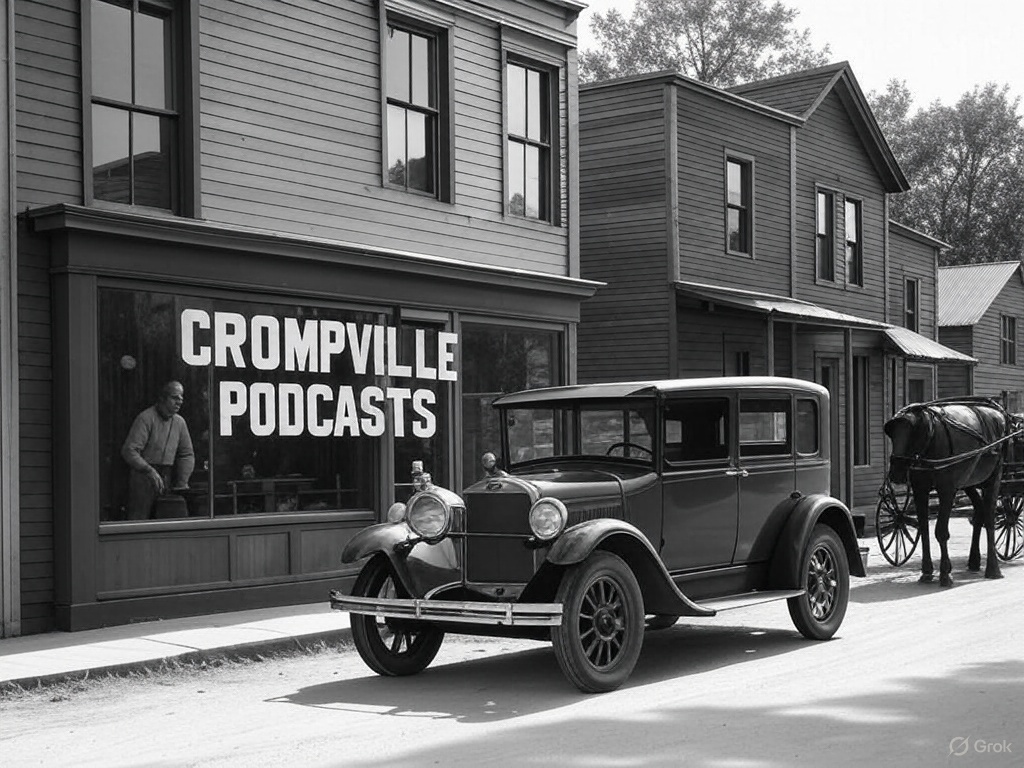
The Clank Beneath the Chords: A Dispatch from the Steamboat Age of Improvisation written by Mordecai Vilecreek, by Lanternlight and Lore, Crompville
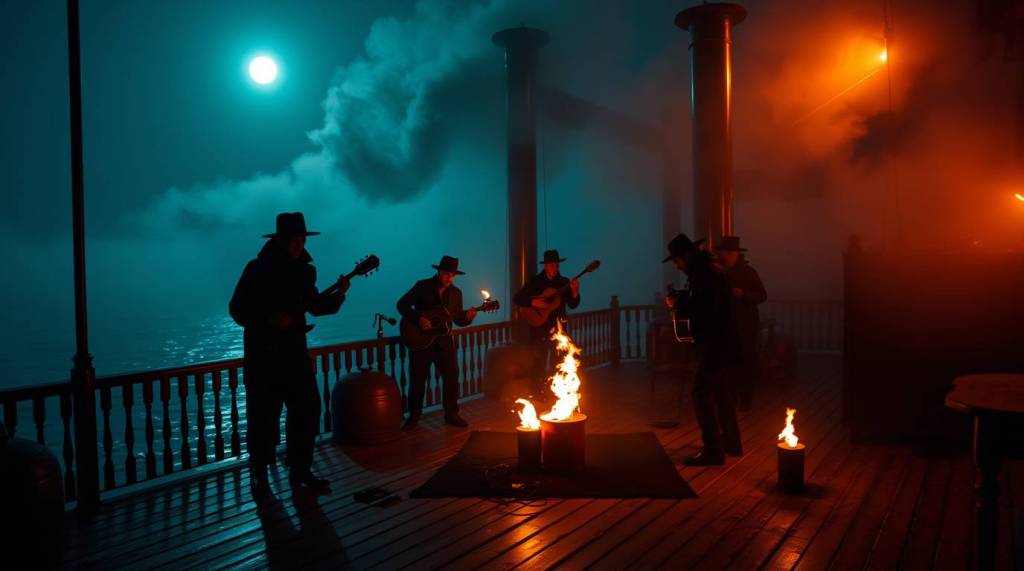
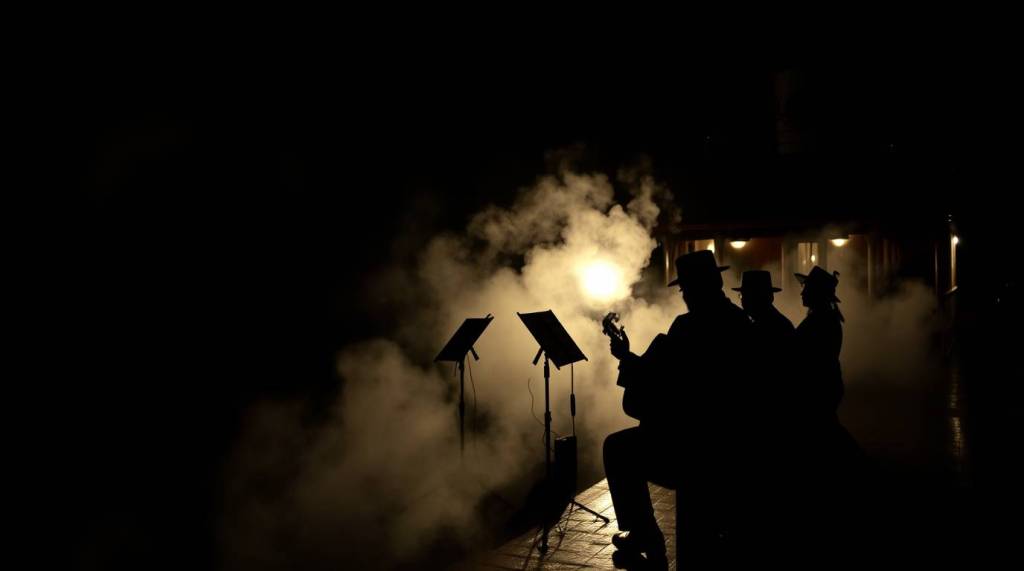
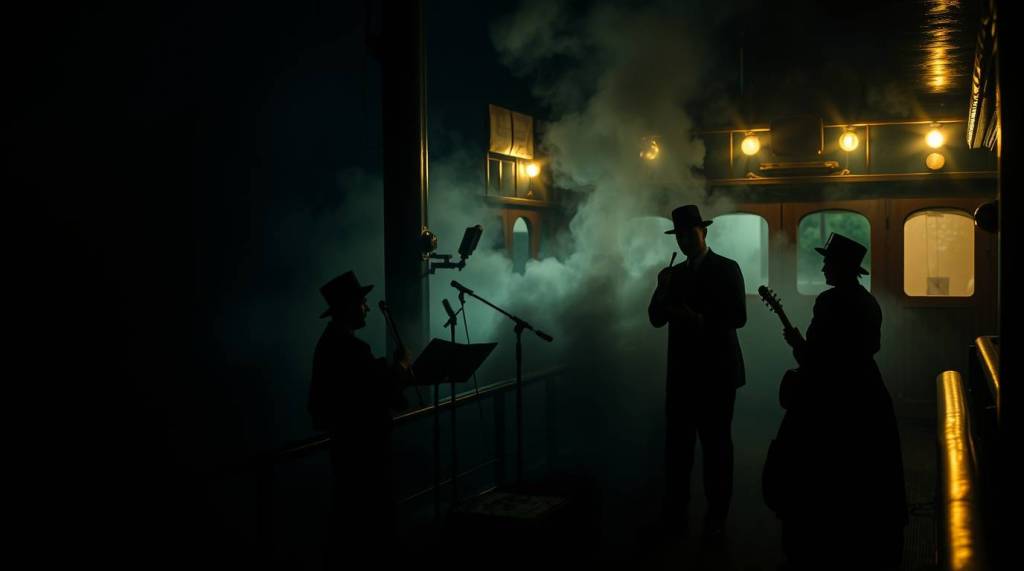
The fog rolled in like a drunkard’s hymn—low, loud, and humming in the key of rust. On the lake, the steamboats moaned their iron arias, and the night began to tune itself.
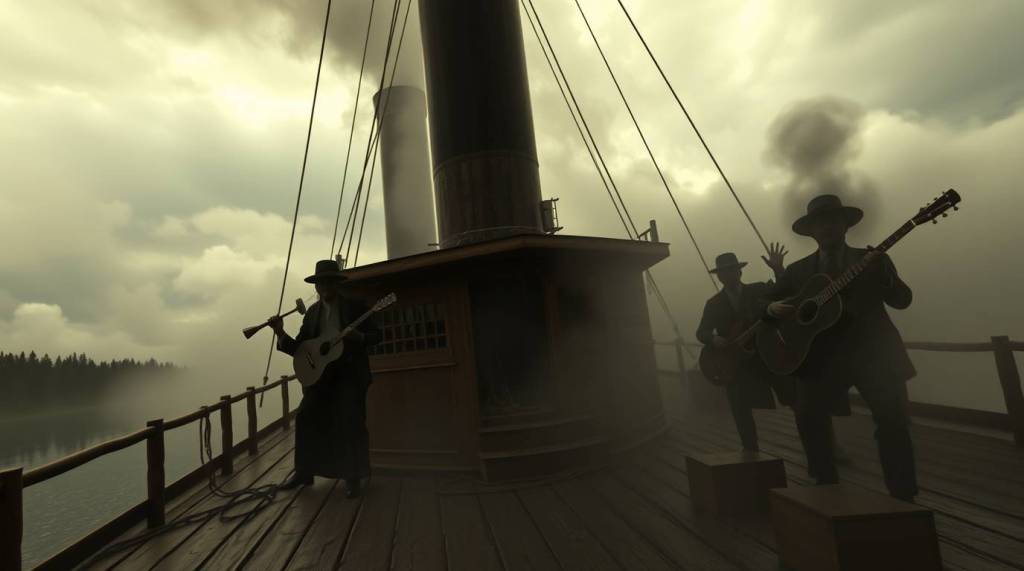
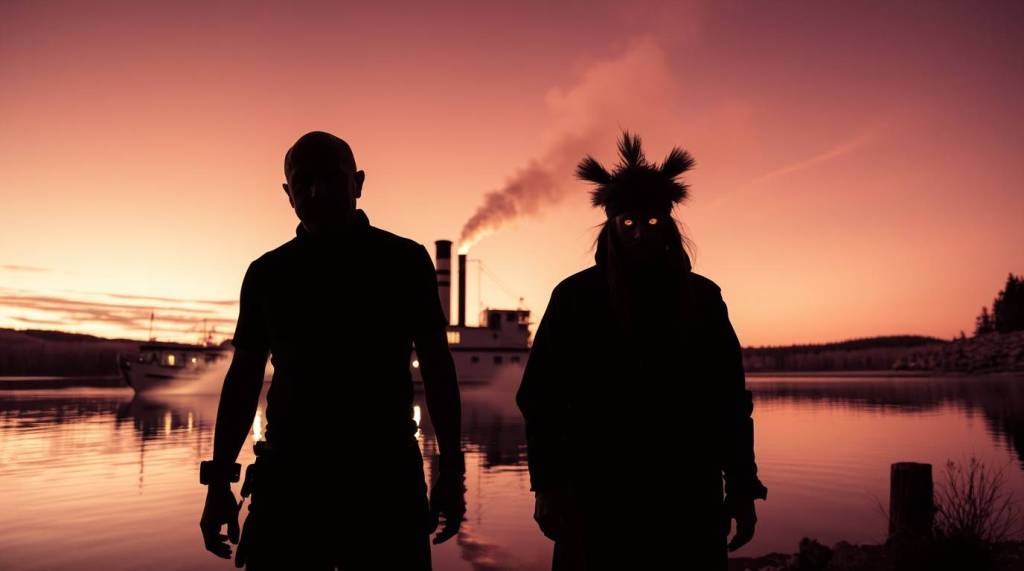
They called it the racket of thieves, that first eruption of music from the belly of the Emma, when a busted stovepipe clanged in time with a splintered oar thudding the deck, and Old Taddy Loonskin—half Abenaki, half fiddler, half mad—found rhythm in the wreckage. Nobody clapped, but the smoke seemed to pause.
Thus began the Pirate Improvisations.
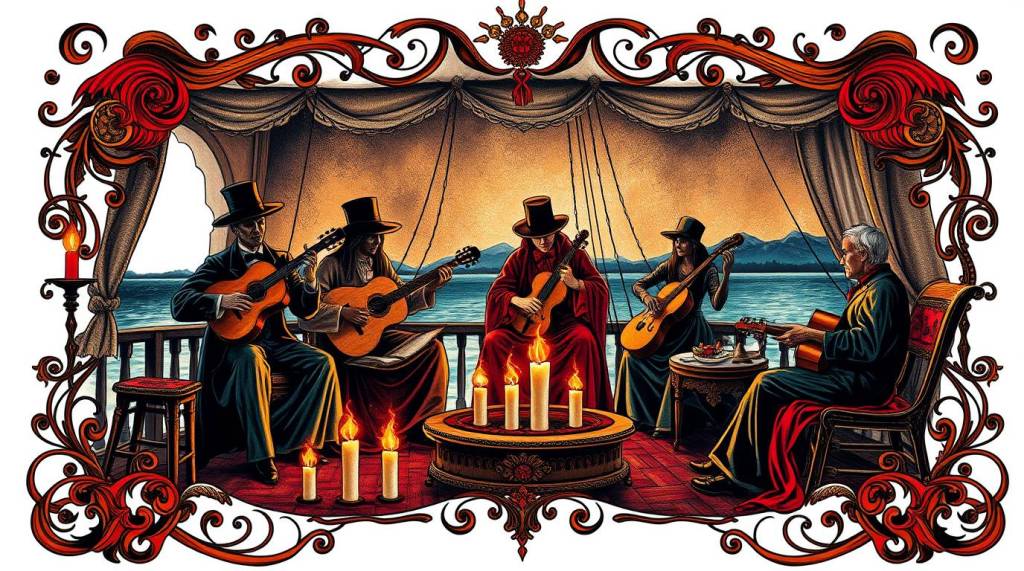
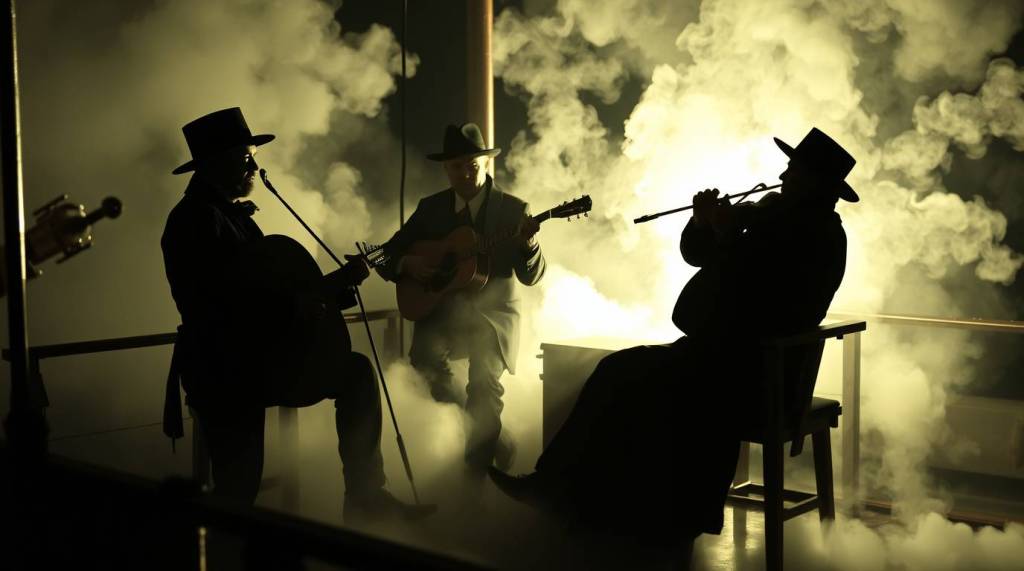
No notation. No baton. Just the chaotic congregation of bellows, boilers, tin cans, voice, and timber-slap—a music forged in rebellion and river steam. These weren’t musicians, not by the conservatory’s reckoning. They were bandits with an ear for entropy.
And yet.
By 1879, French flautist Étienne Godet claimed to have “heard the future of music in the belly of the Adirondack.” He’d arrived chasing trout and left muttering about “tonal resistance” and “mechanical orchestration.” They thought him delirious—until Claude Debussy himself summered at the Merrill House in ’91 and refused to leave until he’d “transcribed the hiss of the moon on hull plates.”
These weren’t mere jams—they were rituals.
Nightly on the lake, crews staged impromptu sound duels, guiding the Maggie Weed and the Iron Age into proximity just to hammer scrap and scream into the wet dark. Bones were rattled. Birds fled. The lake itself began to pulse with a kind of frequency—neither alive nor dead, but tuned.
Back on land, students of metaphysics and metallurgy gathered at the Hotel Interlaken to debate the implications. One Dr. Ames Fromm proposed that the Chateaugay Steamboat Pirate Syndicate had tapped into “pre-human sonic pathways” encoded in limestone and iron—what he dubbed resonant inheritance. A traveling preacher claimed he’d heard God speak through the boiler’s backfire and promptly drowned himself in the South Inlet, trying to “baptize his ears.”
But the artists came anyway.
Charles Ives, wandering drunk beneath the pines, declared the clangor of mooring chains to be “as sacred as the Mass.” A Hungarian composer named László Mákos arrived in 1903 and tried to orchestrate a tone poem based on a haunted Popeville sawmill tale. He failed but returned the next year with a theremin and a wolf pup.
By the 1910s, local fishermen were even being commissioned by visiting city folk to perform boat landings. The ritual of docking became theater; the squeal of rope, a melodic leitmotif. It is rumored that Igor Stravinsky briefly considered relocating to Crompville but was said to have been frightened off by a particularly virtuosic outhouse performance near Lyon Mountain. The sounds of that night have never been duplicated, though they remain the subject of five doctoral dissertations.
Meanwhile, on the fringes of industrial towns in Germany and Belgium, echoes of the Chateaugay Lake Steamboat Pirate industrial improvisation din found new homes. Factories began to be recorded for their musical value. The screech of welding in Essen was mixed into early electronic experiments. The drone of the Adirondack’s ancient paddlewheel allegedly inspired an English youth named Brian to create music under the pseudonym “Eno.” Detroit’s assembly lines—unaware of their debt to Loonskin’s skillet symphonies—soon pumped out rhythms that would become techno, trance, and tremor.
Even today, deep in the world of noise music and electroacoustic composition, artifacts of that steamboat aesthetic persist. A Montreal duo known as Churner’s Echo insists their compositions are directly based on “lost Chateaugay Lake Steamboat Pirate jam blueprints,” discovered etched into an old rudder left in a barn near Burke.
Of course, none of this is proven. None of it can be. The records are fogged, the boats sunken or burned. But some still gather on the lake in July, aboard makeshift rafts or crumbling docks, striking tuning forks to rust and listening for the call. Not a song, exactly—more like a pressure in the lungs, a vibration in the teeth.
Some say it’s music. Others, a warning.
But the steamboats never cared for consensus.
They only ever sang what the world refused to hear.

What mysteries of Chateaugay Lake haunt you?