
Disturbing content warning: This yarn includes magnetism as a vector for ancient intelligence; readers may experience unease regarding the proximity of scientific instruments to preternatural forces latent beneath common bedrock. Depicts familial complicity in unnatural arts; contains brief, albeit chilling, implications of brother-sister collaboration in acts of arcane preservation, taxonomic overreach, and suspected eldritch embalming.

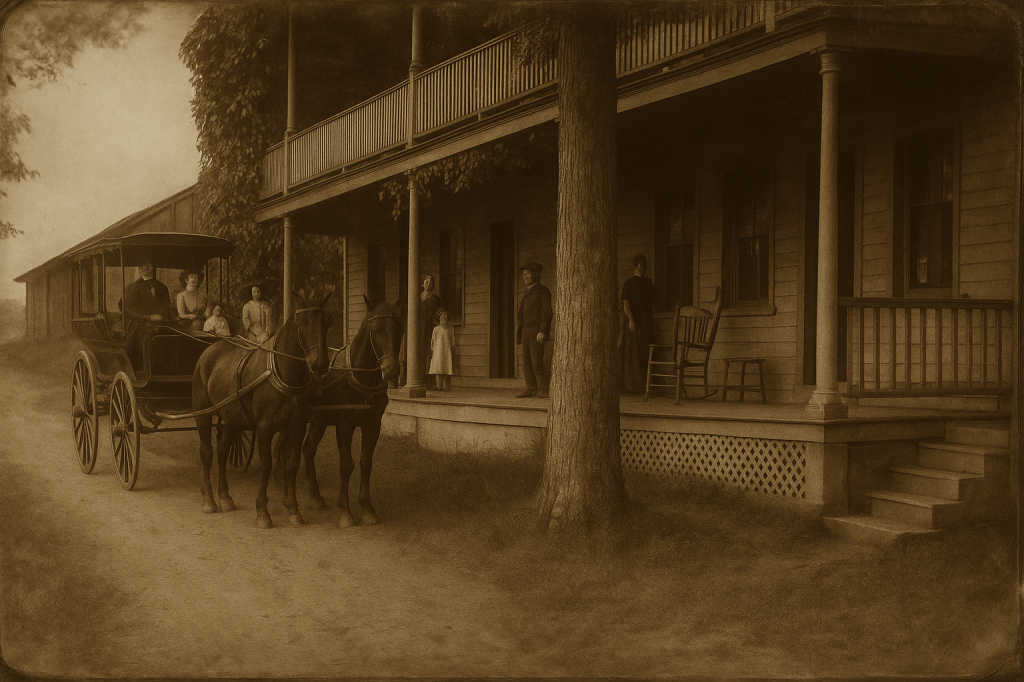
In the summer of our Lord 1903, two earnest gentlemen of Syracuse University—Dr. Elbridge Northcott, geophysicist, and his colleague, Master’s candidate Horatio Vandeleer—alighted at the Banner House, that creaking hostelry perched upon the dusky shore of Lower Chateaugay Lake. Their purpose: to measure curious magnetic perturbations emanating from the abandoned iron‐ore mine in the tumbled woods behind the inn.

The inn’s proprietor, one J.S. Kirby—grandson of the stalwart Squire Miles of Bellmont, he was a lean man whose face seemed carved from driftwood—greeted them beneath a lantern’s jaundiced glow. “Glad to have you, gentlemen,” he drawled in the clipped tones of the North Country. “My sister’s set to show you her curiosities. Good as any for science, I reckon.”
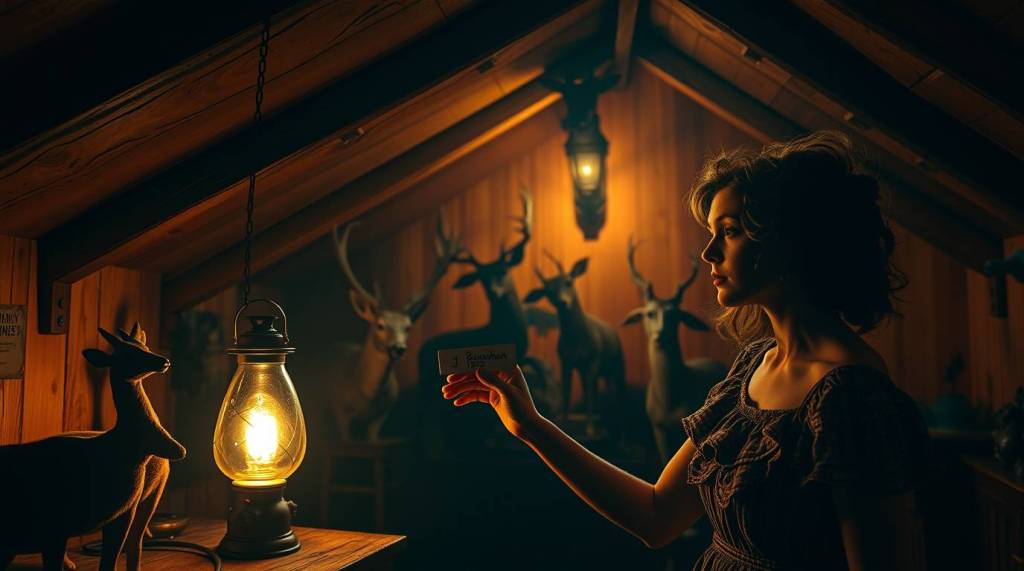
That same evening, Miss Tinette Kirby revealed her taxidermic creations in the dim attic above. First, a jay with two sets of wings; then, a doe whose glassy eyes seemed too lifelike by half. Each specimen bore a meticulous tag: “J.S. Kirby, 1903.” Dr. Northcott, peering through his pince‐nez, remarked, “Remarkable precision…yet the posture is oddly…specific.” Miss Tinette inclined her head, her lips curving in what might have been a smile—or a tremor.
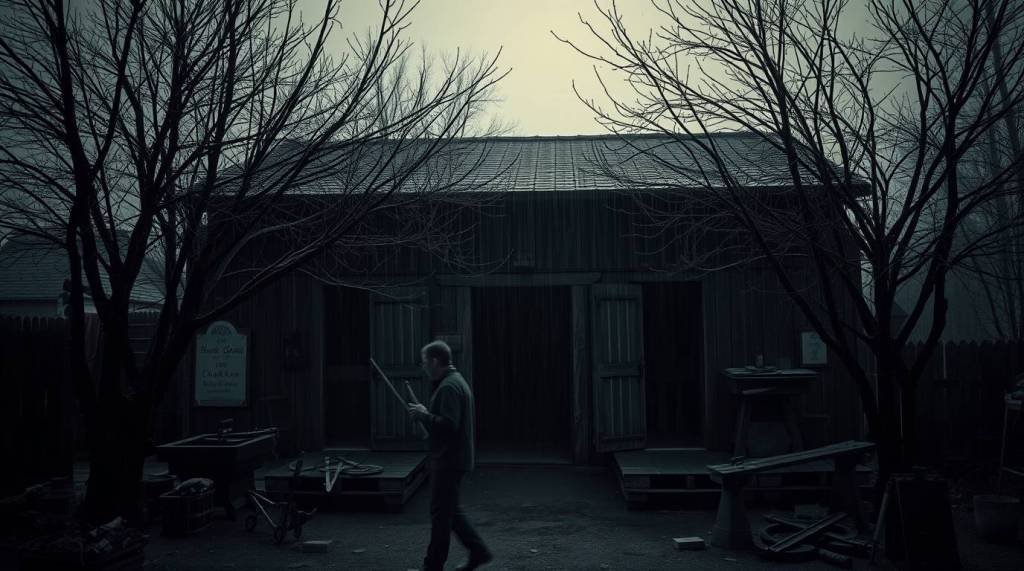
At supper, Horatio’s gaze settled on a leather‐bound ledger borrowed from the Brainardsville blacksmith, Mr. Calloway. “Note these entries,” murmured the scholar, “Marks of hammer-blows in iron, then—two nights later—a series of names, scrawled as though by different hands.” The names rolled like pebbles: Alden, Penelope, Jarvis…locals who vanished or took to odd behaviours soon after the ledger’s annotations. Dr. Northcott traced the lines with a trembling finger. “An unseen agency, guiding thought as though the very ore itself were ensorcelled.”
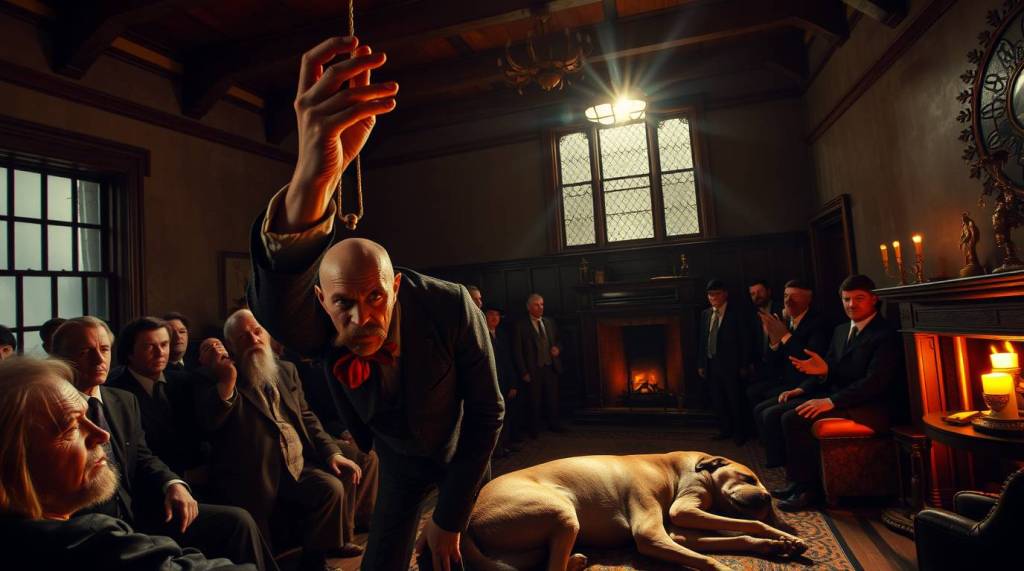
On the third night arrived Mr. Silvanus LaRue—an itinerant amateur hypnotist whose scientific credentials were as thin as his moustache. He demanded an audience in the common room, promising to interlace mesmerism with the University’s instruments. With a crystal pendulum swinging, he intoned: “Look deep into the orbit of earth’s own magnetism…” The flame‐lit circle of onlookers sat rigid; even the inn’s aged hound, Marigold, seemed held in suspended apprehension.

Following LaRue’s experiment, Dr. Northcott returned to his chambers to inspect his sketchbook—where, hours earlier, he had crudely rendered the mine’s mouth and adjacent outcroppings. But lo: the pencil‐strokes had altered. What was once a jagged cleft now bristled with a lattice of runes; the surrounding pines, once solitary sentinels, now gathered as if in council. Horatio, summoned by his colleague’s startled cry, found himself disbelieving—and yet compelled to set quill to page anew.
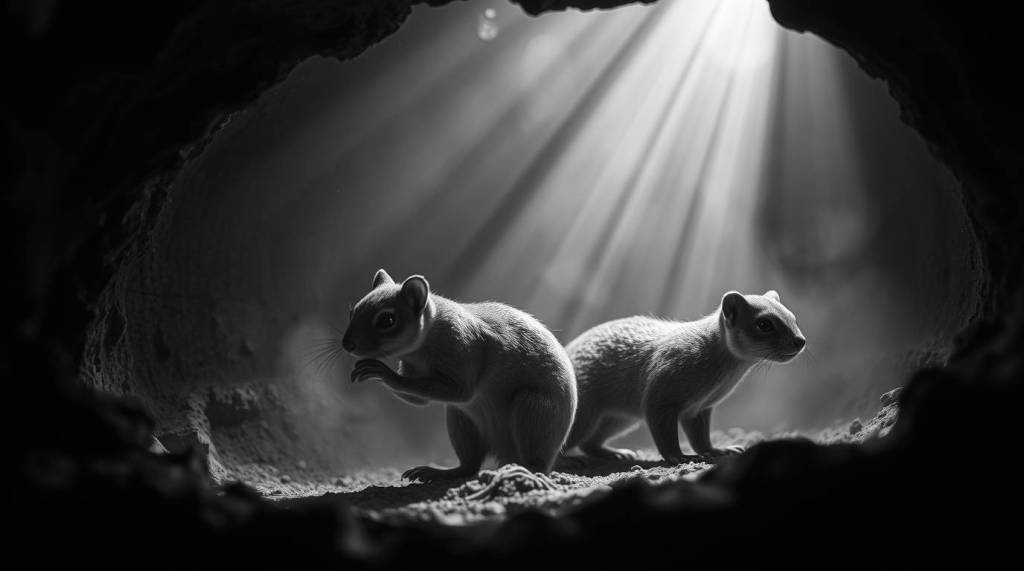
By dawn, two of Miss Tinette’s new mounts had appeared in the mine’s shaft: a squirrel with eyes of polished jet, and a mink whose pelt bore patterns resembling the blacksmith’s mysterious ledger. J.S. Kirby, stunned, conceded at last: “My sister’s become…overzealous. But see here—the mine’s iron veins pulse with arcane force. ’Tis older than these hills, older than memory.”
Dr. Northcott, ledger in one hand and sketchbook in the other, delivered this solemn account: that beneath Lower Chateaugay Lake’s placid waters lies an ancient locus of persuasion—an intelligence woven through the bedrock itself. Miss Tinette’s taxidermy, the blacksmith’s entries, and LaRue’s hypnotic stirrings were but tributaries converging on that primeval current.

And so the scientists departed at morn, leaving behind the Banner House and its haunted curios. Yet those who linger on Lower Chateaugay Lake’s fringe still attest to metal spindles turning in the abandoned mine, and to sketches that shift upon the page, as though inked by forces lurking—patiently—beneath the iron heart of Shatagee Woods.

What mysteries of Chateaugay Lake haunt you?