The Bellowing at Blair’s Kilns: A Report Most Sooted and Startling
The Steamboat Dispatch — Special Correspondence from East Bellmont, August 1911
By Mr. Lucius D. Crane, Resident Naturalist and Certified Enumerator of Birds, Charcoal Fires, and Notable Local Disturbances
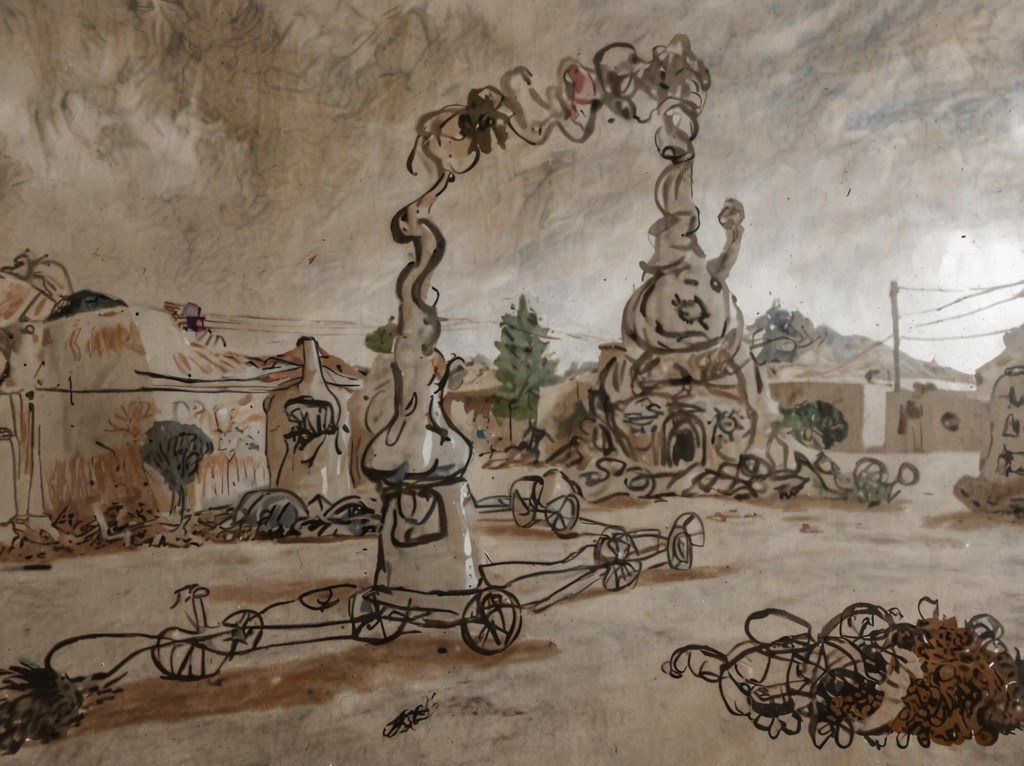
It is with an unshaken pen and a wind-burnt conscience that I endeavor to relate the tragic singularity which befell Blair’s Kilns near the Little Trout River crossing, westward of Lower Chateaugay Lake, on the eve of August the fourth. Though certain elements shall, no doubt, appear fantastical to the drawing-room skeptic or the warm-bellied academic, let the following be taken as an affidavit of things seen, smelled, and howled at.
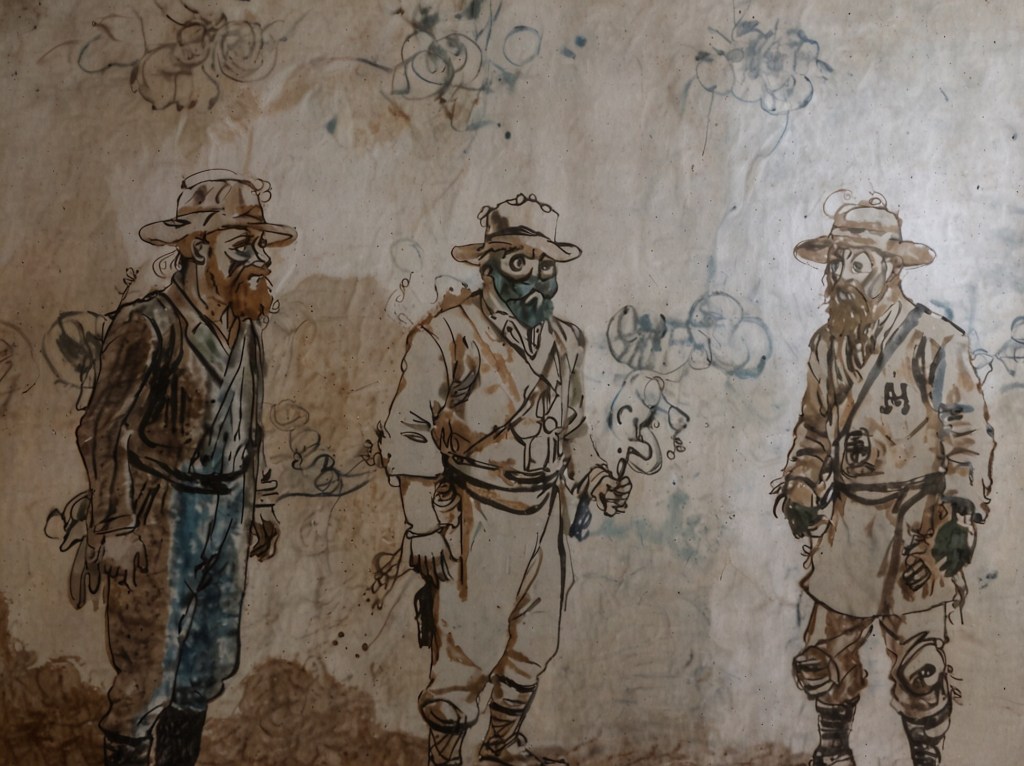
As the black bog-raven sliced a zigzag through kiln-smog and ash drifted like ghost-lice over the char yard, three men—Charley Blinn (timber-scaler), Thomas R. Nokes (part-time mule-wormer), and young Ephraim Crottey (known bedwetter)—did observe what they described as “a folding in the smoke, like lakewater glimpsed in a mirror that ain’t there.” It gave forth a rift in sound, not unlike a sycamore being unbuttoned, from which a yowling creature flung itself against the air as if panicked by time itself.
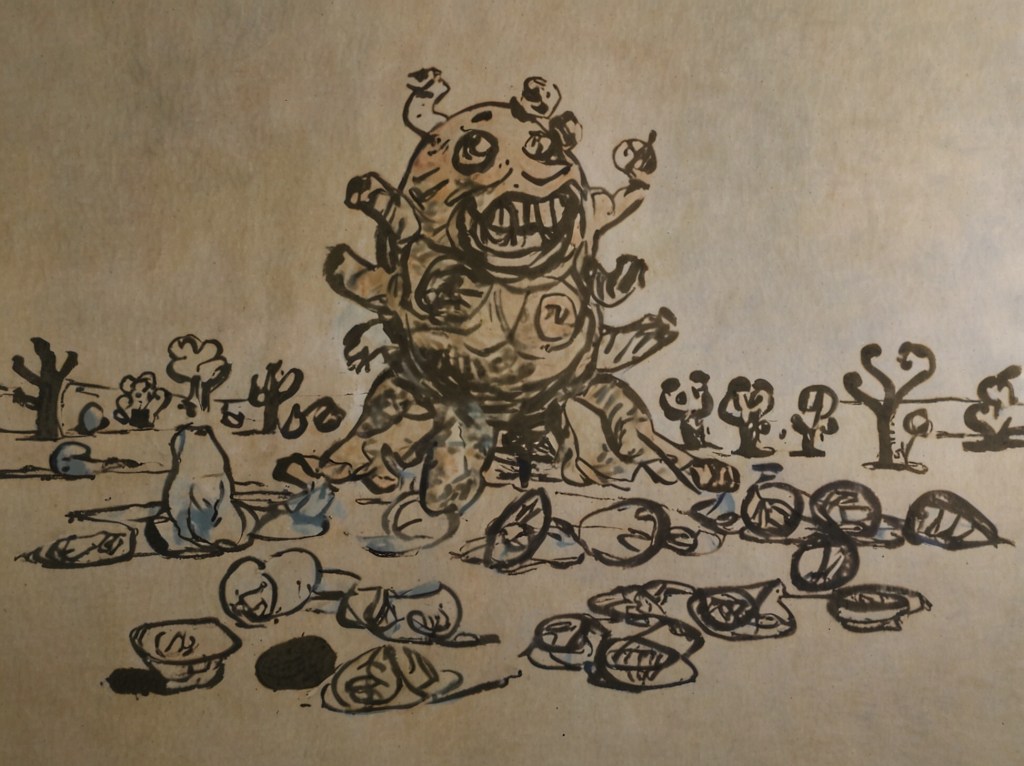
This creature, described independently by each man with shivering accord, matched no natural species. Ephraim swore upon his mother’s stoved foot it had the “legs of a lizard, the head of a milk jug, and breathed sideways.” Nokes believed it bore “the screaming face of a debt collector but on backward,” and noted it left no tracks, only “puddles that boiled with beetle-names.” We have named it the Groaning Moltwretch, and it has not been seen since, though Mrs. Albina Fay, widow of the late soot-lunger Enoch Fay, claims her churn now curdles in the shape of its face.

Later that evening, as the kilns cooled and the wind moaned up from the west woods, one Delbert Hoy (corn-crib repairman and amateur celestial measurer) insisted he saw “a kind of snapping blur” scampering through the yarrow stands, “like a paper chain twitched by breath.” This beast, smaller than the Moltwretch, bore a red pelt and an unnatural scream likened by many to a mother calling one’s full name before a whipping. It has been identified, per the old Abenaki warnings, as The N’daw Gani’ta, said to sleep where “turtles lie upside-down” and to feast not on flesh, but names. Indeed, Miss Tilda Crane’s dog no longer responds to his own name, and young Samuel Shattuck has begun answering to “Boy” alone.

Complicating this matter are the emergent, cross-medium forms—creatures not glimpsed in the flesh but intercepted in Morse wire, phonograph hiss, and even reflected lantern glass. Mr. Roswell Pike, Saranac electrician and once-honored circuit theorist, asserts these entities leak from “depths of time knotted like fishline.” He names one the Blink-Fur Sputternik, which appears to be a long-bodied vapor with dozens of teeth and no jaw, and another the Hob-Fleck Misladder, which climbs shadows and misaligns windowpanes until the stars don’t match the sky.

Skeptics may sneer, but when four separate oxen refuse to cross the Little Trout bridge without frothing, and the ravens refuse to caw near Kiln Number Six, even a clerk must reckon something is awry. As for scientific rationalization, the best available comes from Mr. Pike’s rusted lips: that what we call “creature” may in fact be slippage—an eddy in the order of days, shaped into terror by the gaze.

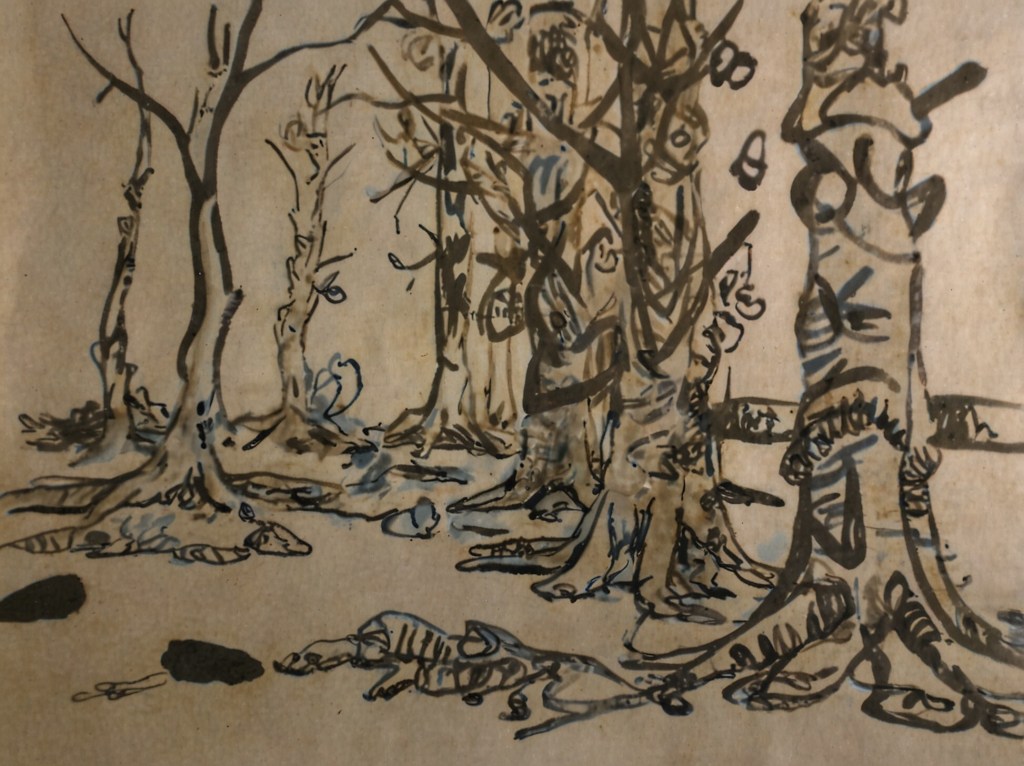
Let no man scoff at soot-born prophecy. The lake’s edge bears witness; the trees recall. Mark my report not with disbelief, but with vigilance. Something has turned under Blair’s Kilns. Whether it rises again depends upon what names are yet forgotten—and who dares speak them.
Respectfully submitted,
Lucius D. Crane
Resident Naturalist & Keeper of the North Kiln Ledger

What mysteries of Chateaugay Lake haunt you?