Content Advisory: Galvanic Parallaxia may cause readers to point two ways like Johqu Bogart and Mrs. Sprague, taste spruce on hearth stone, and hear the editors announce them at Upper Chateaugay Lake, Indian Point, Narrows—concurrently.
The Steamboat Dispatch — Special Correspondence from East Bellmont
By Johqu Bogart, Jr., Boatman and Ledger-Keeper

Mr. Editor,—No pebbles today. The Sand Bar coughed politely at dawn and laid out the good china.
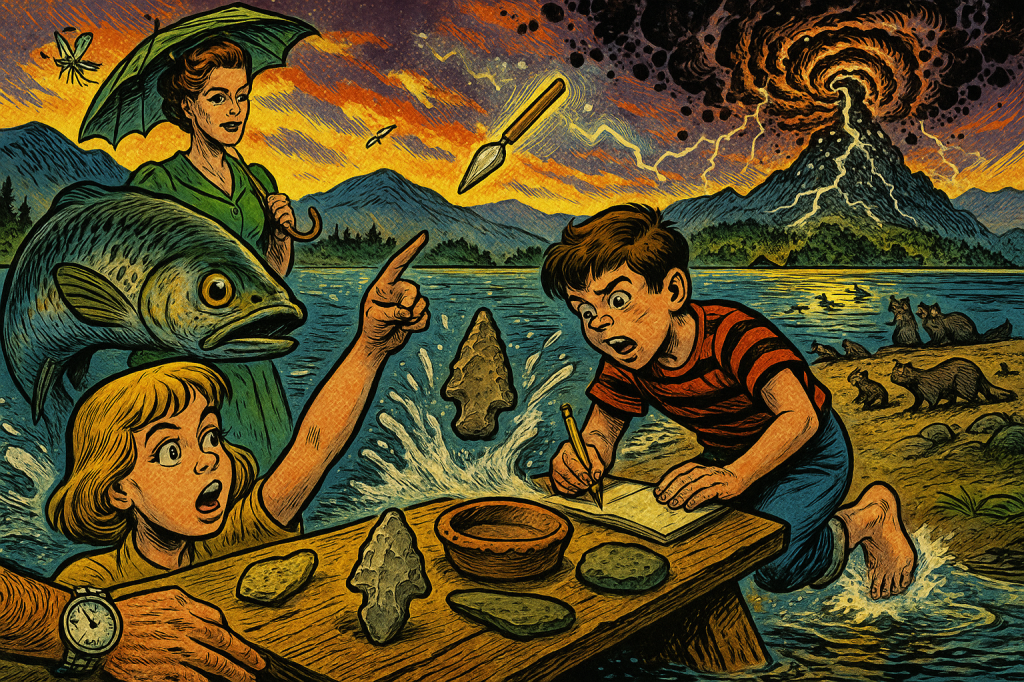
First up from the shallows came a triangle of honest flint—an arrowhead with shoulders like a wrestler and a point that still meant business after a hundred winters. Little Nora held it up between finger and thumb with the expression of a banker discovering interest he didn’t remember earning. “This,” she announced, “is not skipping-stone money.” Correct. This is groceries-and-gravity money from somebody’s summer long ago.
Then Tommy pried up a rim of pottery, scalloped with thumb-press marks clear enough you could shake hands with the maker. Another bit followed it—base of a pot, soot-kissed, curve true as a rule—and a flat, heat-cracked rock that had once been part of a hearth and still smelled faintly of fish and spruce tips if you were polite to it. A scraper turned up—a tidy oval of chert worked along the edge till it felt like a common miracle. Finally, a bone awl: pale, needle-lean, the kind of tool that mends clothes and nets and arguments. Now we were talking. The Sand Bar had opened its drawer of useful things.
“Camps stood here long before resorts,” Mrs. Sprague said from the dignified altitude of her umbrella. “Don’t you dare put any of it in your pockets.” The children nodded like woodpeckers. I—being the local quartermaster of curiosity—produced my brass ruler, my pencil, and my one good promise: “We’ll set everything back where the day left it, exactly so.”

We arranged our discoveries on a dry plank and played the Ancient Kitchen Guessing Game. The awl had stitched a split moccasin while somebody laughed at a joke we wouldn’t get. The scraper had cleared scales from a trout that had opinions. The pot had simmered something that could heal a man who’d rowed too far in a good wind. The arrowhead had flown honest, fed a family, landed soft in sand, and decided to retire with dignity.
Now—because even artifacts enjoy a little theater—we stood the potsherd rim-up and the hearth stone east-facing, the way Mrs. Sprague’s grandmother taught her at Indian Point, and we said “Good morning” like we meant it. The lake approved in its bureaucratic fashion: one small wave put a stamp of foam on each piece as if to say, “Filed.”
“Announce yourself,” said a voice I couldn’t place. It turned out to be my father’s watch, which occasionally talks in other people’s accents. “Johqu Bogart, Jr.,” I announced helpfully to no one visible, “boatman, ledger-keeper, lousy singer, friend of returned cookware.” The arrowhead gleamed a little, which I took for acceptance into the Department of Under-Sand Affairs.
We had ourselves a merry science. Nora used my ruler to take dignified measurements (“One thumb and three freckles across”). Tommy, appointed Brushmaster General, whisked with a spruce tip till the sherds winked like clever eyes. Mrs. Sprague handled the bone awl like a violin bow. I kept notes, which means I drew heroic pictures and pretended they were measurements.
“Whose were they?” Nora asked.
“Summer people,” I said. “The first kind. Families who knew where the fish would be before the fish did. Folks who came by paddle and footpath when the map wore its hair long. They made supper, told stories, left quietly. Same as we try to do, only better.”
“And where’d they go?” Tommy asked.
“That way,” I said, and pointed in two directions at once: along-shore toward the Narrows for the canoes, up the long road toward the Gap for the carriers. “Some names moved with them—names like Owlyout, the creek that breeds the grand trout. Some names stayed in the sand till a thumb found them again.”
We held the arrowhead to the light. It pointed directly at the sandwich in my coat pocket, which proves stone remembers meat. We voted, three to one (Mrs. Sprague abstained on procedural grounds), that arrowheads point chiefly at lunch. Scientific breakthrough duly entered in the ledger.
A loon cruised by at union pace to supervise. Two boarders strolled down to see what the fuss was, and for once I said the magic sentence: “Look with your eyes and your hats on.” They did. The lake granted us ten minutes of perfect silence, which is the maximum allowed by statute before somebody whistles.

Then the comedy began. A whitefish the size of a sermon loitered an arm’s length off the bar and watched us work like a foreman. When Tommy balanced the hearth stone on the plank to sketch the curve, the fish gave one satisfied tail-flick and approved the radius. A small gust tried to make off with the bone awl; Nora addressed the breeze like an aunt who knows you too well (“No you don’t”), and set the tool back with a sigh old as cedar.
We found one more thing before the day turned: a little cache where the sand had slumped just enough to show somebody’s careful thinking. Three flakes of chert snugged under an inverted sherd—a pocket-sized repair kit, buried tidy against bad luck and worse weather. I have seen river men tuck spare oar-pins under thwarts the same way. That recognition felt like a handshake between centuries.
Naturally our town imagination machine came down to the shore in various hats. Young Pete suggested a museum with velvet ropes made of old fishline. Mrs. Sprague suggested a museum consisting of “Put it back.” I recommended a third institution: The Practical University of Kneeling Down. Curriculum: sand, patience, saying thank you out loud. Tuition: free, but the lake keeps your tuition anyway in case you forget to be humble.
We put every piece exactly where it had been, down to the bossiness of each grain of sand. We took rubbings and sketches and a solemn promise from both children that pockets were for pinecones and boat candy only. I borrowed the awl for one minute to show how a seam can become a story and how a good tool chooses its owner by how you set it back.

Just then old Mr. Baptiste paddled along the edge, bow pointing toward the Narrows, pipe busy, hat describing its own weather. He watched us working and raised the pipe in salute. “Found your neighbors, ho ho!” he said.
“Just visiting,” I answered.
He nodded. “Best kind.” He held up something from his thwart—a smooth, drilled stone the size of a plum. “Net sinker,” he said. “Gave it back last year, by golly. They lend well, eh?” Then he paddled on, which is his way of signing a guest book.
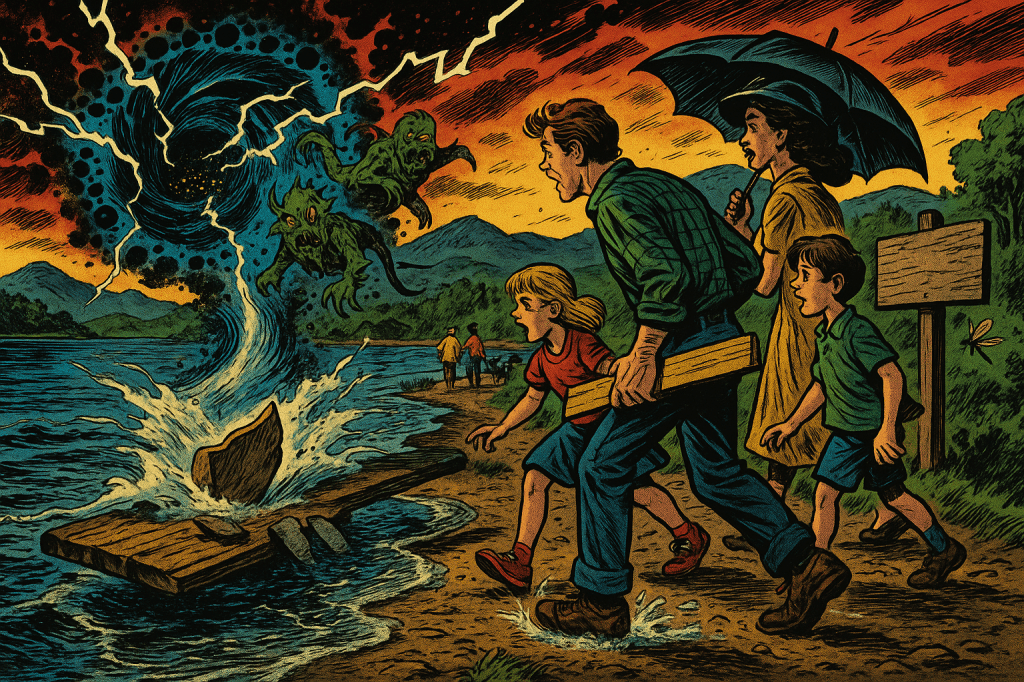
By afternoon the Sand Bar had resumed its day job of looking innocent. Tourists tramped the high side in new boots, dogs argued with foam, a dragonfly stitched the air shut where we’d been kneeling. We packed our plank, our ruler, our jokes. Mrs. Sprague looked taller than when she’d arrived, which occasionally happens to a person who has told the past what time it is.
Before we left, Nora asked if we could name the spot.
“It already has one,” I said. “Sand Bar.”
“But like… a secret name,” she said, whispering in the theater manner that carries beautifully across open water.
“All right,” I said. “How about Borrow & Return?”
She thought, then nodded as if stamping a passport. Tommy approved in crumbs from my sandwich.
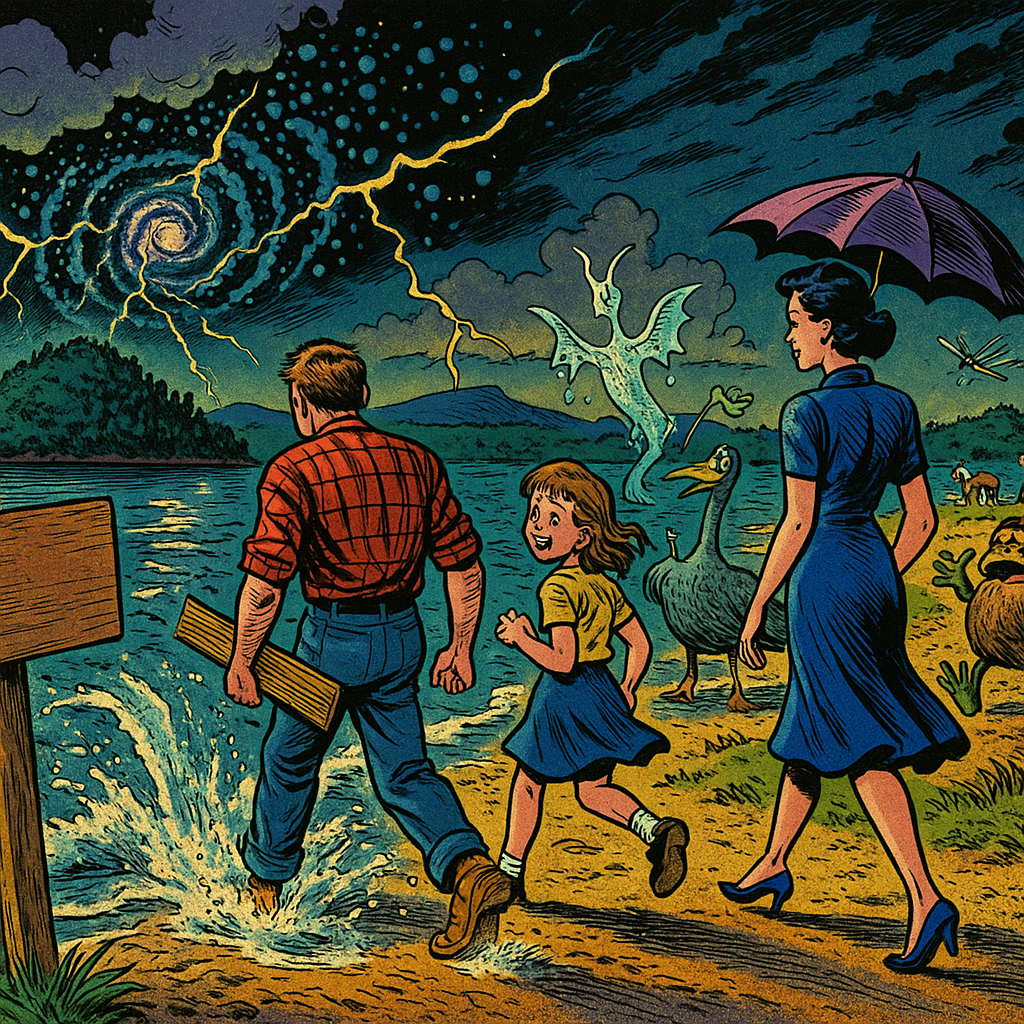
We walked back along the road with the lake smug and sparkling behind us, and I allowed myself one little editorial. Folks like to pretend treasure is gold that glows and complains. But the best treasure is work you can still recognize: an edge you can feel with your thumb, a curve that remembers soup, a needle that says, “Mend this and carry on.” If the Sand Bar loaned us its drawer today, we paid by laughing properly and putting everything back tidier than we found it. That’s the whole bargain.
For the Dispatch, then: The Sand-Bar Summer People are still excellent hosts. They keep their tools under the sand like sensible neighbors, and if you come with a ruler and a good joke, they’ll let you borrow the past for exactly as long as your knees can stand it. After that, return all items to Borrow & Return and thank the clerk on duty—the water—who will nod, stamp your ankles, and wave you along.
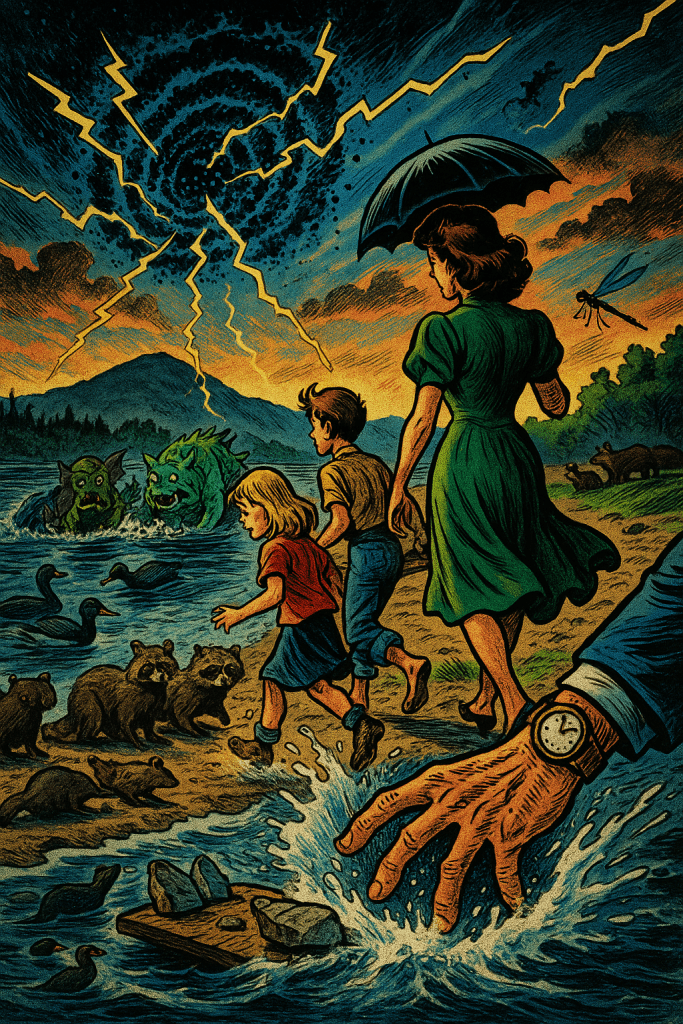

What mysteries of Chateaugay Lake haunt you?