
Content advisory: psychological horror, identity dissolution, time-loop disorientation, and spectral influence. Depictions of obsession, cigarette and alcohol use, and gun violence linked to Evelyn Nesbit and Harry Thaw may disturb sensitive readers today.
The Eternal Dance
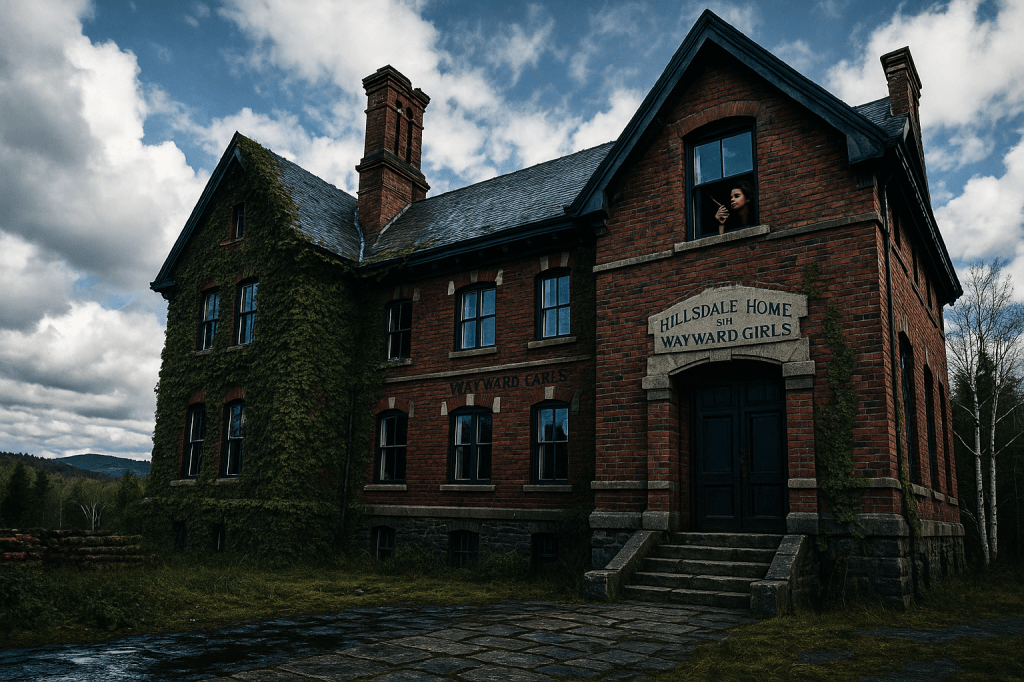
East Bellmont High Knoll Seminary for Correct Deportment and Diminished Enthusiasms, a red-bricked mansion brooding under a leaden sky, choked in ivy. Inside, the clock ticks erratically, skipping beats like a faulty heart. And there’s Zenda Crane, all attitude and hunger, coiled like a wire in her dormitory window, a cigarette dangling from her lips as she looks out at the world she doesn’t belong to. She dreams of escape, of bigger things—her name in lights, the scent of whiskey, the buzz of applause, the smell of sweat in a darkened theater.
The girls at the “Seminary for Wayward Girls” call her a lost cause, but Zenda—she’s got that fire, that flicker of chaos that can’t be tamed. She’s chasing something, some wild idea of freedom, but it isn’t clear what that means yet. She’s obsessed, though, with the play they’re putting on at the theater downtown—something about old stars and scandal. Evelyn Nesbit, the beauty caught between art and madness, a tragic muse. The more Zenda reads about her, the more she feels the pull. Evelyn’s life seeps into hers like ink on paper, staining her thoughts, her dreams.
At night, Zenda sees Evelyn in her dreams, shimmering like an old photograph that never quite fades. The actress’ face hovers just beyond the veil of sleep, a crooked smile, eyes dark as the night sky, filled with secrets. And that voice, the one that whispers, calling Zenda to follow, to become more than she is.
It starts small, doesn’t it always? She practices her lines under her breath, pacing her room like a panther, tracing Evelyn’s steps with every move, every word. Soon, Zenda’s world becomes tangled with Evelyn’s. Her walk changes, her speech. The edges of reality blur as the boundaries between their lives dissolve. Evelyn’s voice echoes louder, guiding her deeper, pulling her into the role, into the life she can’t resist.
By day, Zenda schemes her way into auditions, sneaking off from the East Bellmont Prison, her head filled with dreams of the spotlight, but by night? That’s when things get strange.
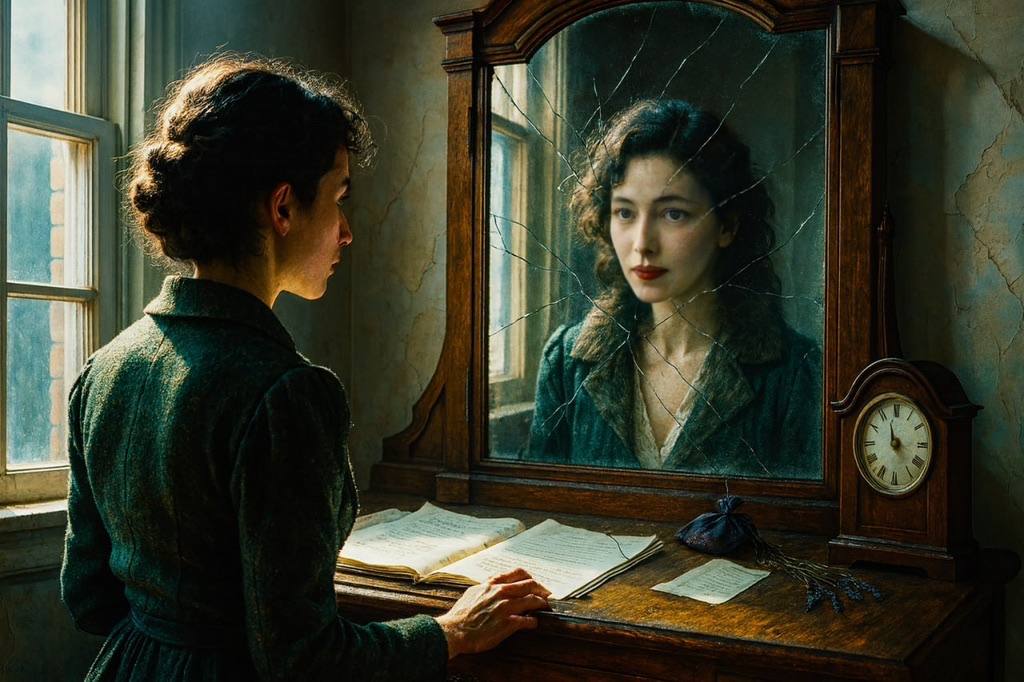
The air grows thick with the scent of lavender and gunpowder. The mirror in her room begins to tremble, the reflection looking back at her isn’t her own—it’s Evelyn’s face, twisted, pleading, as if trapped behind the glass. And Zenda, she just laughs it off, at first. Just nerves, she thinks. Too much late-night reading, too much method acting. But deep down, something stirs.

She starts sneaking out to the lumberjack camps, drinking with the French-Canadian boys, dancing by firelight, a chaos of bodies, laughter, and liquor. Her wildness takes over, the need to feel the world spin, to lose herself. She can hear Evelyn’s laugh on the wind, feel the sharp sting of her smile in the shadows. She’s falling into Evelyn’s world, deeper and deeper, but that doesn’t scare her.
What does scare her is how real it all feels—the voices in the forest, the flickers of 1906 New York that bleed into the present. She sees flashes of an old life, a past life, Evelyn’s life, her fame, her fall, her tragedy. Zenda feels it all in her bones, a heavy weight she can’t shake.
Her obsession with the role consumes her. It’s no longer about acting. She is Evelyn, living it, breathing it. The line between performance and reality vanishes. She speaks in Evelyn’s voice without thinking. At night, when the girls at East Bellmont are asleep, Zenda stares into the mirror, watching Evelyn dance. Her movements are sharp, frenetic, like she’s trying to claw her way back into the world.

Zenda’s mind begins to unravel, her grip on herself loosening. She’s having dreams she can’t wake up from—dreams of velvet curtains, stage lights blinding, and then the gunshot. Harry Thaw’s face, sharp and deranged, staring at her from the audience, as if he’s waiting for her to fall. She wakes up gasping, the sound of applause ringing in her ears, her heart racing, skin cold and drenched in sweat.
The days pass in a blur of rehearsals and parties in the woods. Zenda can’t tell where her life ends and Evelyn’s begins. She’s not sure she even cares anymore.
She’s becoming Evelyn Nesbit, fully and completely, and it terrifies her. But at the same time, it feels right. Like this is what she was always meant to do, always meant to become.
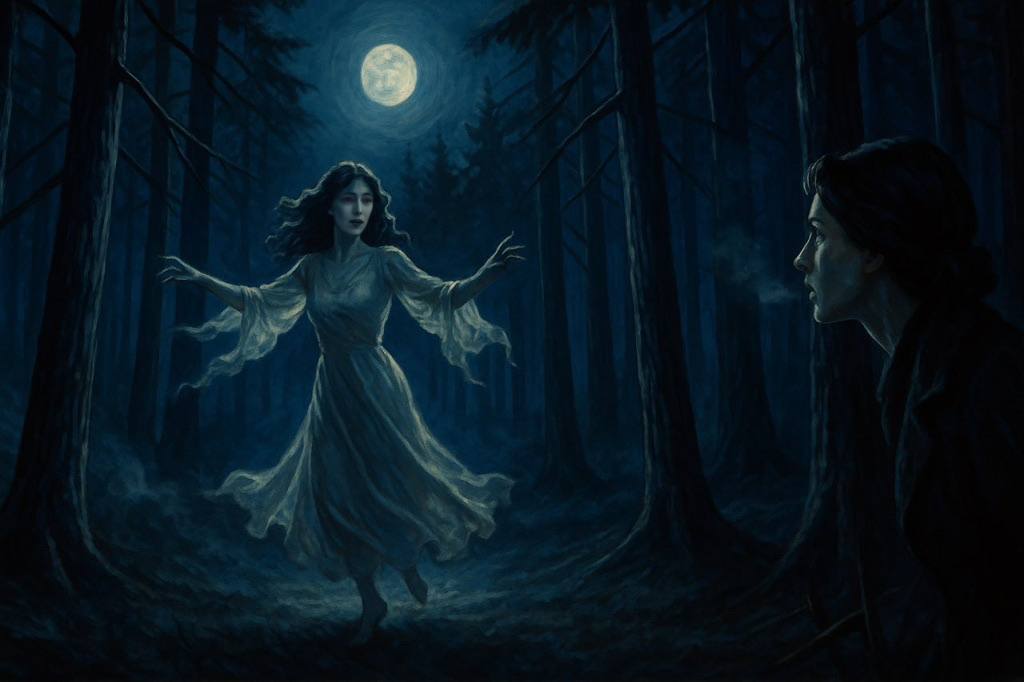
One night, deep in the forest near the lumberjack camp, Zenda sneaks away from the firelight, the sound of laughter fading into the trees. The moon hangs low, watching. The air feels different here—thicker, darker. And then she hears it: a song, faint and distant, but growing louder. The song of a time long past, the song of Evelyn’s downfall.
It pulls her in, deeper into the woods, past the point where she should have turned back. And then she sees it—the ghost of Evelyn Nesbit Thaw, pale and flickering, dancing under the moonlight. Her movements are sharp, desperate, as if she’s trying to break free of something. Zenda’s heart pounds in her chest as she steps closer.
“You’ve come,” Evelyn says, her voice soft but echoing through the trees like a bell. “I’ve been waiting for you.”
Zenda can’t speak, her throat tight, fear and excitement swirling inside her. She’s standing face to face with a legend, a ghost, and all she can do is stare.
“We’re bound, you and I,” Evelyn whispers, her eyes dark, hollow. “You’ve taken my story, and now it’s yours. But you won’t escape it. Not without a price.”

Suddenly, the forest shifts, reality warping around her. The ground beneath her feet feels unsteady, the trees stretch impossibly tall, their branches curling like claws. Zenda stumbles back, her head spinning, her mind unraveling. She’s caught in the space between worlds now, between Evelyn’s life and her own. She’s trapped in the Eternal Dance, the one Evelyn could never escape from, and now neither can she.
The voice of the Chronophage whispers through the trees, its presence felt but never seen, a constant gnawing on the edge of reality, devouring time, devouring life.
“You’ll relive it,” Evelyn says, her smile twisted and sad. “Over and over. The same mistakes, the same fall. Until you learn. Until you understand.”
Zenda feels her world collapsing around her, her life folding into Evelyn’s, the years bending and twisting in on themselves. She is no longer just Zenda Crane—she is every version of herself that has ever been, every version that has ever lived and died in the shadow of Evelyn Nesbit.
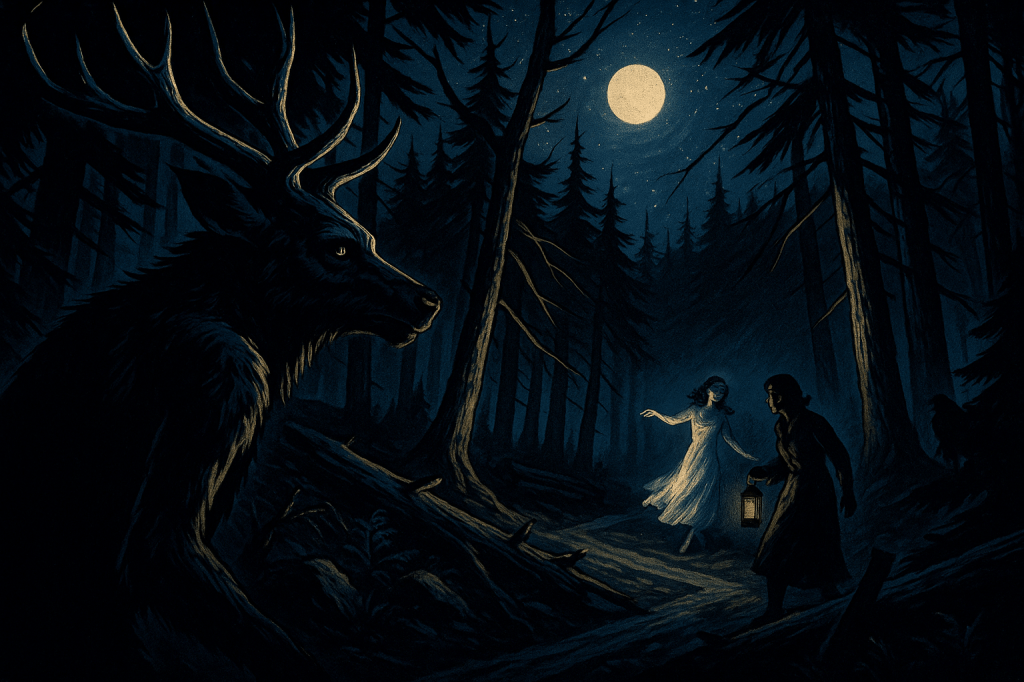
The Wendigo watches from the shadows, its antlers scraping the sky, its eyes glinting in the darkness. It feeds on the chaos, on the madness. It feeds on the Chronophage’s hunger, the endless loop of time and tragedy that Zenda now finds herself trapped in.
But Zenda doesn’t give in. Not yet. She feels the fire still burning inside her, the defiant spark that refuses to be extinguished. She is not just a pawn in someone else’s story—she is more than that.
The Eternal Dance is not her end.
It is her beginning.

What mysteries of Chateaugay Lake haunt you?