Advisory: the following contains unflattering comparisons of modern theorists to pantless catamount hunters and echo-befuddled trousers-losers; proceed only if your faith in progress remains unshaken by local liars.
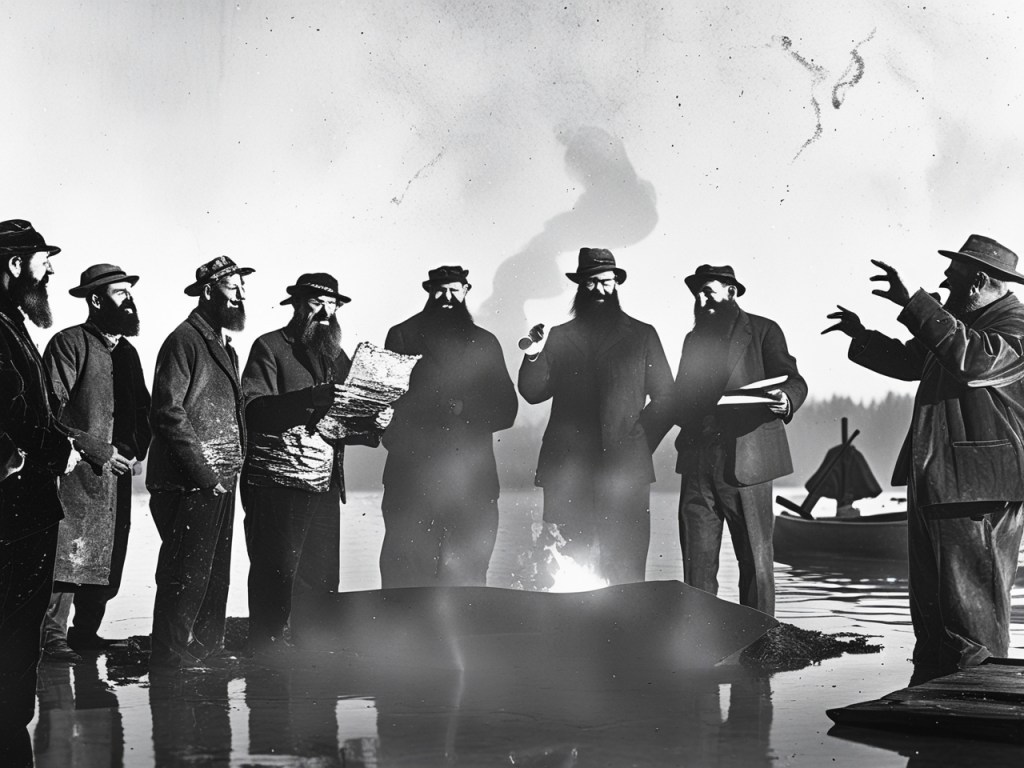
THE SANDBAR PHILOSOPHER EXPLAINED—WHY UPPER CHATEAUGAY NEVER HOUSED A COLONY OF RUNAWAY REFLECTIONS
SHATAGEE WOODS MUSEUM OF UNNATURAL HYSTERIA,
UPPER CHATEAUGAY LAKE, N.Y., 20 MARCH 1926.
Dear EDITOR:
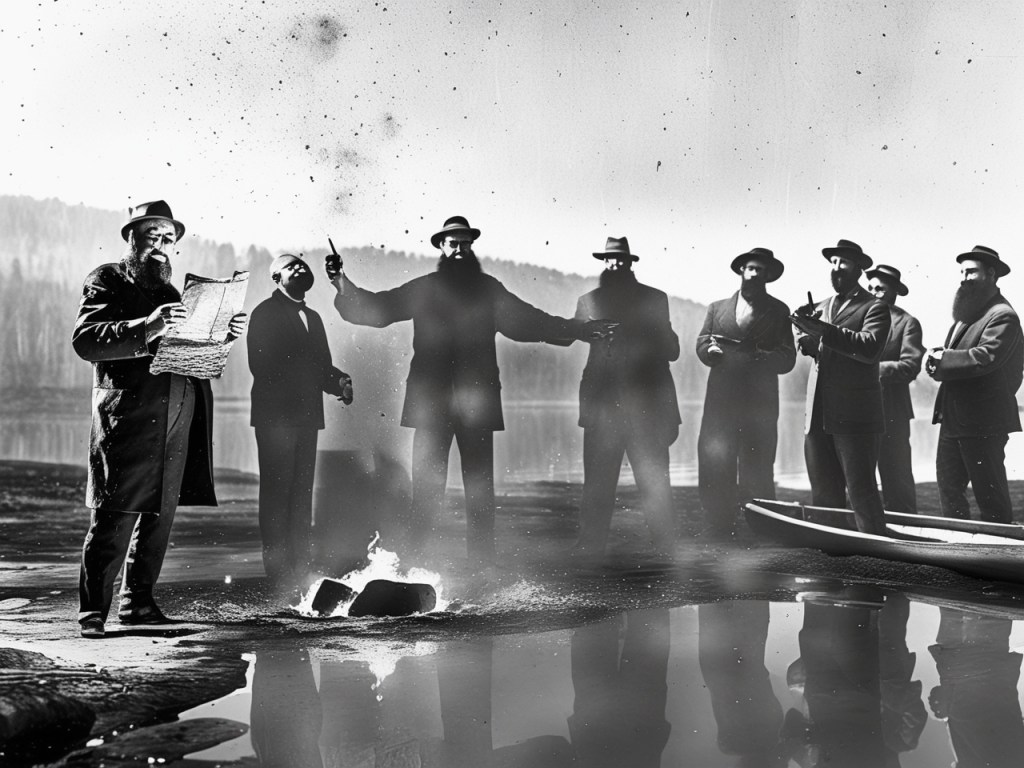
I received your recent article on the supposed 1838 settler village on our Sandbar—with its independent reflections, dimensional disorders, and other odd furnishings—in the same spirit one accepts a neighbor’s pie: gratefully, yet quietly curious what went in after dark.
I don’t dispute the Sandbar’s age or the upper lake’s talent for strange sights. The region long recalls Indian summer camps there; pottery and arrowheads turn up; one account notes parties fishing seasonally, another preserves the tale of a Delaware man’s grandfather camping nearby after the War of 1812 and naming the brook Owlyout, “Great Trout Breeder.” Yet the same history stresses no trace of buildings or fireplaces to prove a village—only temporary camps and plenty of later talk. Meanwhile, Chateaugay town traces to 1796 settlement, and county histories freely name pioneers elsewhere. They offer no record of a mirror-obsessed republic on that beach in 1838 (or 1832, depending on the jug or memory of Capt. E.E. Thomas).
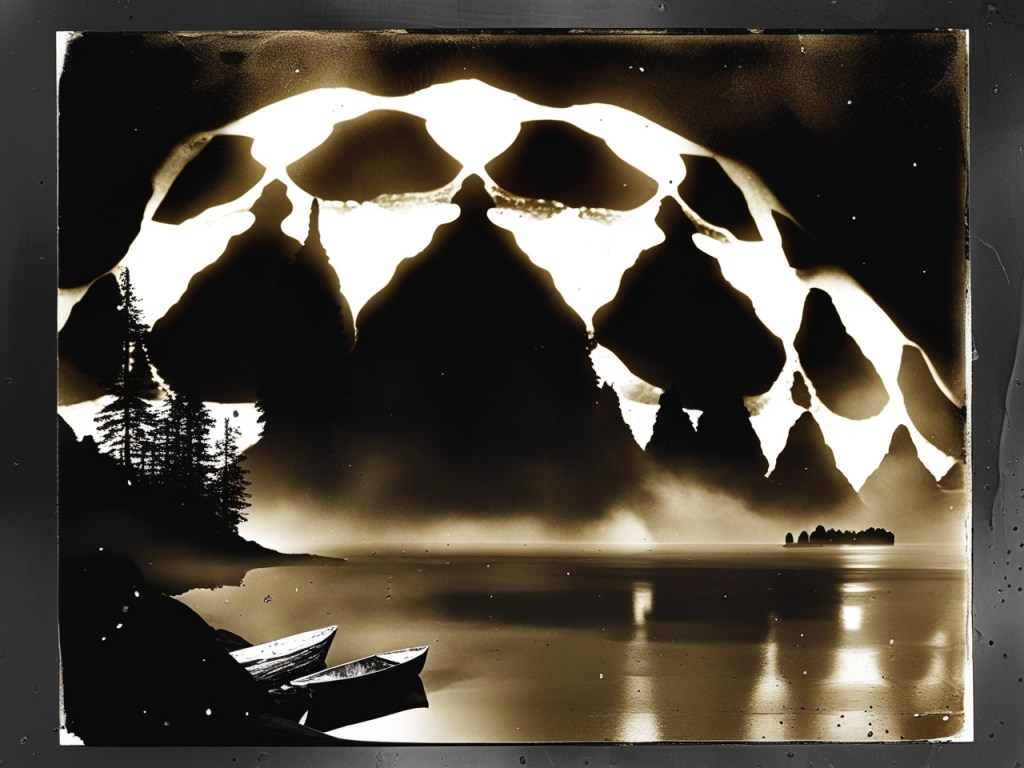
If every upside-down image in still water spawns a spectral town, this lake has been over-governed for decades. A Merrill kin recalls fine inverted scenery and ducks hanging above Moffitt Isle; any October calm-crosser knows mountains flip as readily as a politician post-election. But optical tricks lie far from a township of existential sufferers. The article claims settlers grew so fond of their reflections they nearly forgot their souls—while older lake lore, rheumaticky as it may be, turns such tales practical: fog, mirage, loneliness, or a distant woodsman misheard. That strikes me as sounder North Country wisdom than this fresh load of cosmic accounting.
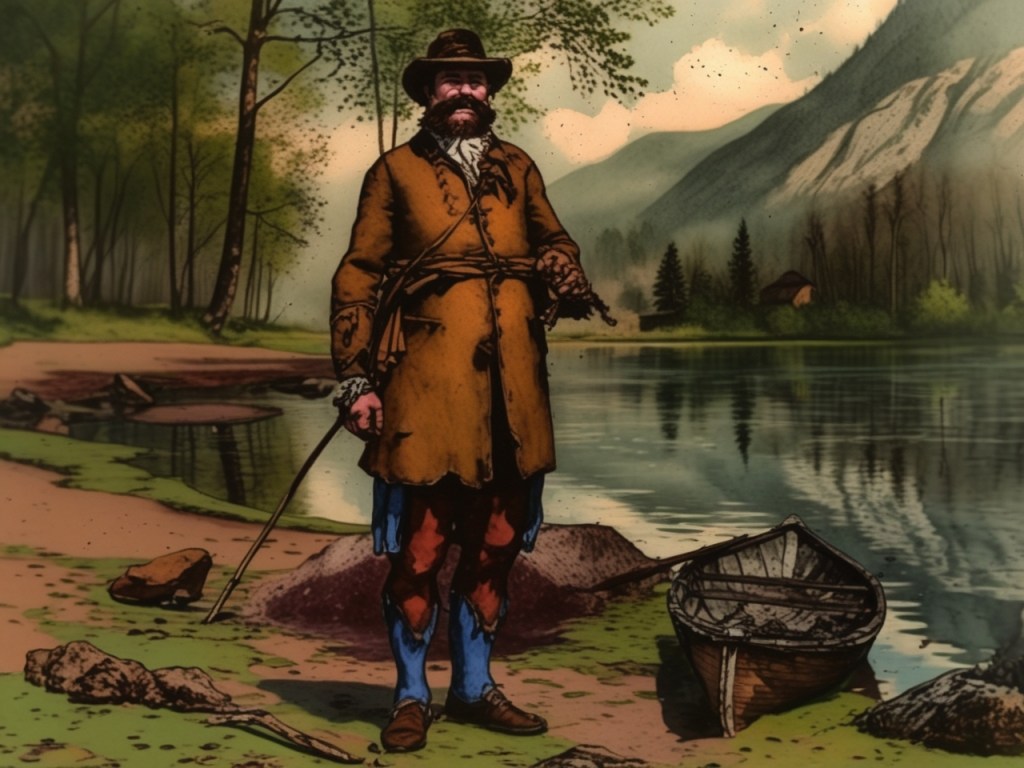
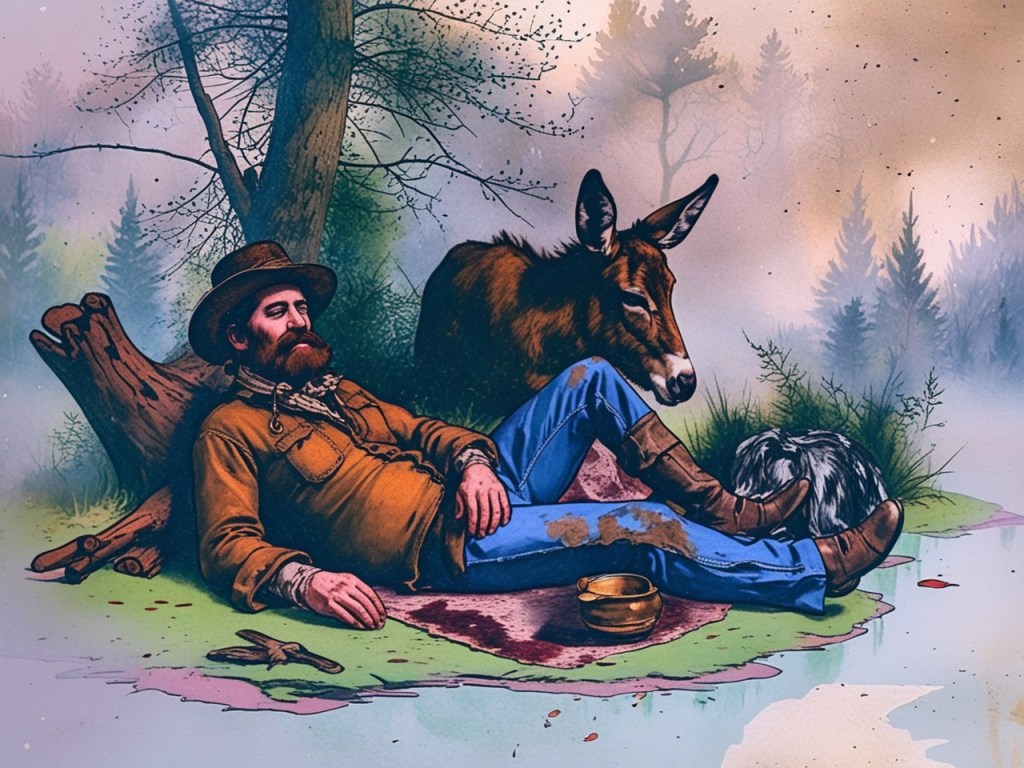
Here old Sangamo ambles in, donkey leading, to save us from folly. Moses St. Germain—Sangemo, Sangamo, or whatever form the name took after three taverns and two accents—was a real woods figure tied to Chazy Lake and the carries, not chairman of any Society for Distressed Reflections. Hammond describes a frightful forest racket that could prime a rifle and sober a bold man—only to reveal old Sangamo asleep beside a deer while his donkey delivered the Judgment. That’s truer sandbar philosophy: not dimensions, but mishearing; not duplicate selves, but one ragged beast braying for six denominations and a school board. If any apparition ruled that upper beach, it was likelier Sangamo’s donkey than a settlement of watery self-critics.
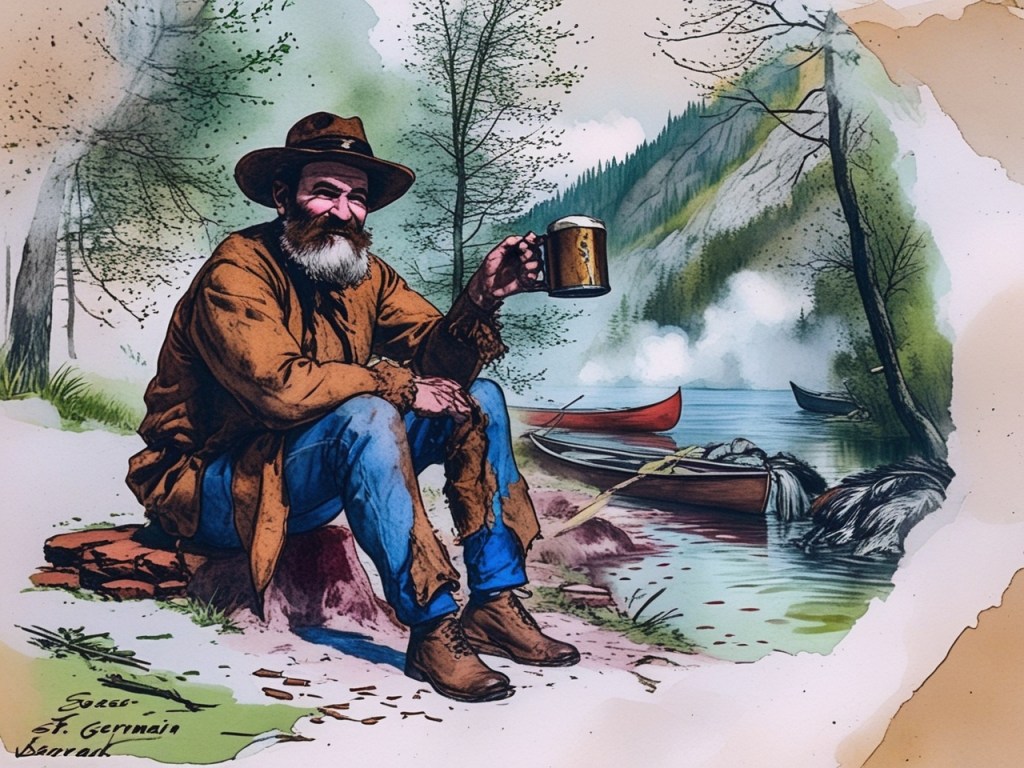
Nor was the man mere jest fodder. Recollections place St. Germain among Chazy Lake’s early characters: sons hauling boats and gear on the Big Clear Pond carry; homemade “pop-beer” tourists drank bravely; mastery of johnny-cake, trout, venison, onions, coffee, and pancakes that made camp life feel providential. One notice sets Meader’s hotel on the old St. Germain site; another hails him as veteran fisherman and respected citizen; another has him chasing a panther near Chazy Lake with son, companions, and dogs. That makes a finer “sandbar philosopher” than the article’s fellow peering into water until his face quits and another takes over. Our woods produced guides, carries, camps, trout, and stories aplenty—no need to import a boarding-house of stray reflections for seasonal color.
So let the Sandbar hold its true distinctions: old camps, whitefish memory, Indian pottery, creek name, and power to nudge imaginative folks past caution. These suffice. But don’t embellish beyond recognition. A temporary Indian camp isn’t a metaphysical suburb; a lake mirroring mountains keeps no ledger of human identity. I’ll allow one philosopher on the Sandbar—if it’s old Sangamo, dozing in the flies while his donkey handles public discourse. That’s history our corner can swallow. The other piece, clever and lively though it be, feels composed from a phantom Lyon Mountain catamount stand—where a man might lose his trousers, hear his echo twice, and return claiming a civilization.
With best wishes from all the local liars and experts,— BELZORAM.
P.S. Reading of independent reflections reminded me of city gentlemen who once came north to confirm Owlyout’s old name. That was sensible. Had they stayed another day, some modern theorist might have convinced them the brook bred not trout, but parallel selves. We’re progressing too fast.
#NorthCountryFolklore #AdirondackMythBusting #MirageAndReflectionLore #FrontierTallTales #OpticalIllusionHistory #LocalSkepticism #SandbarPhilosophy #ShatageeWoodsHysteria #SangamoDonkeyLegend #UpperChateaugayEchoes

What mysteries of Chateaugay Lake haunt you?