
Borderland Advisory on Lost Hides
Farmers and woodsmen: should a hide or bundle turn up in fence-row or pasture, deliver it without delay. Concealment may be deemed complicity, and the court will not look lightly upon it.

A Steamboat Dispatch from East Bellmont
Illicit Traffic Alleged on the Border—Evidence Mislaid, or Vanished.
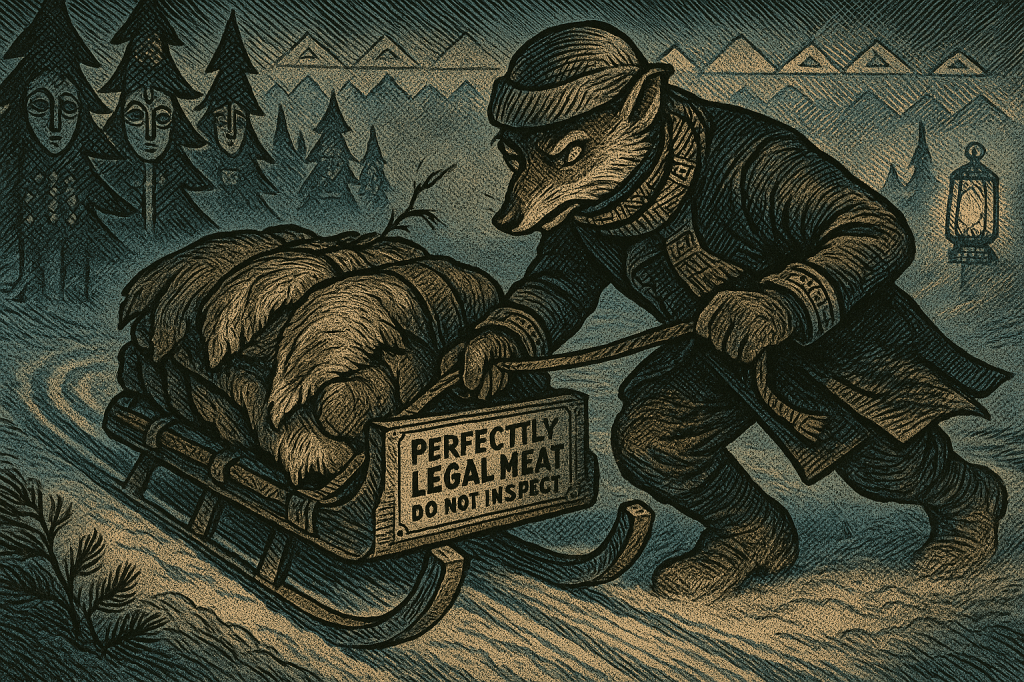
On the morning of the 14th instant, before sun-up and while the crust still bore a man’s weight, sled-tracks were observed leaving the cabin of one Sangamore on the Chazy Lake road, the runners keeping to the fir ridge and trending not, as would be ordinary, toward the village of Chateaugay, but northerly in a direct bearing for the Line; the load, as several witnesses state it, was covered with deer hides fit to the season, and would have passed for lawful produce but that upon striking a frozen rut one bundle slipped aside and revealed beneath, as brick-tight rolls, a quantity of tobacco of a sort not commonly pressed here nor bought at the store. The team did not halt. The driver mended the lashings and maintained his pace through the hemlock shade, where the frost-smoke hangs and a man at twenty rods is but a motion.
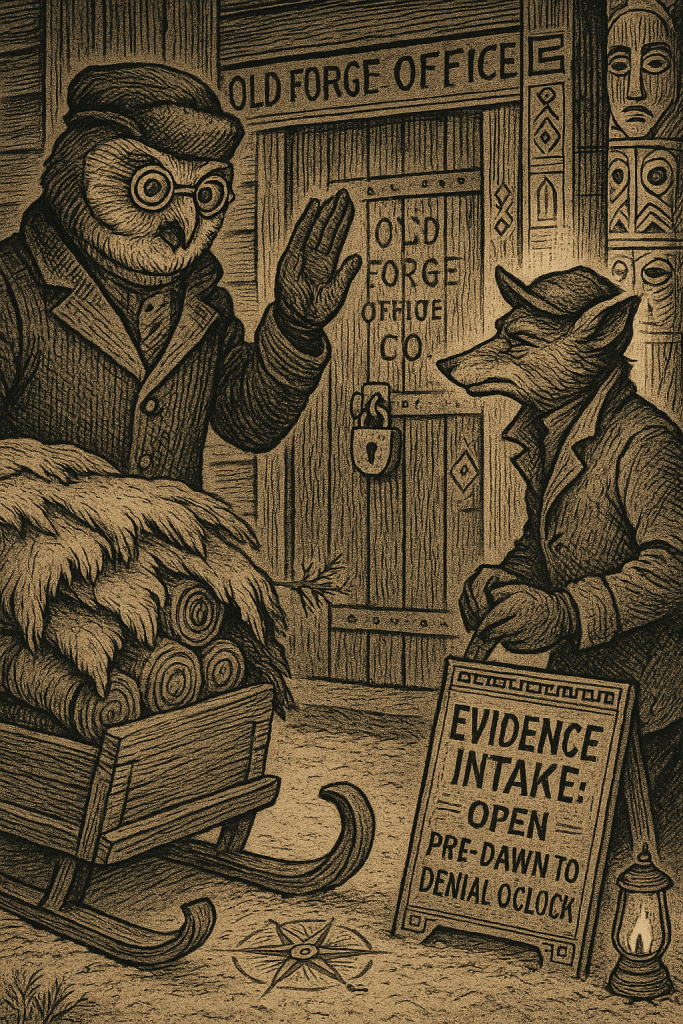
In consequence of these representations an examination was had, and the sled, overtaken near the cedar swale below the ridge, was brought in by the constable. The hides were at once removed, counted, and set within the shed adjoining the old Forge office, there to abide till a magistrate might see them; the bolt was turned, the lamp trimmed, and a watch posted who, by his oath, kept the rounds at the even hours. In the morning that followed there were no hides, nor so much as a hair between the threshold and the inner wall. The hasp showed no fracture; the staple, no wrench; the padlock, no new mark. What remained was the odor of leaf, strong, and a dusting of spruce needles finer than chaff upon the floor.
The accused, on the contrary, claims that the tobacco—if any such there was—could only have been laid by mischief when the sled was seized; that a bystander handled the load unbidden; that he trades in skins, not leaf; and that no man saw him cross to Canada. Certain of the witnesses answer that they observed the bricks before the seizure and can tell rolled leaf from venison by the shape and weight; others admit they saw only the outer hides but affirm the track itself points to the Line, not to any lawful purchaser at village or mill. The constable allows that when he first took the sled the bundles lay true, yet upon later inspection one lashing sat differently than before; whether this be proof of a planting or merely the fussing of idle hands he cannot say.
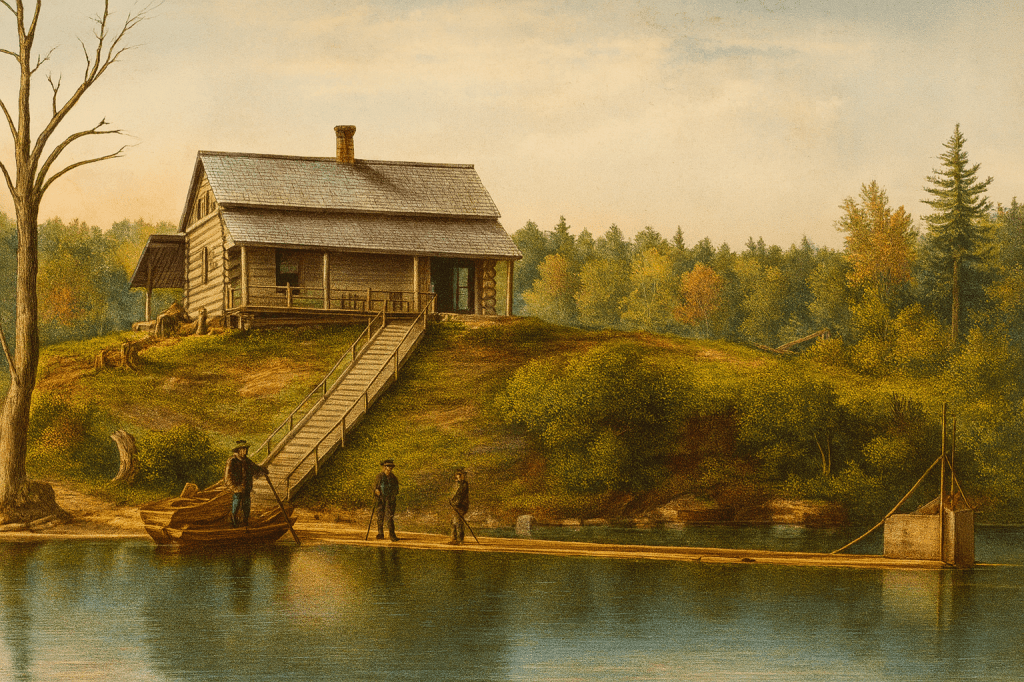
It bears noting, to complete the file, that the place which now serves as evidence-shed was, in the day of the Company, used as store-house and tally room. Ore came by barge from Lyon Mountain, the waters being lifted by the outlet dam; charcoal, bloom, bar, provisions, and tools all passed under that door’s shadow and many a wagon stood where these contested hides were laid. The ledgers of those years tell a history of loads that left by river, by plank, and by the Narrows; some paid in coin, some in kind, some in promises never redeemed. If the present affair seems strange, the site itself has long been a register of traffics beyond the memory of the newest settler and short of the exactness loved by clerks.
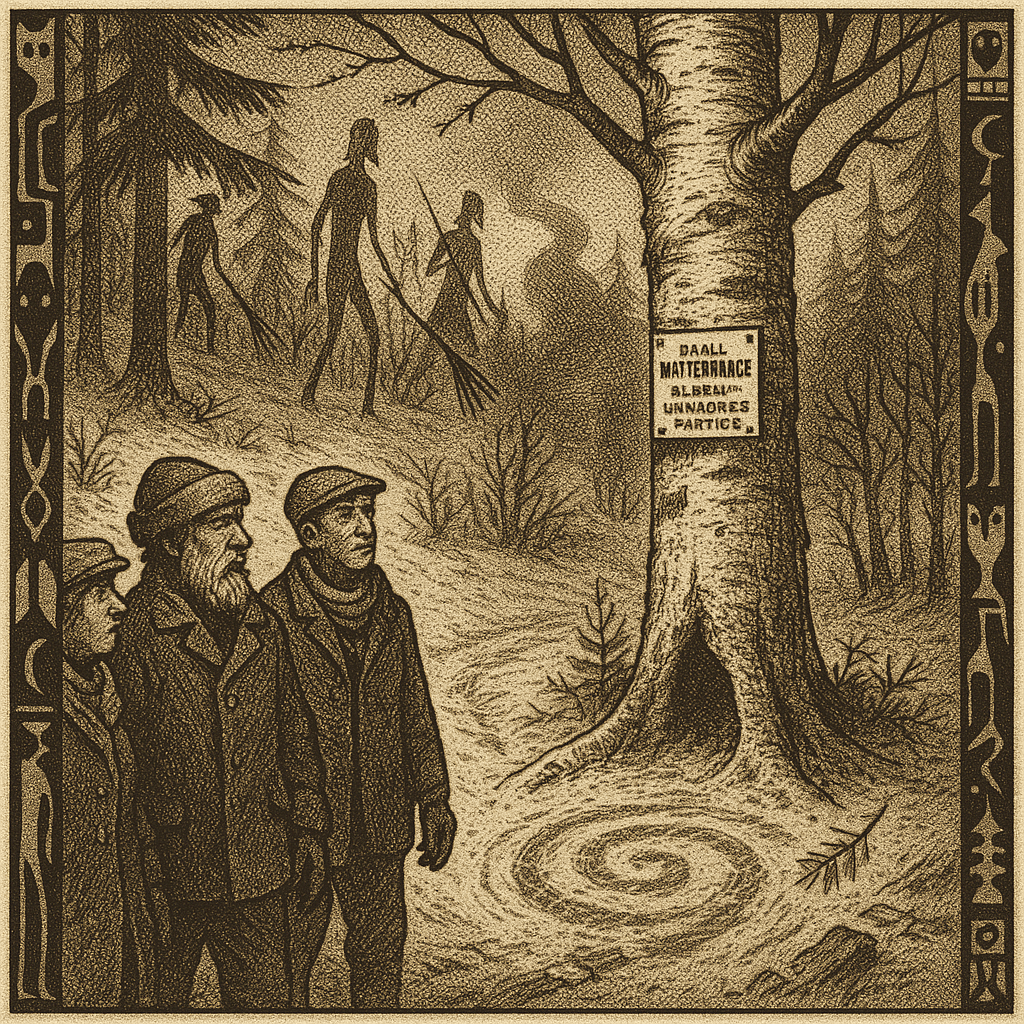
Old residents recall, moreover, a circumstance concerning the same Sangamore upon the Lyon Mountain side: that he once discovered a cavern emitting smoke, marked his route by broken brush, and even (so the account runs) hung an article of clothing in the top of a yellow birch to fix the spot; that he returned with neighbors on the morrow; and that every sign had been rubbed out as if the woods themselves had been combed backward in the night. Some say those erasures were the work of Indians who, having their own source of lead in the hills, would not permit a stranger’s foot to carry the secret; others say the marks were never secure, the distance misjudged, and the birch not the same. This recollection is here entered not as proof of the present charge but to show the neighborhood is no stranger to trails that cannot be recovered once lost.
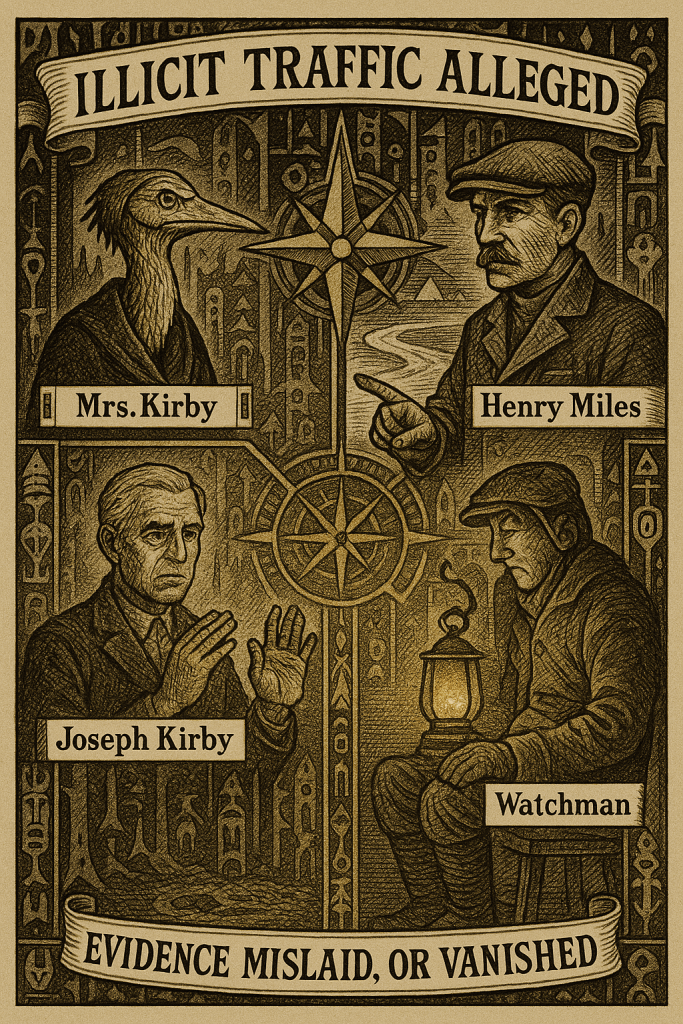
Testimony was taken as follows. Henry Miles states he saw the sled pass the lower bend “an hour before daylight proper,” and that the runner-cut, where it crossed his own foot-path, “ran clean and narrow like a team bound for distance, not a short-haul neighbor turn.” Mrs. Kirby avers she “heard the bells and the low call of a man to his beast near the cedar swale,” at which time a bundle slipped and a second man—unknown to her—“stepped from the firs and put his hands to the lashings.” She can say nothing to that man’s name and will not swear he was in league with the driver. Joseph Kirby, examined apart, maintains he saw rounded shapes “like loaves” beneath the hides when the bundle went askew; he will not guess the weight. The accused denies any second hand upon his load and says, further, that he turned east “to avoid drift” and not toward any boundary.
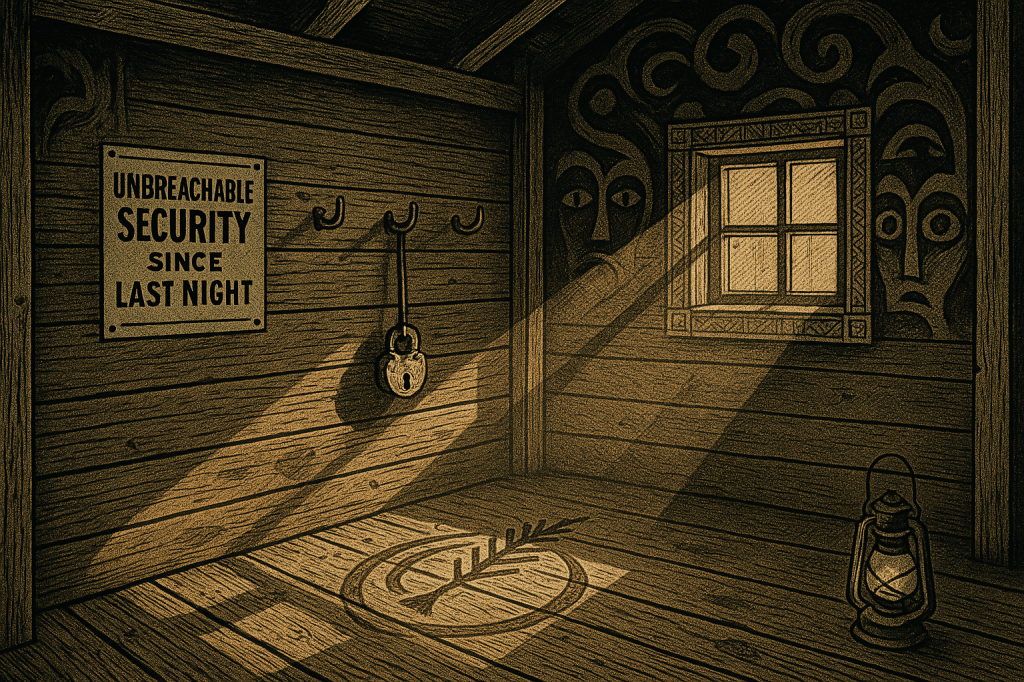
The constable deposes that the shed was locked, the key in his pocket, and the watchman—one of the mill hands now idle—kept the appointed hours; that no break could be found; that the window-bars, though old, stand firm; and that his own lantern, trimming-wick set low to save oil, showed no mark upon the floor but spruce dust “thin as meal.” The watchman, an honest fellow of few words, admits he slept “near an hour and a half” in the small hours and therefore cannot account for every minute; he is ashamed of it and says no more.
There has been talk of the Line—its closeness, its temptations—and whether certain men, being used to winter roads, take a portion of their profit in leaf and powder both. This paper prefers to speak to the record and not to wind-borne rumor. It is true there are by-ways from Chazy Lake to the north that cross country light and carry a sled faster than the long way to village. It is true, also, that in former years the company tug did haul freight of many kinds along the lakes, and that such traffic trained men to move goods by night and mist without prattle. From these truths a conclusion may be drawn in either direction; the law will draw its own.
As to personal character, the affidavits conflict, as they often do when a man has lived long in the woods and dealt in both hospitality and haste. One neighbor calls Sangamore a guide and cook of merit, “handy to set a bone and brew a tonic for winter fevers.” Another asserts he “lives above the law in small things and will test it in great ones if a profit stands beyond.” These statements are entered with the caution proper to character-witnesses whose memory may be sharpened by friendship or dulled by old grudges.
The legal posture is thus: the sled and team are held; the driver has given his surety; the hides, being gone, cannot be produced at this time; the room has been sealed and a deputy will sit the night within; the Sheriff has the matter under advisement; and the magistrate has fixed a date for further examination. If additional testimony arises—from the border patrol, from any buyer, or from some farmer who finds a bundle in his fence-row—the court will receive it. Until then we must content ourselves with what is sworn.
It may be useful, for the quieting of nerves, to recall that disorder of this kind is not new; that in former affrays the machinery of law, once engaged, has performed as designed; that surgeons have done their part when called; that juries have made their recommendations; and that the temper of our district, though quick to talk, is sound at its core. Whether this be a smuggling of ordinary type, done from poverty and in the pinch of winter, or some larger cunning which leaves fewer footprints than a fox upon crust, is not ours to decide upon the first day. The evidence will ripen—or it will not—and the Grand Jury will take it up in due course.
For the present, the public is advised to avoid the old shed and the yard adjoining while the seal is laid and the deputy within; and any person, finding in field, fence, or barn a hide or bundle answering to the above description, should deliver the same to the constable without delay.
OLD SETTLER.

What mysteries of Chateaugay Lake haunt you?