
Popeville, Chateaugay Lake, N.Y. Thursday, March 12, 1887
Not every day does a man hear music without a visible player—no bow drawn across horsehair, no fingers on strings, no neighbor to claim the tune. Yet such an uncanny event recently crossed my path, and because it has sparked lively debate at every stove corner and store stoop, I set it down plainly here. Readers may judge for themselves whether it was merely wind teasing the timber or something the old woods keep hidden until they choose to unsettle our senses—perhaps the faint echo of the Jo-ga-oh, those invisible Little People of Iroquois lore, the forest guardians who dwell unseen among pines and rocks, watching over the natural order and occasionally playing tricks on those who trespass too boldly.
A handful of us had climbed the high ridge overlooking Drew’s Clearing, where black spruces stand sentinel amid broken clearings. The March air bit with clean, dry, metallic sharpness, carried on a north wind that sliced through wool to find skin beneath. Above, the sky held the pale, steely glare of late winter, polishing the last snow crusts to blinding sheen and promising bare ground soon. We sought nothing grander than the long view, a lungful of cold oxygen, and a check on how winter had weathered the cuttings—whether drifts had settled evenly for the sled teams soon to haul.
The ridge lay hushed except for the fine hiss of wind through balsam needles and the slow, arthritic creak of trunks rubbing like unoiled gates. Mid-afternoon had arrived, that hour when daylight feels finite in the hand and a man instinctively tallies the hours left before dusk. Then it came: three pure, piercing notes—not quite a whistle, yet so cleanly shaped they might have been lifted and set afloat by deliberate breath. They drifted along the ridge crest, circling, never quite alighting—like hawks quartering the sky or the opening strain of some ancient melody the Jo-ga-oh might hum to remind intruders of the woods’ hidden laws.
What arrested us was not the sound itself—axes ring distantly, teamsters shout, boys halloo across frozen bays—but the silence that followed the third note: a deliberate, muscular pause, as though the next phrase had been composed, rehearsed, and then cruelly withheld. In that stretched void the air thickened with an unsettling scent—sharp pine resin laced with something dank and ferrous, like blood freshly spilled on frozen moss—while a bitter, metallic tang coated the tongue as if we had bitten cold iron filings. Eyes played tricks in the waiting: branches that stood straight moments before now seemed to bend inward, forming gaunt silhouettes of small, shadowy figures—perhaps the Ga-hon-ga, stone-throwers of streams and ridges, or the dwarf-like Jo-ga-oh themselves, punishing the boastful. Shadows flickered at vision’s edge like half-glimpsed little people darting behind trunks, mind-born phantoms the forest refused to confirm.
I have seen trout fishermen grow fidgety at every ignored rise and a posted hunter go wire-tight at the snap of a twig, but never before had mere absence—of sound—seized a group so completely. We froze, wordless. No one laughed it away. Each man listened as if his own name had been spoken and then half-recalled. The sensation began in the chest—a slow, involuntary clench—climbed to the throat, then spread until the whole body tilted forward on locked knees, straining toward nothing visible. One boy lifted a gloved hand as though to quiet an orchestra only he could hear; an older companion later confessed the hairs on his nape had risen and seemed to whisper among themselves.
We muttered, each reluctant to voice bewilderment first. “Fiddle,” one offered. “Not within a mile,” another answered; the clearing below lay open, smoke-free, trackless on the crusted snow. City sportsmen with gadgets were suggested, but no boot prints marred the trail. I looked to Morris, who has tramped these woods to the border and is seldom rattled. He cocked his head, listened, then said low, “It’s a tune that knows exactly where it’s bound but refuses to hurry—same as the old stories of the Jo-ga-oh, who play their airs to warn or welcome, depending on a man’s heart.”
The fourth note struck then—bright as struck flint, decisive as ice parting over black water. Not loud, yet it scoured the air clean. Breath rushed out of us in a collective sigh we had not known we held. A swift electric shiver raced my spine to scalp—vivid, almost pleasurable—and the boys, rigid as fence pickets moments before, suddenly shifted and laughed unevenly, sheepish at having been so utterly mastered by four small sounds and their cunning silences.
Had it ended there, wind among branches might have sufficed for explanation—a taut wire humming, a hollow stump sounding true. But the pattern returned: three notes, the teasing gap, then the fourth like a key turning in a lock—twice more—each pause coiling nerves tighter, each time the air growing heavier with that ferrous, mossy reek and the tongue thickening with cold iron bitterness, while the forest conspired in visual deceit: spruces leaning closer, limbs twisting into beckoning arms; fleeting glimpses of small, coatless strangers half-hidden in underbrush, vanishing when eyes focused; every windfall a crouching shape, every shadow one of the Jo-ga-oh’s watchful kin.
We hunted the source in earnest—two descending the south flank, two holding the crest—stepping softly, halting often, ears straining like men trailing a moose by faint crackle of deadfall. The notes mocked direction: closer when we retreated, fainter when we closed in. A cluster of young pines sighed thinly as wind passed through; for a moment we almost believed them guilty—but their moan lacked the crisp articulation of the three notes and the bone-deep satisfaction of the fourth.
At the ridge’s southern break, where land falls toward darker swale beyond the clearing, the sun hung low; long indigo shadows pooled; the north wind scoured the point with relentless fingers. We were turning to descend when, from the timber just above and behind, the three notes sounded once more—steady, reed-clear—and the pause stretched longer than ever, thick enough to lean against. The olfactory assault sharpened: cloying wet decay beneath the metallic bite, as if the ridge itself exhaled grave-damp breath; the gustatory sting turned acrid, coating the throat like swallowed pine pitch. Visual phantoms surged—trees rearranging into a silent audience of twisted watchers, small pale faces flickering between trunks before the mind could pin them.
Then the fourth note fell: luminous, conclusive, releasing that same quick, galvanic shiver across every man present, as though an invisible mainspring had been cranked to breaking and finally let snap. Illusions shattered; the air cleared.
“No fiddler stands among those pines,” Morris murmured, his voice carrying something closer to reverence than amusement. We combed the ground for wire, snare, or mechanical trick—only the ridge’s usual leavings: snow-dusted boughs, old windfalls, scattered cones, delicate hare tracks. The air hung empty, pristine. Having delivered its message, the music did not speak again while we remained.
Descending through gathering dusk, the clearing below taking on its familiar blue-gray March twilight glow, talk flowed freely. One blamed wind alone; another proposed a far-off horn whose other notes we never heard; a boy admitted, quite seriously, that he had never felt his heart beat so nakedly as during those taut silences, nor known such pure relief when the fourth note arrived—like slipping free of tight ropes.
I offer no final verdict. I report only what entered our ears and what it did inside our bodies. The experience re-taught me how fiercely a brief, repeated pattern—and the cunning interruption of that pattern—can grip a man more powerfully than any shout or spectacle, and how the mind, under strain, reaches for the old tales of the Jo-ga-oh when the woods whisper warnings beyond ordinary explanation.
Should any reader have encountered a similar phenomenon on the ridge above Drew’s Clearing, or possess an explanation for music that plays itself—three notes, a loaded silence, then one clean, resolving fourth—without visible musician or instrument, I would welcome the particulars. In the meantime the roads are firming, teams move briskly, and a quick, expectant energy runs through the hamlet as spring leans hard against the door. Still, when the north wind sharpens and moves among the listening spruces, I catch myself pausing, breath held, half-waiting for the woods to sound that fourth note once more—and wondering if the Little People have decided we are worth another lesson.
—Belzoram
Popeville, Lower Chateaugay Lake, N.Y. Thursday, March 19, 1887.
It is one thing for sober men to hear queer music in the timber and return home with nerves half-ashamed. It is quite another when, within a week, a man vanishes on that same ridge, blood appears where no deer was dressed, and a hidden contrivance is lifted from the young pines—clearly built to signal, yet unable, by any honest trial, to sound the last and most disturbing note of all.
I write of the ridge above Drew’s Clearing for the second time, and with greater caution. My former account—taken by some as windy fancy and by others as a useful reminder that the Jo-ga-oh brook no laughter—has since been darkened by circumstances more earthly and, to my mind, more alarming. If wicked men have laid hands on that high ground, the case belongs to the law. If the old woods have laid their own hand over the matter as well, then law will proceed with cold fingers and poor light.
The missing man was Elias Vane—Lige—a winter watchman at the cuttings below the ridge. Broad-shouldered and sound in hard weather, he was not beloved; he had a way of seeing too much and retailing it at store doors in a tone meant to fetch advantage. On Monday he told Jenks of the Popeville store, within hearing of several, that someone had been running loads “crosswise o’ the regular haul” through the south swale beyond Drew’s Clearing. If he chose to speak plain, he added, there would be red ears among certain teamsters before week’s end. By Tuesday evening he was not at his board. By Wednesday morning his dog returned alone, one ear torn, a strip of harness leather in its teeth, and so altered in manner that Mrs. Vane shut the door against it until daylight.
This alone would have set men searching. What seized the whole hamlet by the throat was Morris’s quiet declaration—he who had stood beside me on the ridge when we first heard the strange four-part pattern—that if Lige had been fool enough to nose around that southern break after dark, he had likely strayed into the very throat of the music.
Eight of us formed the first proper search party, two boys trailing until swatted back downhill with language fit for geese and politicians. Snow still patched the crust under the spruces, though open ground was rotting at the edges and breathing that black March scent of thawed needles, old wood, and earth not yet ready to show its face. The morning was bright, yet on the ridge-top the light carried a pale, strained cast that warns of changing weather—though none came.
We found signs of passage sooner than I liked. Not an open trail, nor anything a careless eye would call decisive. But Morris, who reads bent grass as other men read print, traced a line of faint disturbances where someone had climbed the south flank under thicker balsam, stepping in old windfall shade where crust would not break loud. A trace-chain link lay by a stump. Bark was freshly scored at shoulder height, as if a sled tongue or iron-shod timber had kissed it in passing. Lower, in the darker swale, we came upon blue wool snagged on thorn—good coat cloth, not homespun—and a patch of snow tamped pinkish-brown, as though someone had kicked loose earth or old blood into it and tried to stir the matter with branches.
At this young Peasley—who had begged to join because his hearing was sharp as a fox’s—asked outright whether we thought Lige had been murdered. No one answered him directly. In the woods a man sometimes steps around such a word as though it were a sprung trap.
We had just turned west along the crest, Morris and I a little ahead, when the ridge gave us the same performance again.
Three notes. Pure. Clean. Not loud, but exact.
The first rose from the young pine cluster on our right. The second floated farther up the crest. The third hung almost overhead, as impossible as a tone struck in the very roof of the air. Then came the pause—God preserve me from ever calling it empty. It was thick as a held door, pressing in the ears. Men froze with one boot half-set, half-lifted. Someone behind me drew breath as if for prayer and forgot the words. At the same instant that same unwholesome mixture stole over us: pine sharpness, wet rot, and a ferrous tang like a butcher’s apron left on frost.
Peasley dropped his pole-hook. Morris’ lips moved, though I cannot swear he spoke. I felt the hideous sensation that something on the far side of the silence was waiting to see whether we would reveal ourselves by moving.
Then the fourth note fell.
I have no better phrase than the old one: it released us. Not gently. The thing ran through the company like a spark through dry tow. Men coughed, cursed, laughed too quickly, shifted shoulders, clapped mittened hands—any bodily nonsense rather than admit how completely four small sounds had ruled them.
“Find me the man that done that,” said Crowley, who feared neither storm nor fist, yet spoke with less force than he intended.
We did find a thing made by man. Whether we found the maker’s whole share in it is the trouble.
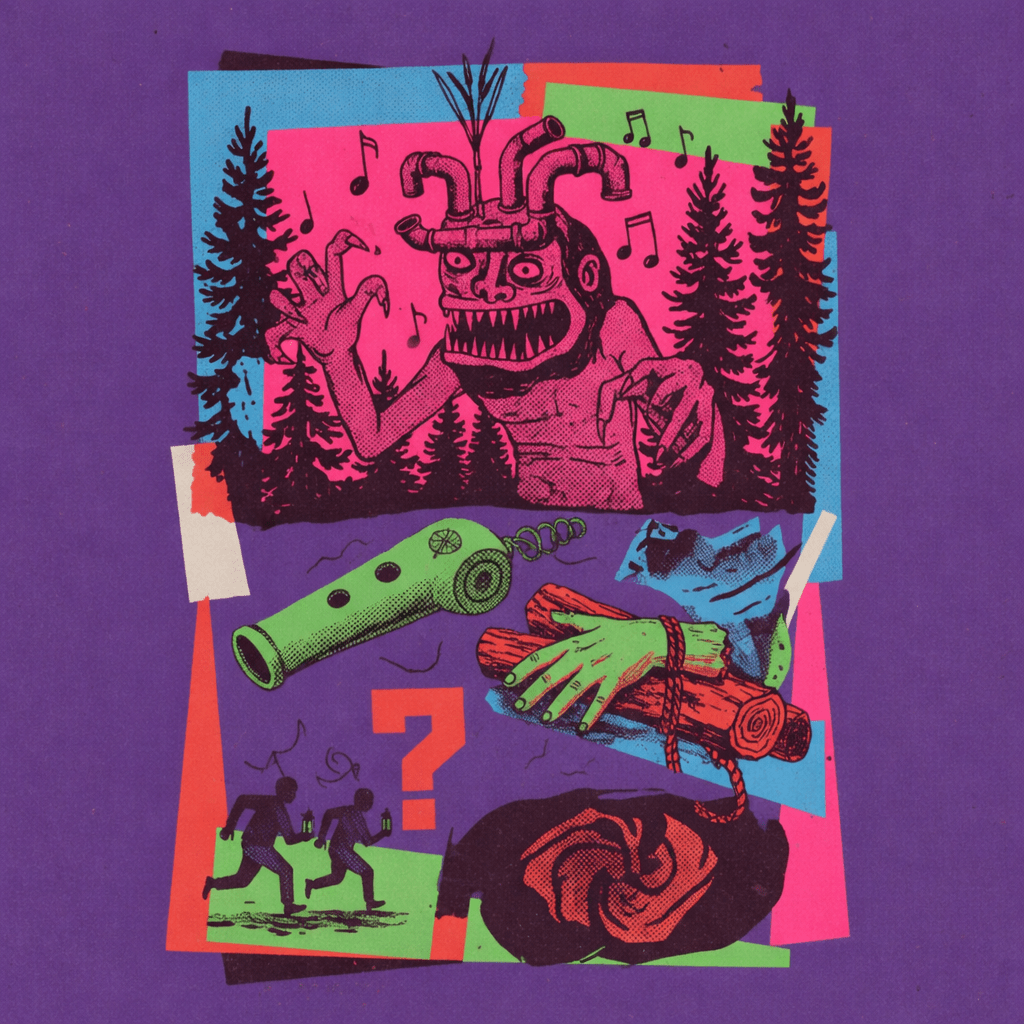
In a knot of pines just below the crest, cunningly bound into bough-shadows with waxed twine, Morris uncovered a length of narrow iron tube bored in three places, fitted with a shaved alder reed and a scrap of spring metal. Horsehair wound about its fastening kept it from rattling. It had the look of a rough signal-whistle or wind-sounding trick, the sort an idle mechanical head might patch together by stove-light if he knew enough of reeds and enough of mischief.
Crowley, hot to settle things into sense, blew it at once. It gave a thin, ugly squeal, then two fair notes, and quit with a spit of frost and breath. We tried again—Morris, then I—altering angle and stopping one bore with a thumb. We contrived something close, very close, to the three notes we had heard. Not one of us produced the fourth. Not even a cousin to it. Where the ridge sound had ended like a key turning deep in ironwork, this little tube only whimpered or broke.
“That’s trick enough for me,” said Crowley, though his face had gone stubborn in the way a man’s does when sense has arrived one inch too short.
“Then where’d t’other one come from?” asked Peasley, and nobody cuffed him for speaking.
We searched more sharply after that. By noon we had found a second piece of trouble: beneath a mat of dead slash in the south swale lay a hand-sled runner, hacked free from its mate, and beside it a sapling club with hair frozen to one end—dark hair, not much, but enough. Half-buried under thawing crust nearby was a little packet wrapped in oilcloth, containing two pages torn from a tally-book. I saw them before Morris folded them away. They held figures and initials, and one repeated mark like an inventory sign—too neat for a logger’s idle scribble and too secretive for honest account-keeping. Jenks later said, after one look, that such pages could have belonged to any store or camp office in the county. The way he said it satisfied no one.
By afternoon the names began to gather. Dace Holleran’s was spoken first and most often. He had a restless reputation, a knack with tin and mouth-harps, and no settled employment that could explain the ready silver he lately showed at cards. Two others were muttered—Sime Fobes and Ned Larrow—but one man cannot print every rumor a village pours into his sleeve without becoming a worse liar than those he quotes. It is enough to say that by evening there was broad belief someone had been moving goods through the ridge-country by stealth: whether stolen powder, iron tools, spirits, or camp stores, no two men agreed. Lige Vane, seeing something of it, had opened his mouth before the wrong hearers.
That night in Jenks’s store I took down several statements as nearly as I could catch them.
Morris said: “There’s human work here, sure as boot-leather. That tube proves hands. Them figures prove hands. The blood proves hands. But I’ve tramped forty year and I’m tellin’ ye plain, no hand I know set that last note in the air. There’s places don’t favor men usin’ ’em mean, and that ridge has got one o’ them tempers.”
Crowley said: “Temper be damned. Men done it, men can hang for it.” Yet when asked whether the whistle we found matched the sound entire, he stared at the stove-jacket a full five seconds before answering, “It matched enough.”
Young Peasley, sent home twice and sneaked back once, declared he had seen, the previous Tuesday at dusk, a lantern wink twice down in the swale and then go dark. When pressed he added that he heard something “like singin’ iron” immediately after, and saw what he took for two men easing a burden between them. Since boys embroider when given an audience, I would discount part of this—had he not then gone pale and described, unbidden, the smell we all knew: “like wet pennies and sick spruce.”
Mrs. Vane, who had more grit than peace, told me her husband came home Monday with his jaw set queer and said, “Them fellers ain’t alone up there.” She asked which fellers. He answered, “The ones that profit.” Asked again what he meant, he only said, “There’s a turn in the ridge don’t answer to Christians after sundown.” He was drinking when he said it, but not much.
On Thursday morning they took Holleran.
He was brought in from a lean-to near the old road with one mitten burned through, a sprained wrist, and a cut across the nose he blamed on falling against trace iron in the dark. In his kit were tin-shavings, waxed twine, a clasp-knife, and a little tool fit for boring holes in pipe. This made the lawmen sit straighter. It made the rest of us sit meaner.
He denied murder. He denied knowing where Elias Vane was. He admitted, after much sidling, that he had “fixed a caller” up on the ridge for “warnin’ purposes,” but swore it was only to scare boys and nosers away from goods that were none of the county’s business. Whether those goods were his, borrowed, or stolen he would not say. When asked about the peculiar fourth note he first spat and laughed. Later, in the lock-up, after a long silence and without looking at anyone, he spoke the only line in the whole business that still troubles me when the wind comes hard out of the north:
“I made three. I never made the one that finishes ye.”
Some took this for cunning—a rogue dressing himself in ghost-clothes to muddy the case. Some took it for fear. Holleran himself was not much use afterward, for by dawn he had taken with a shaking fit and begged not to be left where he could hear the jail stove humming. By the next night he wanted a lamp kept lit. On Saturday he was quieter than stone. On Sunday, before any magistrate could draw more from him, he was gone—escaped, said one; helped out, said another; taken, said a third, and would not say by whom.
Lige Vane was found on Monday.
I will not dwell on particulars further than necessary. He lay not far below the southern break, in a dip where thaw-water runs later in spring. A slash pile had been tumbled partly over him. His skull was broken above the ear, and there were rope marks on one wrist. That is enough. The county doctor, who likes certainty because it makes him feel taller than other men, said the blow killed him and the rest was concealment. Morris, standing by with his cap off, said nothing until the body was covered, then only: “Ye can bury a man. Harder t’ bury what knows he was wronged.”
That afternoon, while they were carrying Vane down, Peasley and one of the teamsters both swore they heard the ridge sound again—faint from above, three notes and a long-held want of the fourth. Others said no such thing. Yet a horse on the lower road shied so violently it nearly tipped a sled, and Jenks’s hound, tied outside the store, set up a cry fit to curdle milk. By evening everybody in Popeville had heard enough to become an authority.
Here, then, is the case as it stands in my books, and likely will stand unless Providence grows suddenly fond of affidavits.
There was human wickedness on the ridge above Drew’s Clearing. Of this I have as little doubt as I have of bark on spruce. A hidden signal-device was found. Secret traffic crossed the swale. A watchman hinted at knowledge, then died by violence. A man handy with tin and lies admitted part of the contrivance and vanished before justice could get a clean grip on him. That much belongs to this world entire.
But there remains another body of testimony—ragged, inconsistent, impossible to swear into a neat row—concerning the behavior of the place itself. Men of different tempers and interests report the same bodily seizure during the pause after the third note and the same queer relief at the fourth. More than one smelled iron and rot where no fresh kill lay. Sound shifted direction like a live thing. The iron tube we found could imitate the opening of the pattern but not its close. And those readiest to laugh by lamplight are, I notice, least eager to stand on that ridge in the narrowing hour and laugh again.
Whether wicked men chose the ground because old fear already haunted it, or whether the ground itself took offense at being used for wickedness, I leave to readers with stouter philosophy than mine. I report only that both explanations now move through Popeville together like two sled-runners under the same load, and no man can yet say which bears the greater weight.
The roads are softening. Sap will think of stirring soon. Teams go brisk at noon and sink to the hubs by dusk. Still, when the north wind sharpens over the ridge above Drew’s Clearing, shutters close a little earlier than before, and talk in Jenks’s store will sometimes falter all at once, as if every soul present were listening for a note not yet sounded.
And if, some evening, that fourth note should return—clean, decisive, and from no direction any Christian can rightly name—I do not believe Popeville will be much surprised.
—Belzoram
Ledger of the Whistle-Hand at Devil’s Pitch
Filed from the west shore road above Lower Chateaugay, where the mud keeps records better than some clerks do
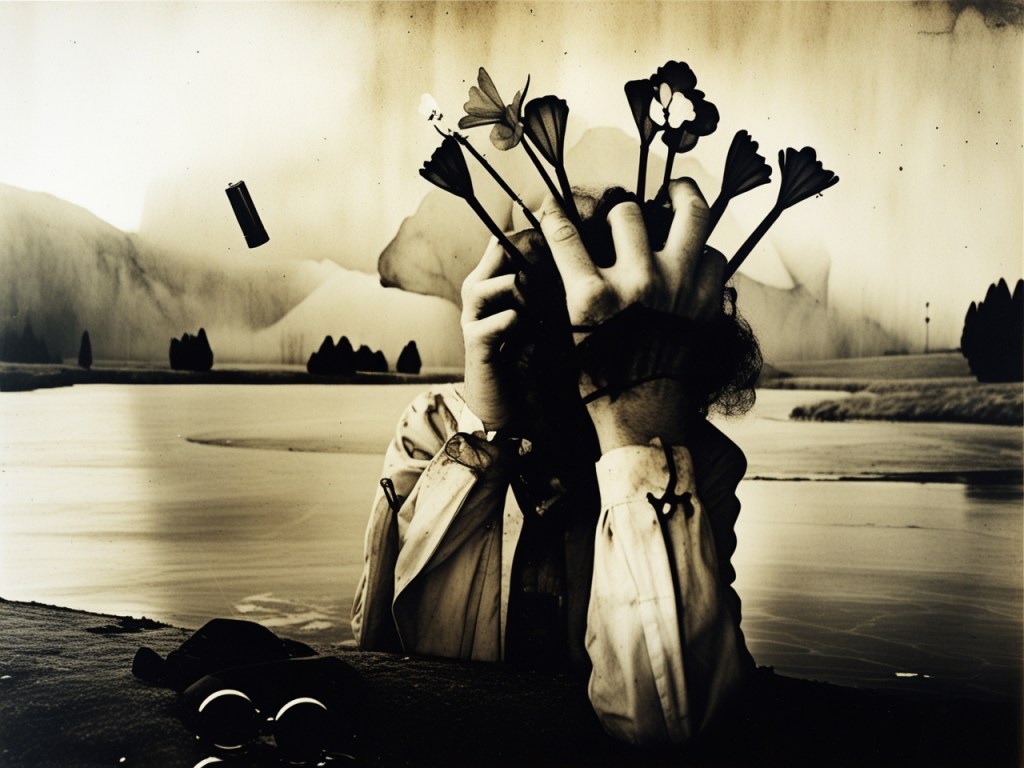
There are two ways a man disappears in the Shatagee country, and any deputy, guide, widow, or liar worth his oats knows both by heart. In the first, he simply loses his wits: walks out after dusk, trusts a bad trail, misjudges the water, freezes in a blow, or follows his own pride into a tamarack sink where the peat closes over him like a book being shut. In the second, some other party lends a hand and then blames the weather.
The case of Gideon Peaslee—amateur fiddle-repairer, sometime logging scaler, and full-time snoop into his neighbors’ private affairs—has never been settled because it belongs, by every account worth hearing, to both categories at once. Or perhaps neither.
Peaslee was last seen on a Wednesday afternoon in late October, carrying a pasteboard portfolio under his arm. Inside, he claimed, were drawings, measurements, and names tied to what he called, with his usual cheerful lack of caution, “the music business behind the old camps.” He did not mean hymns. He meant the queer run of incidents—much joked about at the store, much less joked about by women whose boys came home altered—in which people near the west-shore spruce belt heard lively little airs played where no fiddler stood, then did uncommon things with uncommon confidence.
One young fellow marched half a mile the wrong way because, as he swore later, the tune kept promising to resolve around the next stand of timber. A respectable married man stacked his own traps in the brook, saying he was “helping the measure along.” A schoolgirl near Merrill’s lane heard three notes after supper and tied every spoon in the kitchen drawer together with curtain string, insisting she had not done it on purpose but because it seemed necessary. Such tales draw laughter by daylight; after eleven o’clock, with the stove clicking and the dog unwilling to face the door, they draw other conclusions—conclusions that feel less like imagination and more like memory.
Peaslee, who lacked fear but not curiosity, had grown convinced these episodes centered on an object he described as “a whistle, tube, or perforated camp implement of painted green character,” found and traded among boys near Devil’s Pitch—an ugly little cut of ground above the lake where slash, old cordwood, and busted iron have collected since the first men found it efficient to leave ruin where they stood. He further claimed the whistle had once belonged to the late Arba Coon, an inventive sinner linked in turns to bootlegging, signal systems, timber theft, and a failed scheme to frighten small landholders off valuable frontage by means of nocturnal performances in a false mask.
Here the human explanation begins in excellent order—yet it never quite ends there.
Arba Coon, dead these nine years, was exactly the sort to strap pipes to a helmet, paint himself monstrous, and leap from the spruces making noise—if by such theater he could depress a property’s value, distract a watchman, or move contraband while honest citizens stared the wrong way. He had a tinsmith cousin in Malone, a taste for mechanical contrivance, and no aversion to fraud performed with style. Three elderly witnesses, each unreliable in his own professional way, once testified they had seen Coon emerge from the dark “with stove-elbows atop his head like the Devil had taken to plumbing.” One claimed he squeezed a bladder under his coat for the notes. Another insisted the sound came from a concealed reed-box. The third had been drinking hair tonic and need not detain us. Yet even they sometimes glanced toward the spruces when the wind carried a certain three-note phrase, as if the memory itself had begun to play.
Yet Coon’s death did not end the music. If anything, the silence after his passing only made the tunes clearer.
On the night Peaslee vanished, young Hollis Drew and his cousin Fenner were returning from an eel set with two lanterns and one pail when both heard what Hollis later called “a jig trying awful hard not to be a scream.” The sound came from Devil’s Pitch. They climbed the bank and saw, spread among the stumps and frost-sick brush, a scene each described the next day in terms so vivid and contradictory that the local authorities gained no peace from hearing them—and neither, in the quiet hours, did the boys themselves.
Hollis swore he saw a black figure in the trees with a head “all elbows and tubes,” its mouth opening and shutting too wide for any Christian vertebrate, while scraps of surveyor’s ribbon—or maybe birch bark—fluttered around its shoulders. Fenner, more practical, saw only a man in costume running bent-backed among the slash and another man on the ground trying to crawl away. Hollis said the thing had claws; Fenner said gloves. Hollis said music notes shook loose in the air; Fenner said those were sparks from the lantern he dropped. Yet both admitted, in private later, that the notes had seemed to come from inside their own heads as much as from the clearing.
Both, however, agreed on three particulars: a green whistle or tube lay in the clearing; a bundle of short sticks was corded together as if for kindling or weighting something in water; and a human hand was visible where no hand should have been, tied up in that bundle or laid upon it. In Hollis’s telling the hand was green as pond scum. In Fenner’s it was gloved in green wool and therefore no marvel—save for its attachment, or lack of it, to the rest of its proprietor. And neither could later swear which version felt more true once the lanterns were out.
The boys ran home, as well they might. When men returned armed with lamps, ropes, and opinions, they found no monster, no living assailant, and no corpse. They found instead the bundle of sticks, a length of cord, a soaked portfolio, one green-painted metal whistle bored with three holes, and—lower in the draw—a black oilcloth sack containing odds and ends too miscellaneous to be innocent: a wig-cap, fragments of painted papier-mâché, two lengths of stove pipe, carpenter’s braces, and teeth cut from sheet tin to fit a mask.
That would have settled the matter for any sensible county south of here. A scare-rig, plain as the nose on a magistrate. Human mischief, probably tied to old land fraud, bootleg signaling, or some fresh extortion scheme using antique nonsense as cover. Add the tracks: two men’s boots, one dragging mark, and the distinct heel-stamp of a size known to belong to Orrin Vance—a bankrupt camp cook with debts, a loose tongue, and the recurring bad luck of being found near trouble as if drawn by iron filings in the blood.
Vance was taken up and questioned. He admitted meeting Peaslee that evening. He admitted knowing the old Coon scare apparatus had not all been destroyed. He admitted, after pressure, that Peaslee had threatened to publish names linking several respectable modern parties to night operations on the lake—timber shifted off-line, liquor stored in old ice houses, maybe a touch of insurance-minded arson. He admitted there had been “a scuffle, same as men have.” But he denied murder, denied any severed hand, denied wearing the mask, and denied above all that the whistle had been blown.
“You don’t blow that thing,” he said. “That thing gets after you when folks start expectin’ it.”
This remark, though poetically inconvenient, might still be put down to nerves—except that the men questioning him later swore the three notes had sounded faintly in the next room while Vance spoke, though no one else was there.
Then Peaslee’s body failed to appear.
In ordinary crime the dead turn up because the living are neither as strong nor as thorough as they imagined. In Shatagee country the land sometimes aids concealment with a zeal that feels personal—almost as if it were choosing what to keep. Searchers found signs of dragging to a seep-hole above the lake, then signs away from it again. Dogs worked the trail to a rotted tote-road, commenced whining, and circled as if the scent had not stopped but risen. One man heard the same maddening three-note lure and walked half across a beaver meadow before his brother cuffed him stupid and led him back; the brother later admitted the notes had followed him home that night, faint but patient. Another searcher, a school trustee of sober disposition, claimed the black spruces round Devil’s Pitch gave off a rhythm “like a crowd agreeing under its breath”—a rhythm that matched the tune exactly when he tried to hum it later.
Three days later a float-bundle of wood tied with the same cordage came ashore near South Inlet. Inside was not a whole man, but enough of Gideon Peaslee to turn wit into silence. His right hand was absent. His coat was slashed. Around one wrist was paint—green, with specks of black. In the breast pocket they found a notebook page, blurred but partly readable: “mask,” “Coon apparatus,” “boys’ whistle,” “Vance paid by—” and then a line rubbed to pulp by water or something patient and wet.
That would seem, again, to press hard in favor of human guilt. Vance had motive. Vance had opportunity. Vance lied. There was costume material. There was old fraud-pattern. There was a body concealed by means both practical and ugly. The hand, if ever green, might have been gloved. The monster, if ever seen, might have been a scoundrel in theatrical plumbing. Yet every man who handled those fragments later said the green paint felt colder than the water it came from, and one swore it left a faint melody on his fingertips for days.
But here the woods, as they often do when men begin congratulating themselves on reason, grew difficult.
On the evening after the remains were brought in—with half the township full of talk and the other half pretending not to listen—Widow Peaslee, who had no patience for folklore and less for fools, heard from her shed precisely the air Gideon had mocked the week before. She opened the door thinking some ghoul of a local boy meant to torment her. Instead she saw hanging from the pitchfork rack the missing right hand of her husband, green not with glove-wool but with a scum-like bloom, the fingers flexed round the three-hole whistle. Before her son reached the place with a lamp, both hand and whistle were gone—yet the widow maintained, to her dying day, that the fingers had moved once, as if waving goodbye or beckoning.
The report was disputed. The son said his mother was near fainting and may have mistaken a mitten for a miracle. The daughter said no, she had heard the little tune herself, “as if someone were teachin’ the air bad manners.” A neighbor declared the whole family ought to sleep more and invent less. Nevertheless, within a week two cows broke their tethers at the very notes Hollis had described, and old Mrs. Bellows, no ally to nonsense, said bluntly that the spruce belt above Devil’s Pitch now “disliked bein’ disobeyed”—and that the dislike felt mutual.
There the case split clean into its two enduring camps—though more than one man in the first camp woke sweating from dreams in which the second camp’s version felt suddenly, horribly plausible.
The first camp—deputies, storekeepers, editors, and men who consider themselves robust because they have never examined their own fear—holds that Orrin Vance and perhaps one unnamed associate used the old Coon monster-rig to menace Peaslee, extract or suppress his papers, and in the struggle killed him. The bundle of wood was for sinking the body. The missing hand was removed to destroy evidence or because the dead man had grasped at the mask. All music, all apparitions, all later reports were products of mass suggestion, neighborhood theater, and the excellent American habit of improving any story until it can no longer be used in court.
The second camp—widows, eelsmen, two doctors who will not admit membership, and every child who has ever heard a tune where no player stood—argues that while human wickedness surely struck the first blow, the woods took offense at the bargain. That some contrivance of false terror—mask, whistle, stage-business, property trickery, murder-plan, call it what you please—was carried into a place already full of old industrial grievance, drowned camps, and musical wrongness; and that the country there, being no admirer of imitation, laid hold of the counterfeit and made it true. Or perhaps the counterfeit had never been entirely false to begin with.
In this latter account, Arba Coon invented a fraud. Orrin Vance inherited or revived it. Gideon Peaslee stumbled upon the mechanism. But once the whistle was sounded—or even expected—the thing ceased belonging to its operators. The pipe-crown face was no longer a mask worn in the woods. It was the woods wearing the mask back at them. Or perhaps the woods had been wearing it all along, waiting for the right hands to pick it up.
As for the climax of that hideous affair, no final account commands obedience, though three witnesses place the last scene on a freezing moonlit night near the pitch. Vance, trying either to recover hidden papers or destroy the remaining apparatus, returned alone and was followed—at some distance and with the best poor judgment available—by Hollis Drew, Deputy Ames, and Widow Peaslee’s eldest son.
They saw Vance in the clearing with a lantern and shovel. They saw him stoop beside the black sack. They heard him curse at something on the ground. Then all parties agree the whistle sounded—though none could later swear whose breath had started it.
Deputy Ames swore Vance himself must have blown it, perhaps to scare off observers. Hollis swore Vance flung the whistle away the instant it began, as if it had started by itself. Widow Peaslee’s son said there were not one but two sounds: first the whistle, then the answer—the same tune passed through a throat too large and wet for any human frame. All three descriptions, years later, still matched in every detail except the one that mattered most.
The lantern went over. Something black rose behind Vance or over him or out of the spruce itself. Ames fired once and may have hit bark, canvas, man, or nothing living. Hollis said he saw tin teeth and pipework shining. The son said he saw only Vance backing away from a shape wearing his own terror on its face. There was thrashing, then a splash from the draw below, then silence so immediate it felt arranged—arranged by something that had been listening all along.
At daylight they found Vance’s shovel, one pipe segment, the old papier-mâché jaw half broken, and a set of tracks no jury would enjoy. These showed boot prints—Vance’s, very likely—running to the brink, circling, staggering, doubling back. Over and among them lay marks as though some large thing with awkward hand-like extremities had steadied itself in the mud. Yet several of those same marks could be explained by broken branches lashed together, dragged costume pieces, or the splayed slips of a desperate man. Or perhaps not. A torn piece of green wool hung on a stump. Nearby, impressed in the frost, was what Hollis called a handprint and Ames called nonsense—and what the frost itself seemed unwilling to let melt until the next hard rain.
Vance was never found.
So the county kept both stories, as counties do when neither truth nor superstition can quite whip the other outright—because, in the end, both stories may be the same story wearing different masks. Officially, Gideon Peaslee died by criminal human agency and Orrin Vance absconded, perished in the lake, or fled into Canada—depending on which official was hungry at the time of signing. Unofficially, folks say Vance was taken the same way he meant to take another man: by staging fear in a country that does not care for rehearsal, and that sometimes rehearses back.
That, to my mind, is the proper Shatagee conclusion. A man can build a fake devil for profit. He can pipe notes through hidden tubes, strap tin teeth to a mask, rig a whistle to spook boys, and haul a body with cordwood like freight. All that is well within the ordinary genius of wickedness. But once such wickedness is worked in the wrong cut of timber, under black spruce, above cold water, amid the old slag and rot and musical rumor of Chateaugay’s injured ground—well then the woods may take a professional interest.
And when they do, the final cruelty is this: no witness can ever prove whether the monster came first, or whether men made it and the woods merely approved. Or whether the woods had been the monster all along, and men were only the hands that finally gave it breath.
#AdirondackFolkHorror #JoGaOhLittlePeople #19thCenturyNorthCountry #DopamineTensionRelease #SynestheticStorytelling #PhantomForestMedley #InfrasonicEerieAcoustics #WildernessUncanny #HaudenosauneeLegends #PeriodParanormalAccount

What mysteries of Chateaugay Lake haunt you?