Late-summer calm masks gunpowder scars, poison agony, midnight clubs cracking skulls, and sudden flame devouring station and wood along Chateaugay’s uneasy shore.
Disclaimer:
This post is a piece of humorous fiction and regional storytelling, built from a fair mix of old documented North Country memories, public history, tall talk, seasonal exaggeration, and plain creative invention. It may borrow the names of real places, old newspapers, customary local types, and the general weather of bygone days, but it is not offered as sworn testimony, legal proof, medical counsel, ecclesiastical doctrine, policy guidance, or a substitute for reading The Malone Palladium that day on 21 August, 1879, with both muddy boots on and your spectacles wiped clean.
Any resemblance to actual persons, living, dead, half-remembered, summer-boarded, town-council-broken, or still complaining about the road tax, is either historical reference, comic treatment, or coincidence dressed in work clothes. No accusation is intended, no factual claim is made beyond general inspiration, and no reader should mistake a yarn for an affidavit just because it wears a collar and speaks in complete sentences.
To the summer folks: enjoy it.
To the old-timers: you already know how stories grow legs.
To the censors in Brussels and all the social media-controlled platform priests: it is Adirondack satire.
To the fury-merchants in Albany and Washington: not every sentence with a pulse is a public emergency.
And to anybody arriving hungry for scandal, defamation, or a digital bonfire—best move along and find a thinner plank. This here is literature, not litigation.
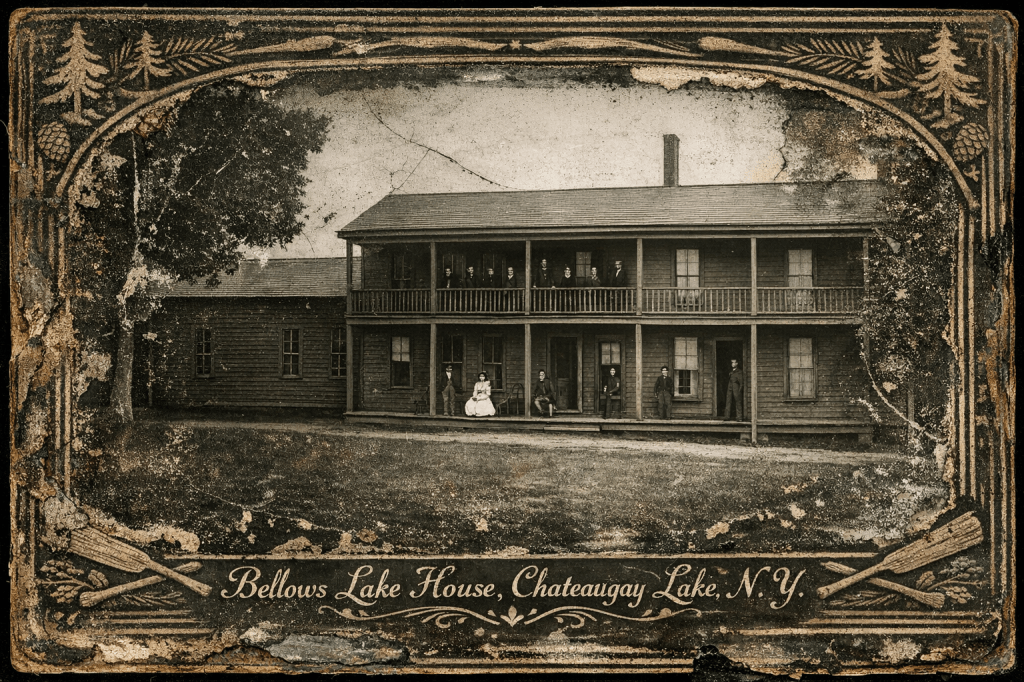
BELLOWS LANDING, LOWER CHATEAUGAY LAKE, N.Y., MONDAY, AUGUST 12, 1879. Stirring Incidents and Seasonable Prospects Along the Lake Shore
The week slipped by with the deceptive calm of late summer—lake water lapping soft against the docks, woodsmoke drifting low on still air—yet it carried undercurrents that left an aftertaste of unease. Men linger longer by the store stove now, voices quieter, while at bedtime prudent hands touch the latch twice and count blessings against the dark.
Silas McKenzie of Popeville still carries the sharp memory of gunpowder and iron on the Fourth. The cannon burst tore into his leg; Dr. Johnson will take the limb. The neighborhood feels the weight of it: a steady man who split kindling and hauled cordwood without complaint, now facing the saw. Sympathy runs deep—neighbors speak his name in low tones, as though the very air around his cabin has grown heavier.
At Malone’s Ferguson House meeting this past Friday evening, the railroad debate flared again, voices rising like heat from a stove. The vote split clean down the middle: donation or local build, with the Iron Company to lease the narrow-gauge stretch to Malone and Popeville. No shouting, only the slow scrape of chair legs on pine boards, the deliberate clink of tin cups set down, each man planting himself like a fence post driven deep. An invisible line seemed drawn through the lamplit room; neighbors stared across it, unblinking. Those who want the rails can only hope cooler evenings and a few more talks by the fire will yet find common ground.
We record with heavy heart the loss of Mrs. Amanda Ferguson of Brainardsville. Monday evening she swallowed corrosive sublimate; for nearly a full day she endured agony that no words can hold—lips cracked, breath ragged, the metallic reek of poison lingering in the sickroom. Insanity is blamed. The house feels changed: sunlight slants through windows but seems thinner, chairs sit too still, the stair creaks with a different echo, as though every board remembers her footsteps and the silence that followed.
Thursday night thieves in the Village of Chateaugay entered the Marsh house like shadows given weight. Upstairs they moved with practiced quiet—drawers sighing open, cloth rustling, boots scuffing softly on floorboards. They lifted a pocket-book from Mrs. Marsh’s dress, eased a ring from her sleeping finger, and were working the clasp of her gold chain when the metal gave a faint click. She woke to their breath on her neck, seized the stout club under her pillow, and swung. The crack of wood against bone rang sharp; blood spattered the floor. One man dove through the window, glass shattering; the other bolted for the door. They left behind a fortune in linens: dresses, coats, underthings, boots—all rolled and knotted, ready to carry off. Spots of blood trailed across the yard like dark coins. No trace of them yet. The county talks of nothing else—the cool nerve of the lady, the sickening nearness of hands in the dark, the way sleep can turn to terror with a single misplaced breath.
Friday fire swept Dannemora Station on the O. & L. C. line. The station house, agent Frank Duffy’s dwelling, Sherlock’s store-house crammed with barrel staves, two platform cars, and two hundred cords of split wood—all gone in hours. Flames first broke through the store-house roof with a low roar; the smell of burning pine pitch and green wood rolled thick across the tracks. Duffy dragged out most of his furniture, scorched and sodden. Eighty cords belonged to the railroad, the rest to men who had sledded it there for sale. Insurance covered some; the rest is ash. A fire without cause unsettles deepest: no spark, no lantern overturned—just flame stepping sudden from the night, leaving people to eye their own hearths longer before banking the coals.
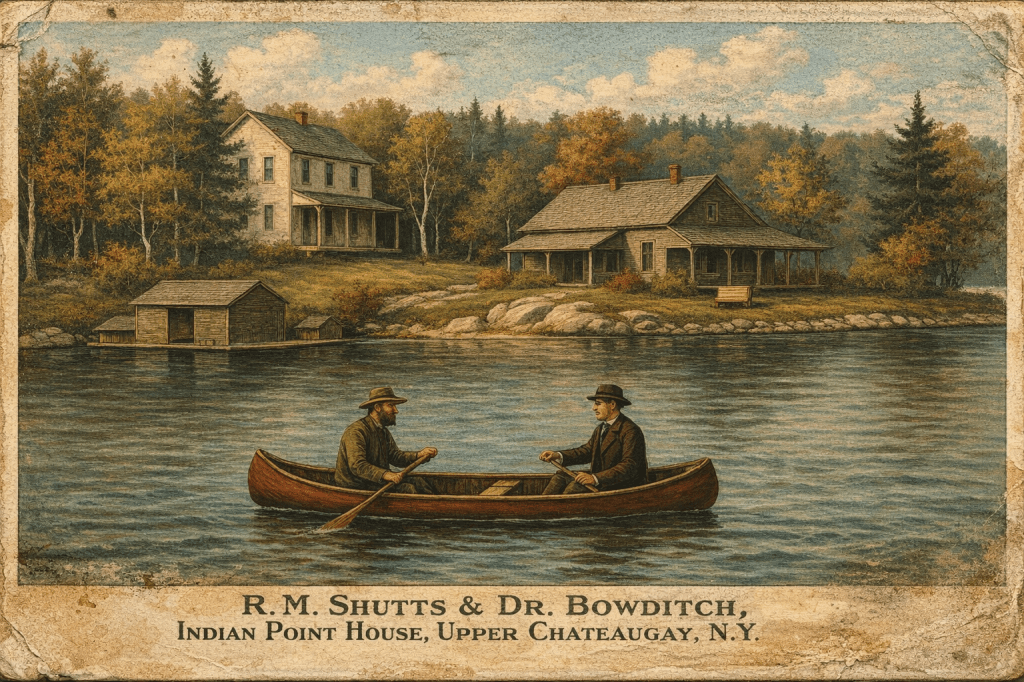
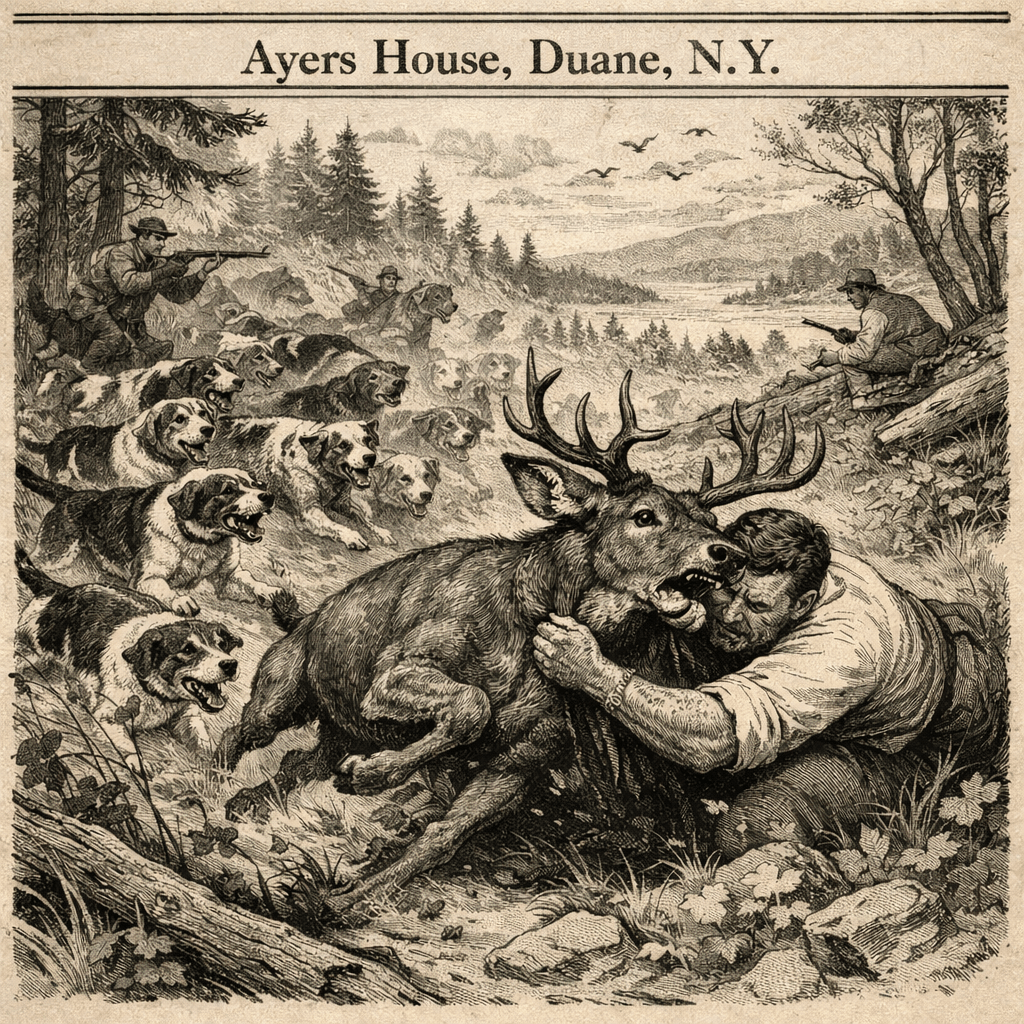
That same Friday the Shatagee Woods rang with the wild horrors of savage deer drives. Twenty-eight hounds bayed through the timber at Upper Chateaugay Lake, voices rising and falling like a broken hymn; another pack worked Duane’s Ayers House at the same hour. A laborer for W. J. Ayers watched deer streak across open hop fields, white tails flashing. One buck veered close—close enough for the man to lunge, strike it with his fist, then run it down, tackle it in the grass, and draw his knife across the hot throat. Blood steamed in the cool air. Even the tallest tales told by R. M. Shutts, a popular local proprietor at Upper Chateaugay’s Indian Point House, fall short of this account reported by several other witnesses working in the same fields, who witnessed the incredible scene unfold.
A friend at Thayers Corners writes of the “persistent burglars.” Three men from Burke, drunk and out for a lark, mistook a house for another and stumbled inside. One took a blow to the calf; Grover extracted fifty dollars from each of the others. “No more thought of stealing than the man in the moon,” our correspondent insists. By daylight it sounds harmless; yet the mind snags on details—liquor may blur a road, but not the quiet creak of floorboards under strangers’ boots, nor the sudden copper taste of blood, nor money changing hands before the fear has cooled.
Tuesday East Bellmont Magistrate “Genesee” Raymond Stoddard received word from Malone: Holmes and Buell, last year’s wagon-tongue swindlers, arrested on his warrant. He left that evening to bring them back. If they return, honest men will breathe easier; the county has tired of glib tongues and quick promises. Justice, when it comes, should lead inward to a reckoning, not outward to another escape.
Mrs. A. McGrath of Cherubusco met grief on our hill Thursday. The wagon seat tipped as the team strained upward; she fell hard, bone snapping in her right arm with a sick crack. Sympathy surrounds her; may healing come swift and clean. Such weeks remind us how fragile the everyday is—a loose board, a shifting seat, a moment’s inattention—and how suddenly the familiar can wound.
Along Little Trout River the charcoal hamlets of Blair and White Kilns smell of sun-warmed pine and the faint sweet rot of hop vines heavy with burrs. Growers say the crop promises fine: burrs plump and uniform, blight held at bay, no lice in sight. Picking should start near September eighth. With the clean hands our people now demand, this harvest may top the state and draw the highest prices. Yet at dusk, when the river mirrors black works and the vines hang pale in failing light, the kilns seem to wait—mouths open among the trees, air too still. The settlement breathes differently then; any unease drifts in with the mist and is gone by morning.
Sorrow, mishap, theft, fire, and stubborn debate marked the week, yet courage answered, work continued, and the hops hold promise. Our people bend but do not break. Let each keep steady, lend a hand where need calls, and the season may yet close warmer than its early shadows foretold.
BELZORAM
#AdirondackChronicles #19thCenturyCrime #LakeShoreGossip #FrontierMisfortune #CharcoalHamletLife #DeerDriveSaga #PoisonTragedy #BurglarClubbed #NarrowGaugeDebate #HopHarvestHope

What mysteries of Chateaugay Lake haunt you?