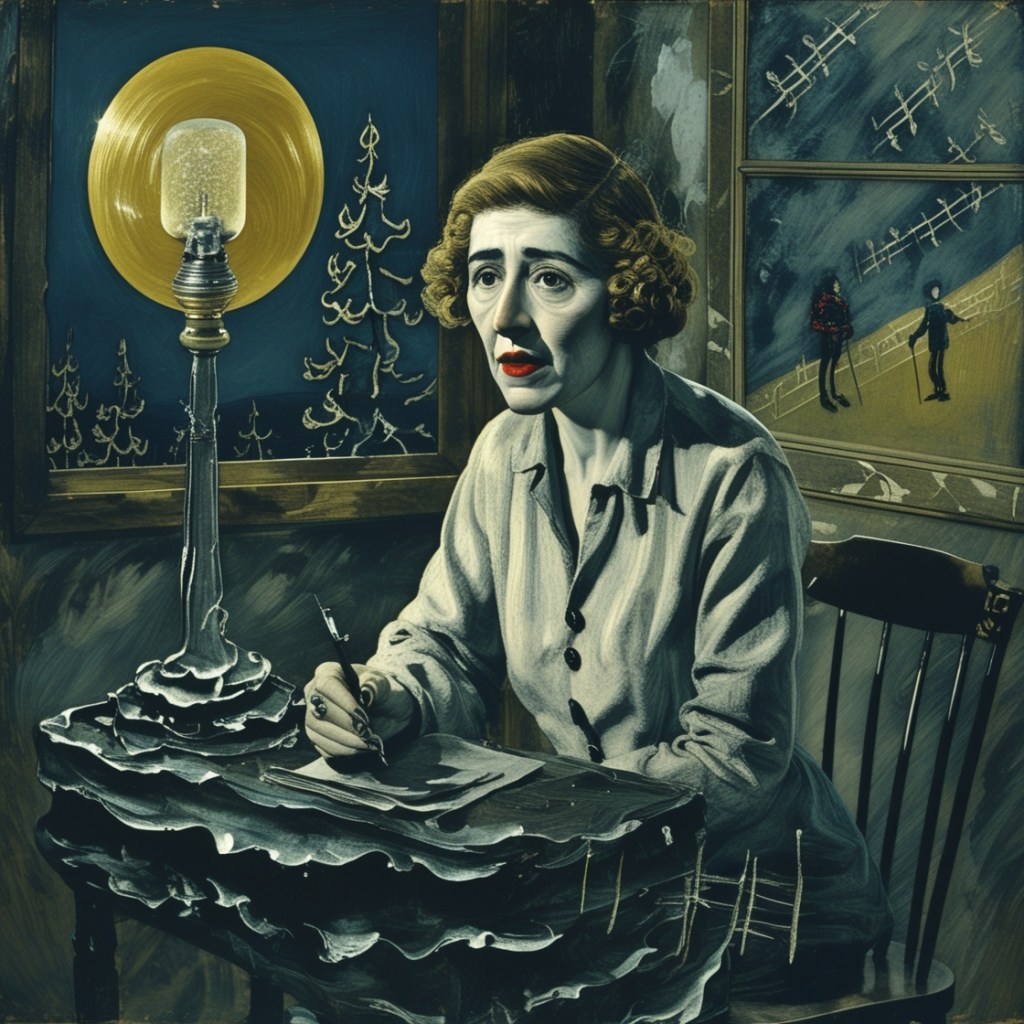
“Fair warning, neighbor: red dust from Lyon Mountain still clings to these lines; should lanterns move unbidden past the ice-house lane, blame not the ink but the hill that remembers.”
SHATAGEE GITASKOG’S INN, UPPER CHATEAUGAY LAKE, N.Y., 18 October 1968.
I HAVE read with considerable interest the account lately circulated about a certain chamber operetta said to have been composed by Mr. Arnold Schoenberg during his stay at the Morrison resort in the summer of 1906. The tale has traveled through the hollows and along the lake road, gathering color as it goes, much like the red dust that once settled on every sill from Lyon Mountain to the Forge.
My grandfather, who kept the Lake House in those years, often spoke of the summer visitors who came seeking the quiet of the spruce and the clear water. Among them were gentlemen of artistic bent who found inspiration in our rugged hills and the stories that cling to the old iron works. Whether a noted composer from the old country passed a season here and set down notes upon the widow’s grief and the lanterns in the dark, I cannot say with certainty. Yet the names and the scenes described ring familiar to any who have listened to the old folks by the stove on a long winter evening.
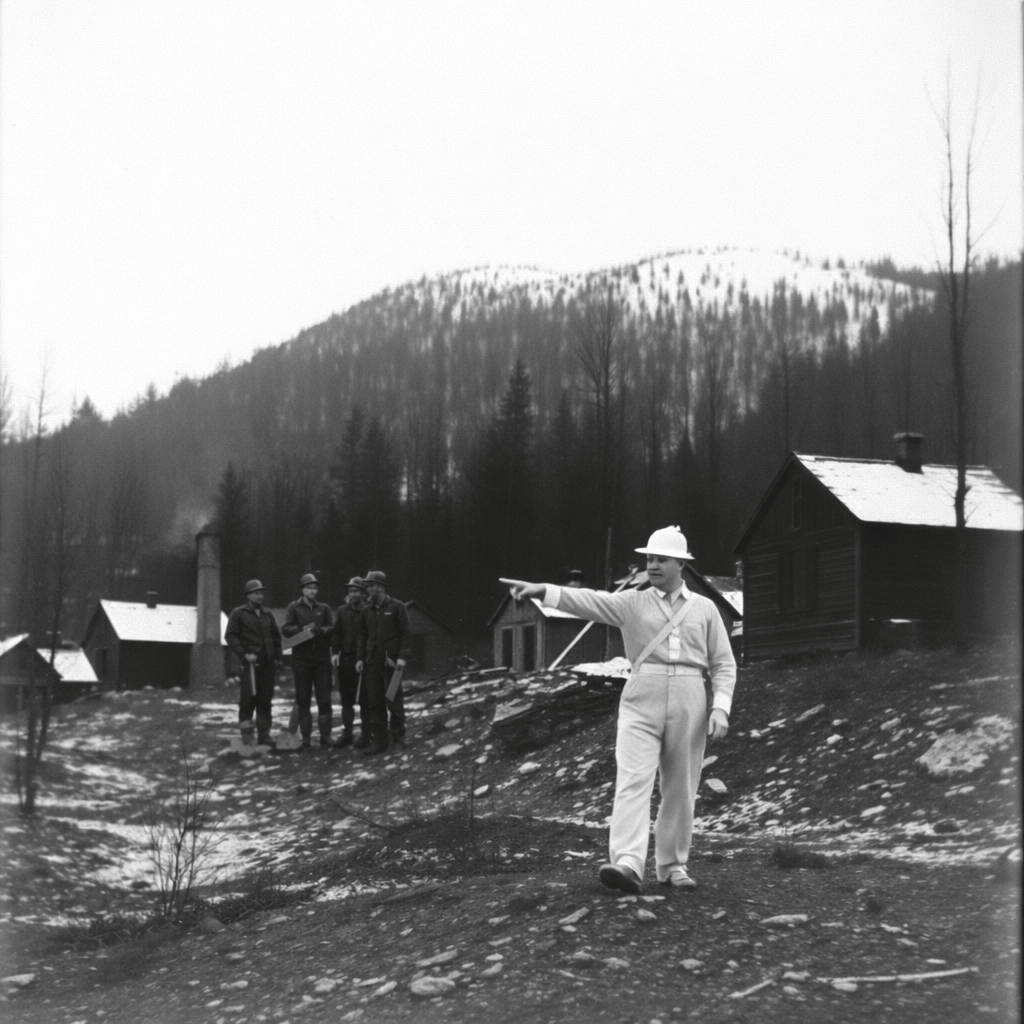
The chorus of strike and lift, the red spark and black drift, the three dull knocks from beneath the shoulder of the ridge—these are sounds and sights that have been known in Furnace Hollow since the mines first drew men into the rock. My father worked the Number Three drift as a young fellow and carried home that same dust in the seams of his coat. He used to say the hill keeps what it takes, whether ore or breath or, perhaps, a sheaf of music paper.
Young Mrs. Ellen McDonough, whose husband Patrick was lost in that Friday noon shift when the mountain changed its tune, still sets a chair by the window and folds the blue shirt with careful hands. She speaks softly of the slow floor creak and the breath beside the cold stove, and who among us would doubt the weight a widow carries when the boots no longer stand by the door?
Tommy LaFlamme, who has carried the mail over every rutted bend of Merrill Road since before the Great War, tells again of the night he saw three lights low and thin moving past the ice-house lane. One was his own lantern, one the moon on the frost, and one he still cannot name. The dogs kept silent, he says, and the very air seemed to tow a figure in a coat the color of dried hematite.
Even the quiet Abenaki woman who sits with her knitting by the window at the inn recalls the three black pines upon the rise and the marks upon the shoulder stone that were there before the forges roared. She reminds us gently that some songs wake old blame and that what iron takes from a buried man may not be neatly sung.
The community here has always balanced its ledgers—wages against wrongs, fire against mountain—and we go about our days with the thrift and good cheer that mark Franklin County. Yet on certain dusks, when the red dust rises after rain and lingers on the hymnbook spine, one cannot help but feel the past brushing close, like a neighbor come to call.
Whether Mr. Schoenberg’s manuscript lies safe in some archive, or whether it rests undisturbed in the dark of the old drift as local lore would have it, I leave to the musicologists and the curious. For our part, we shall continue to sweep the sills, feed the stoves, and listen when the boards speak in the night. Some things buried stay untold, yet the chair by the window waits, and sometimes, when dawn lays red and thin across the lake, a man may yet take his place again.
Mordecai Vilecreek
Route 2
Chateaugay, N.Y. 12920
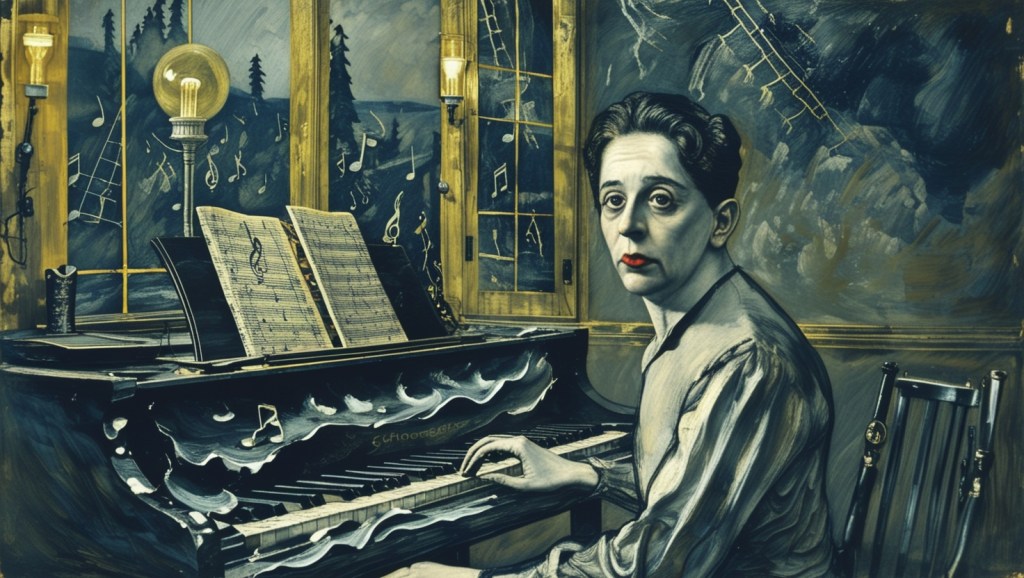
MOVEMENT I FURNACE HYMN:
CHORUS:
Strike and lift
Strike and lift
Red spark black drift
Clang and shiver
Lake and river
Smoke through spruce and rift
Strike and lift
Strike and lift
Wheel and chain and shift
Ore from Lyon
Fire iron
Ash on cheek and wrist
WOMEN:
Sweep the sill and shake the sheet
Still the red comes through
Dust in kettle dust in bread
Dust in me and you
MEN:
Feed the furnace feed the throat
Hear the hollow hum
Every hammer says your name
Every timber drum
ABENAKI WOMAN:
Three black pines upon the rise
Three dull knocks below
What goes under rock and ore
Does not always go
FULL CHORUS:
Strike and lift
Strike and lift
Red spark black drift
Hush now hear it
Ash has spirit
Night has got a gift
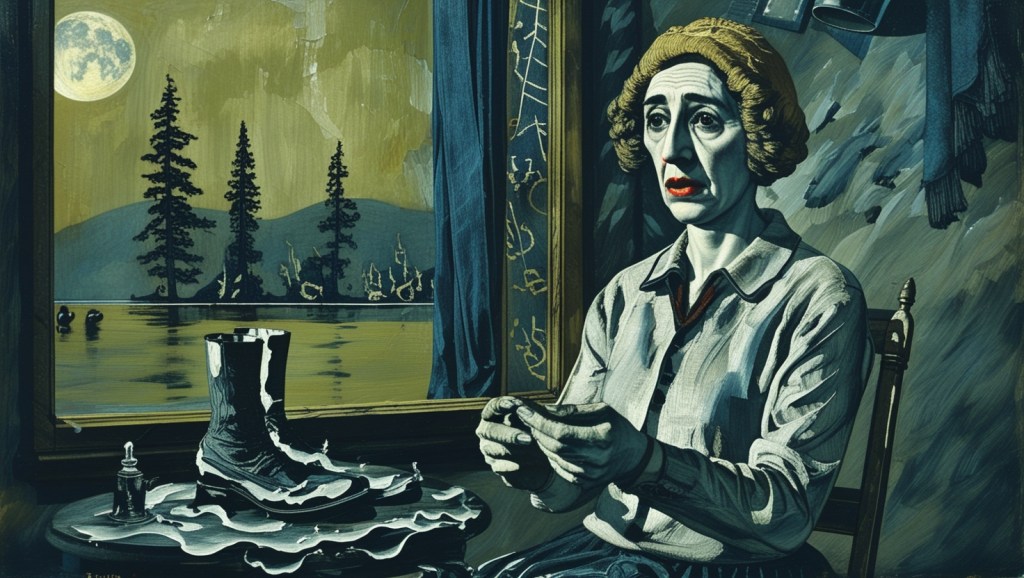
MOVEMENT II WIDOW’S LAMENT:
ELLEN:
Chair by window cup gone cold
Boots not by the door
I have folded your blue shirt
Seven times and more
Patrick Patrick if you’re gone
Why the slow floor creak
Why the breath beside the stove
Why the boards that speak
Red dust rises red dust stays
In the seam and seam
I can wash till Sunday bells
Still it stains the dream
They say widow keep your head
Spring can turn you wild
Then who touched the cradle rail
Like a quiet child
Three soft knocks and none upstairs
Three soft knocks below
Not from road and not from yard
From the dark underglow
REFRAIN:
Chair by window plate for two
I set one place for grief
If you’re gone then why tonight
Does sorrow sound like feet
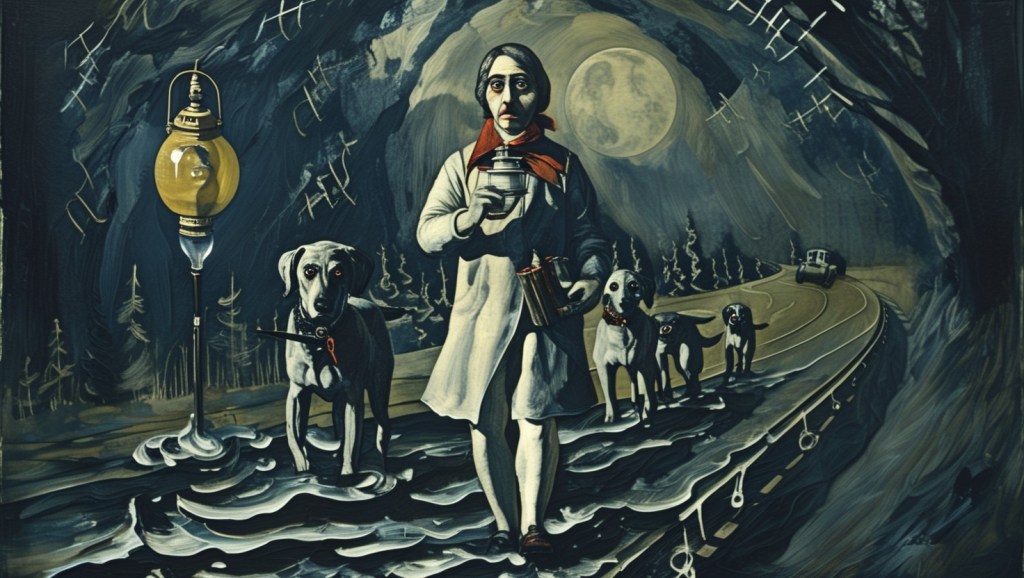
MOVEMENT III THE RED DUST:
CHORUS:
It was Number Three drift
It was Friday noon
Pick and powder timber shout
Then the mountain changed its tune
Some said water
Some said flame
Some said haste for pay
Some said old things in the hill
Do not like the day
Red dust on the beard
Red dust on the tongue
Red dust in the half-made prayer
Half-spoke half-sung
FOREMAN:
Count the lamps and count the men
That is what I did
ELDER:
You can count the lunch pails son
Not the ones rock hid
WOMEN:
Caps came out and bent tin cups
Mittens hard as brick
But no Patrick crossed the yard
No Patrick answered quick
CHILD:
I found one glove by the sluice
Red and dry and torn
MEN:
Boy that’s ore and mud and rust
That is mine-blood worn
FULL CHORUS:
Red dust rises red dust clings
Climbs the hymnbook spine
Every widow in the Hollow
Learns the taste of mine
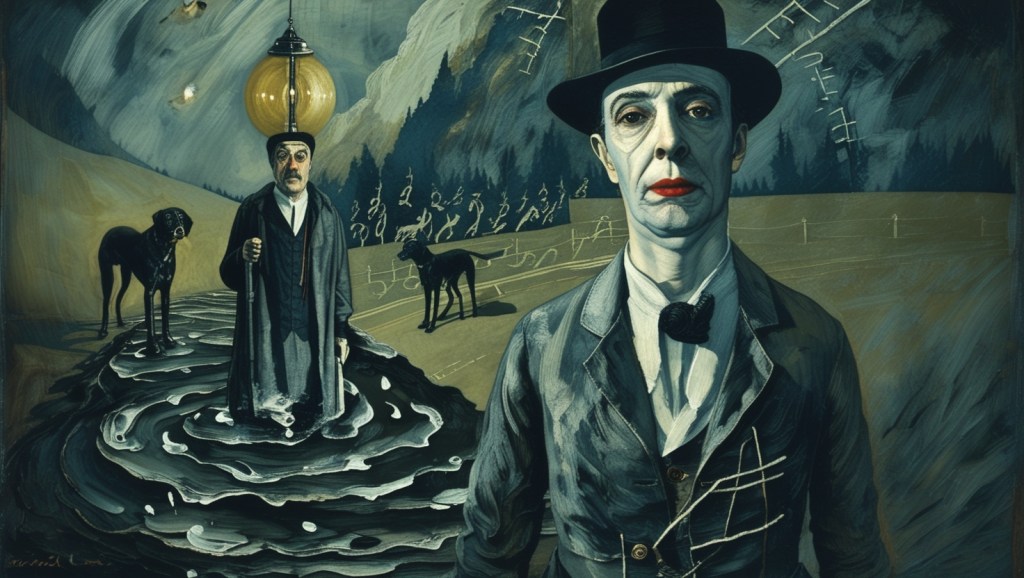
MOVEMENT IV LANTERNS IN THE DARK:
TOMMY:
I know every rutted bend
Every gate and grade
Every dog on Merrill Road
Every patch of shade
I know moonlight plays a trick
On tin and thaw and wire
I know frost can dress a stump
Like a preacher dressed for ire
Still I swear by sack and stamp
By pension slip and bill
I cut below the ice-house lane
And all the world went still
No bird no bark no runner crack
No laugh from any boy
Only one man by the wall
And not a sign of joy
Hat in hand and coat all red
Head bent stiff and slow
I called McDonough is it you
He did not answer no
He did not run
He did not walk
He drifted from the frame
Like dark was towing him away
And knew him by his name
Three lights there were
My lamp the moon
And one I cannot name
It burned behind the ice-house boards
Like frost inside a flame
I reached her gate with empty breath
I raised my hand to knock
And red dust sat upon my palm
Like a little borrowed clock
REFRAIN:
Lantern low lantern slow
Who walks where the cold winds blow
If he’s dead then let me be
If he’s not then answer me
MOVEMENT V THE EMPTY CHAIR:
ELLEN:
Do not stand there dumb as wood
I have feared enough
If you are dream then break by dawn
If you are true be tough
Was it blast
Was it sump
Was it greed that split the seam
Was it some old buried debt
Still walking through my dream
Why Lyon why that black ridge line
Why point and point again
What waits above the slag and spruce
What waits beyond the men
WORDLESS BARITONE:
Ah ah ah
Oh ah oh
Mm mm mm
No no no
ELLEN:
Pages wages map or note
What are you trying to say
Why point not up to heaven bright
But down the mining way
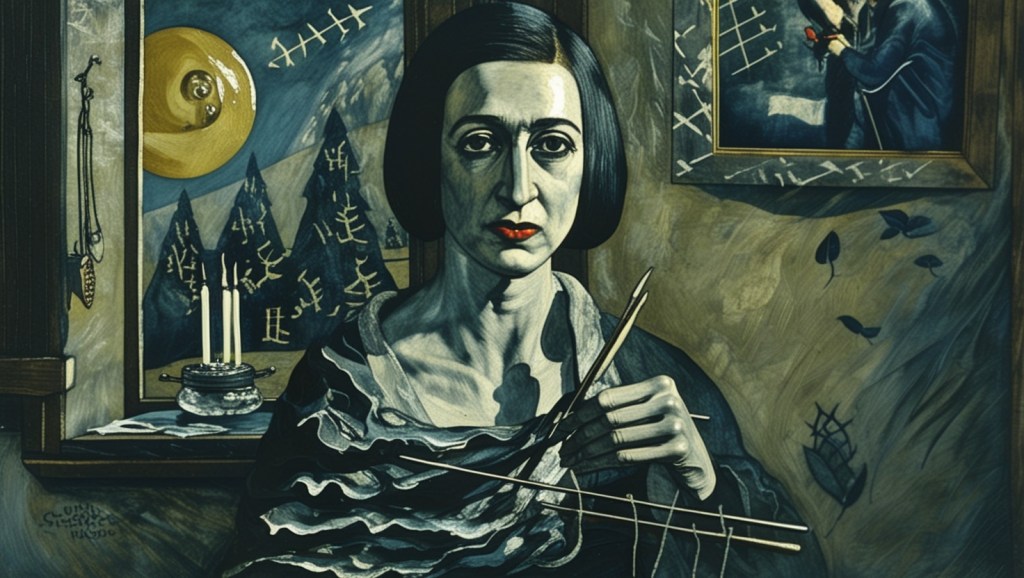
ABENAKI WOMAN:
He has no common breath tonight
The hill has closed his tongue
What iron takes from a buried man
May not be neatly sung
There are songs that wake bad weather
Songs that wake old blame
Songs that know a widow’s grief
And set it into flame
ELLEN AND ABENAKI WOMAN:
Three black pines
Three dull knocks
Three words in the shale
One for sorrow
One for ore
One for what won’t fail
ELLEN:
Then I will go where he has led
I will go though they all sneer
If there is nothing in that drift
Then nothing I shall hear
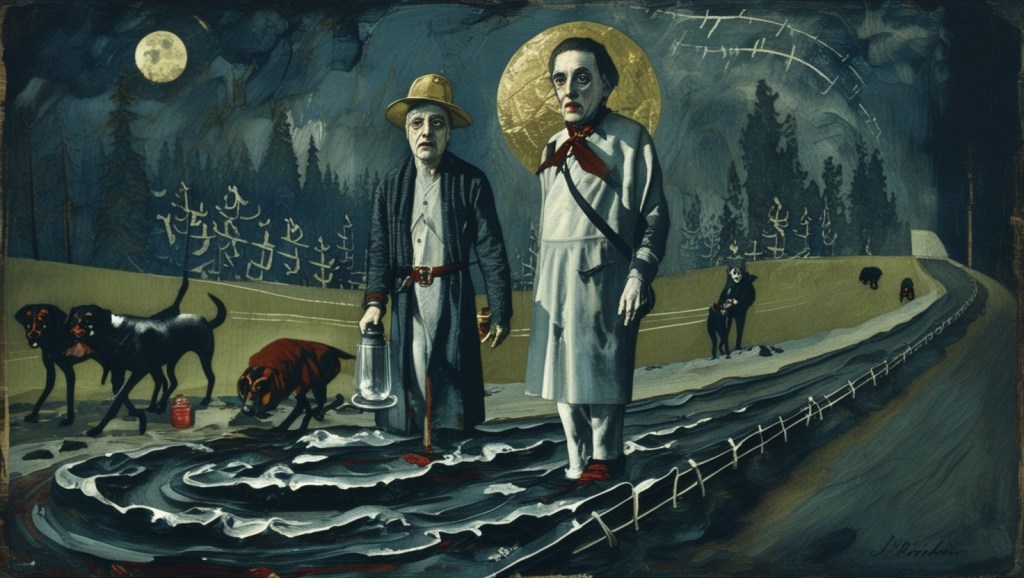
MOVEMENT VI COMMUNITY CHORUS:
TOWNSPEOPLE:
Nerves says one
Moon says one
Spring can bend the mind
Grief says one
Gin says one
Ghosts are for the blind
FIRST WOMAN:
She has not been right since Patrick fell
SECOND WOMAN:
Who among us would
FIRST MAN:
Tommy sees two moons at once
TOMMY:
I see what no one should
ELDER:
Number Three should have been shut
That foreman drove too fast
FOREMAN:
Mind your mouth
ELDER:
Mind your dead
The rock remembers blast
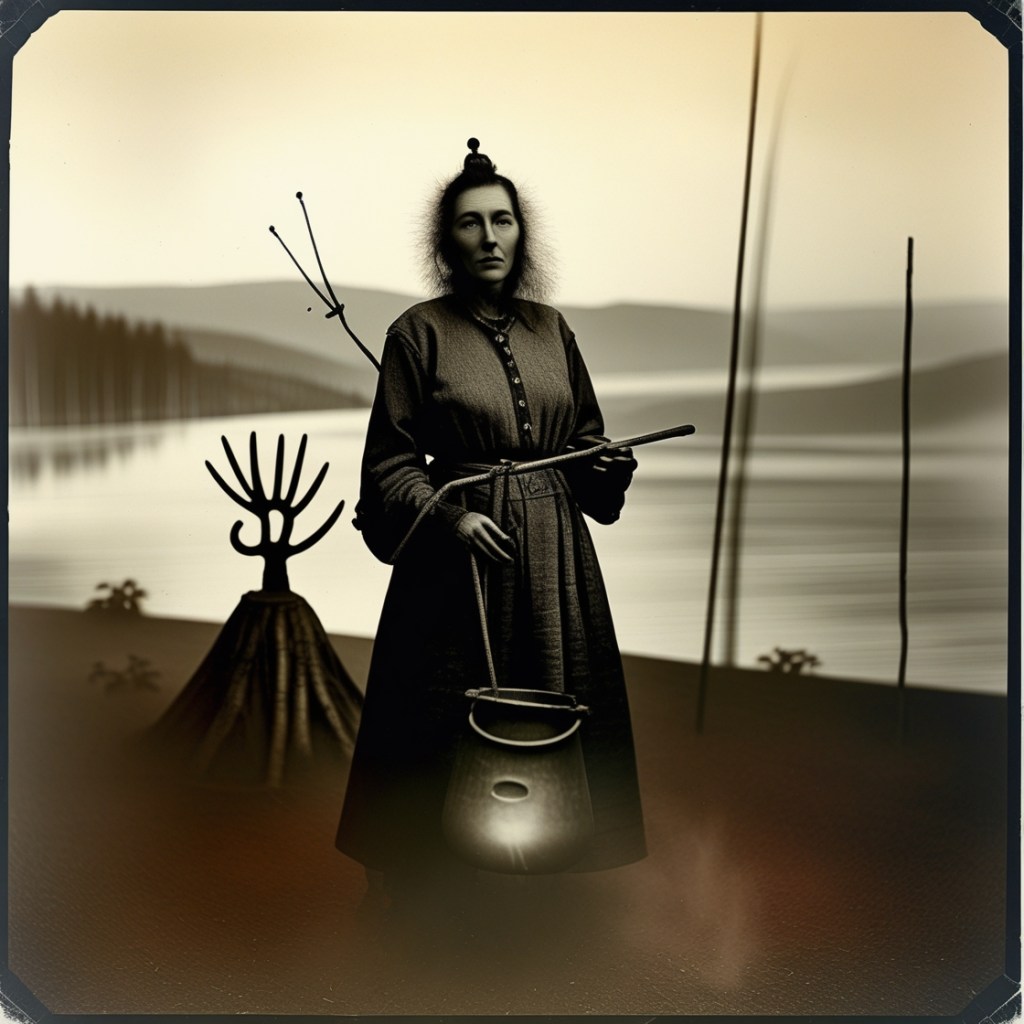
ABENAKI WOMAN:
Before your forge and before your plank
Before your tally books
There were marks upon that shoulder stone
And songs in hidden nooks
You laughed and cut
You drilled and fed
You praised the iron seam
Now two ledgers live below
And neither one is clean
FULL CHORUS:
Ledger of wages
Ledger of wrongs
Ledger of ash and bone
Who can balance
Fire and mountain
Once the hill’s full-grown
Go not alone
Go not at dusk
Go not where the cold drips down
ELLEN:
He died alone
I go at dusk
I will not let him drown
ENSEMBLE REFRAIN:
Lantern high lantern tight
Walk the road and watch the night
If the dead have one last chore
We will hear the mountain roar
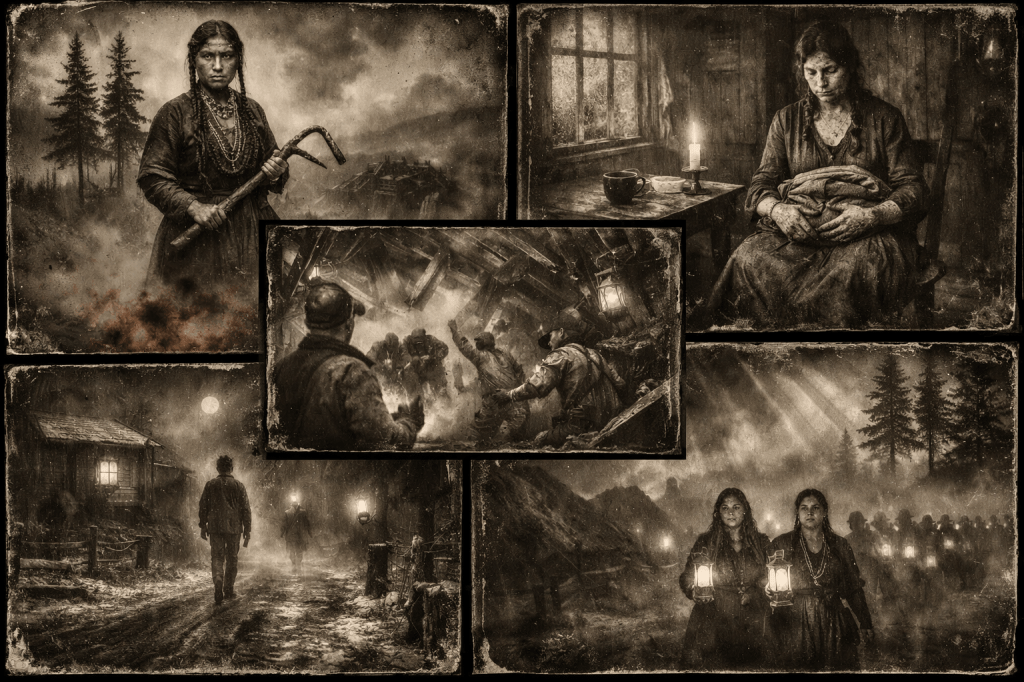
MOVEMENT VII FURNACE RESURGENCE:
PROCESSIONAL CHORUS:
Three lights moving through the black
Three lights low and thin
No dog barking no thaw talking
Only wind and skin
Three lights up the Lyon road
Past the spoil and brace
Every root and every rock
Knows this is the place
ELLEN:
Here the timber
Here the wall
Here the drift-mouth seam
Here the cold that bites the tooth
Here the end of dream
TOMMY:
Strike three knocks and listen close
CHORUS:
One
Two
Three
FULL CHORUS:
What keeps paper dry in stone
What keeps ink from rot
What keeps music under dirt
Hot when it is not
ELLEN:
Not wages
Not a map
Not a note for earthly due
Black marks breathing in the dark
Patrick was this hid by you
PATRICK:
Bury the song
FULL ENSEMBLE:
Bury the song
Bury the song
Too late too late
It has been too long
ELLEN:
Red dust rises
HIDDEN MINERS:
Name by name
Flame by flame
Call us not
We came we came
Strike and lift
Strike and lift
Red spark black drift
Under cinder
Under clinker
Hear the old forge shift
ABENAKI WOMAN:
Down with the pages
Earth on the cry
Some songs are doorways
Close it or die
ELLEN:
Patrick Patrick take my hand
I did not know the cost
I only wanted one last word
Not all the buried lost
PATRICK:
Bury the song
Let me lie
Give the hill my name
Leave the chair
Leave the dust
Leave the little flame
FULL ENSEMBLE:
Chair by window
Road by hill
Dust that settles
When all is still
Lantern low
Lantern dim
Do not sing
What followed him
Chair by window
Cup gone cold
Some things buried
Stay untold
Red dust rises
Then is gone
But after rain
It lingers on
FINAL REFRAIN:
Strike no more
Knock no more
Leave the drift and bar the door
Yet when dawn lays red and thin
He may take that chair again
“The Widow of Furnace Hollow” is a seven-movement Expressionist chamber operetta composed by Arnold Schoenberg in 1906. The work explores themes of grief, spectral visions, and the lingering impact of industrial tragedy within a remote Adirondack community. It is considered a pivotal, albeit lost, piece in Schoenberg’s development, representing a bridge between his early tonal works and his later atonal explorations.
Synopsis
The operetta is structured as a series of interconnected vignettes, each depicting a different aspect of Widow McDonough’s experiences and the community’s reactions to her claims of seeing her deceased husband, Patrick. Patrick died in a mining accident at the Furnace Hollow iron mine. The seven movements are: 1. **Furnace Hymn:** An instrumental introduction depicting the relentless clang of the Furnace Hollow iron works and the rugged landscape surrounding Chateaugay Lake. This movement establishes a sense of foreboding. 2. **Widow’s Lament:** A soprano aria where Ellen (the Widow McDonough) expresses her grief and the overwhelming isolation she feels since Patrick’s death. 3. **The Red Dust:** A choral piece narrating the story of Patrick’s death, emphasizing the imagery of the red hematite dust that covered the miners. 4. **Lanterns in the Dark:** A tenor aria sung by Tommy LaFlamme, the mail carrier, recounting his sighting of Patrick’s ghost near the ice-house. The music builds suspense and ambiguity, questioning the reality of the apparition. 5. **The Empty Chair:** A duet between the Widow and the ghost (represented by a wordless baritone). The Widow pleads for Patrick to speak, while the ghost silently gestures towards Lyon Mountain, hinting at unfinished business. 6. **Community Chorus:** A mixed chorus representing the townspeople’s varying reactions – skepticism, fear, and a growing unease. They debate the meaning of the sightings and the potential disruption to their lives. 7. **Furnace Resurgence:** An instrumental coda revisiting themes from the opening movement, but now infused with a sense of spectral presence and the possibility of the past returning to haunt the present. The piece ends on an unresolved dissonance, leaving the audience questioning the fate of the Widow and the community.
History & Development
In the summer of 1906, Schoenberg accepted an invitation from Andrew Morrison, a wealthy patron of the arts, to stay at his estate near Chateaugay Lake in the Adirondack Mountains. Morrison was fascinated by Schoenberg’s early atonal experiments and provided him with a secluded environment to compose. During this time, Schoenberg became intrigued by the local folklore surrounding the abandoned iron mines of Furnace Hollow and the tales of ghostly apparitions. He was also influenced by the sonic improvisations of the Chateaugay Lake Steamboat Player’s “Bog-Core” performances, a local musical movement exploring dissonant harmonies and unconventional instrumentation. Inspired by a newspaper article detailing the story of the Widow McDonough, Schoenberg began composing “The Widow of Furnace Hollow.” He sought to create a work that blended the expressive power of opera with the stark realities of industrial life and the psychological depths of human grief. The work was scored for a small chamber orchestra, including instruments like the heckelphone, viola d’amore and Ondes Martenot (played with a slide) to create an eerie soundscape. While there is documentation of Schoenberg discussing the piece in letters to Alban Berg, no completed score has ever been found.
Availability
To date, no complete score or even substantial fragments of “The Widow of Furnace Hollow” have been located. The manuscript was believed to have been left at Morrison’s estate after Schoenberg’s departure. Over the years, the estate changed hands several times, and any documentation of the work has seemingly vanished. Musicologists have searched archives, private collections, and even local historical societies in the Chateaugay Lake region, all without success. The operetta remains one of Schoenberg’s most significant lost works, a tantalizing glimpse into a unique moment in his artistic development. It is hoped that one day, a copy of the score will be discovered, allowing audiences to experience this haunting and innovative work. However, local lore suggests a different explanation. Some believe that the score wasn’t lost, but deliberately hidden by Schoenberg himself. Rumors persist that he was deeply disturbed by the intensity of his own creation, fearing that the music had somehow tapped into the very spirits it depicted. According to these tales, Schoenberg buried the score within the abandoned Number Three drift of the Furnace Hollow mine, believing it should remain undisturbed, lest the Widow McDonough’s grief – and her husband’s spectral longing – be unleashed once more.
The Widow of Furnace Hollow (Operetta)
Status: Completely Lost
Type: Operetta
Creator: Arnold Schoenberg
Era: 1906 Shatagee Lake Resort “Age of the Pleasure Seekers”
#ChamberOperettaLore #AdirondackGhostOpera #SchoenbergFolkMyth #FurnaceHollowWidowSong #IronMinePhantomChorus #ChateaugayLakeHaunting #RedDustSpectralNotes #AbenakiIronCurseMelody #FranklinCountyStrikeLift #DriftMineWidowsChair

What mysteries of Chateaugay Lake haunt you?