Readers sensitive to philosophical distinctions should proceed cautiously. The difference between seeking a want and receiving one becomes commercially significant, geographically disputed, domestically inconvenient, and profitable enough to attract every merchant in Chateaugay.
Editorial: The Commercial Uses of Contentment
We printed, not long ago, a piece of excellent advice to the following effect:
Never go abroad in search of your wants; if they are real wants, they will come home in search of you.
We printed this as philosophy.
That was our mistake.
In Chateaugay, philosophy is never safe from business.
Several respectable householders, finding the sentence both economical and handsome, agreed upon an experiment. For one month they would go nowhere in search of unnecessary articles. What was plainly needed might be bought; but nobody was to wander through stores merely to discover wants which had not existed upon entering.
This promised a considerable improvement in domestic economy.
It promised a still greater improvement in merchandising.
The first objection came from a dealer who wished to know what was to become of trade if everybody sat at home waiting for his wants to knock at the door.
A second dealer, being of a more constructive disposition, replied that nothing in the maxim required the wants to walk.
This distinction saved commerce.
Hughes, whose stock is sufficiently extensive to embarrass any citizen attempting not to want something, perceived the principle at once. If a man must not go abroad in search of a want, there could be no reasonable objection to bringing a proper assortment of possible wants within conversational distance of the man.
The experiment had therefore scarcely begun before the households discovered that abstaining from shopping did not necessarily secure solitude.
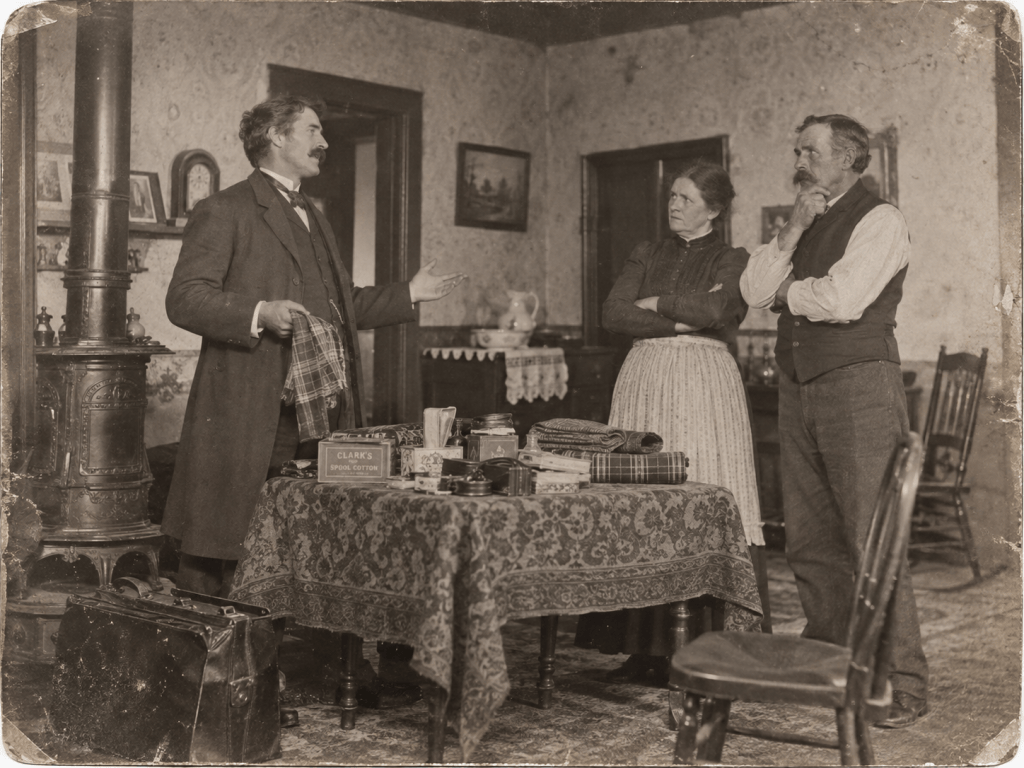
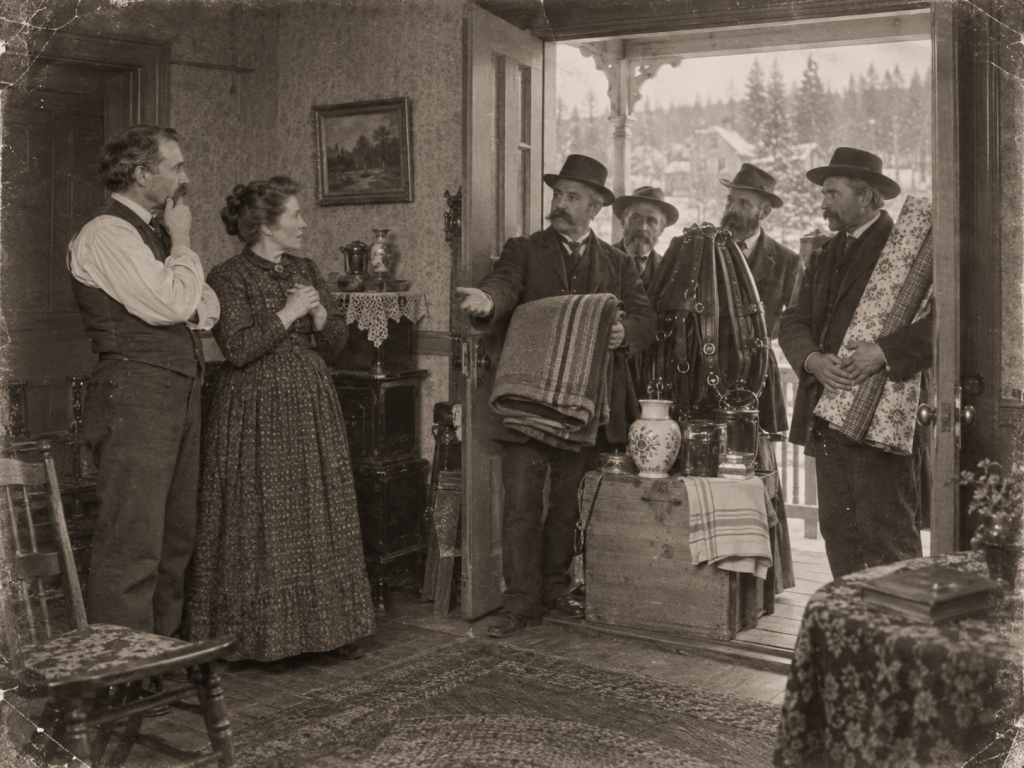
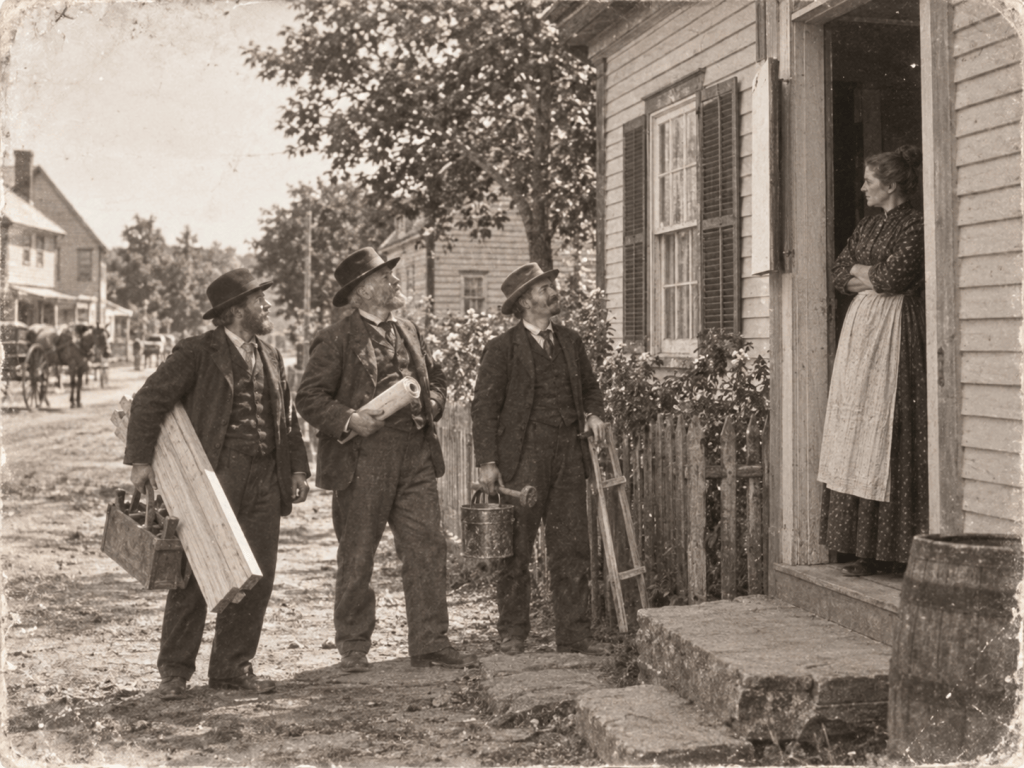
One family, particularly firm against looking at anything it did not need, received a merchant carrying several articles which, he assured them, nobody was under the slightest obligation to examine.
He merely laid them down.
The family protested.
The merchant protested more politely.
“My good friends,” said he, “you have not gone in search of these goods. The goods have come to you. Your rule is being obeyed with a strictness which ought to satisfy the editor who printed it.”
We were sent for as authority.
We declined.
An editor who permits himself to become the final interpreter of every sentence he prints will presently have no time left in which to print another.
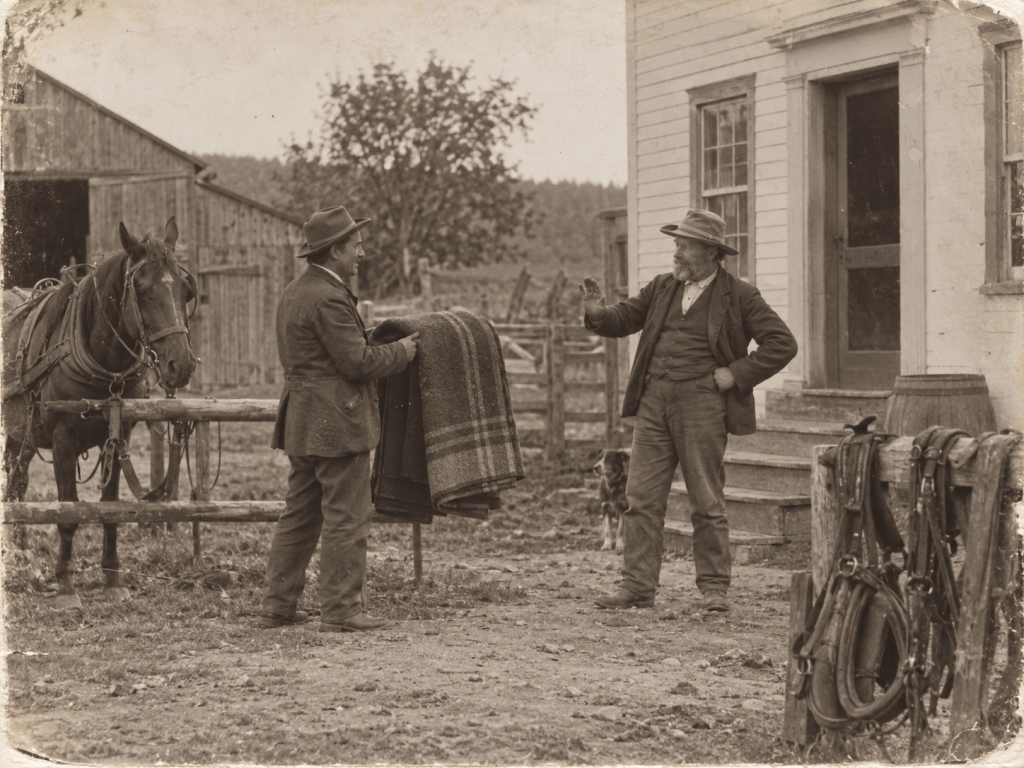
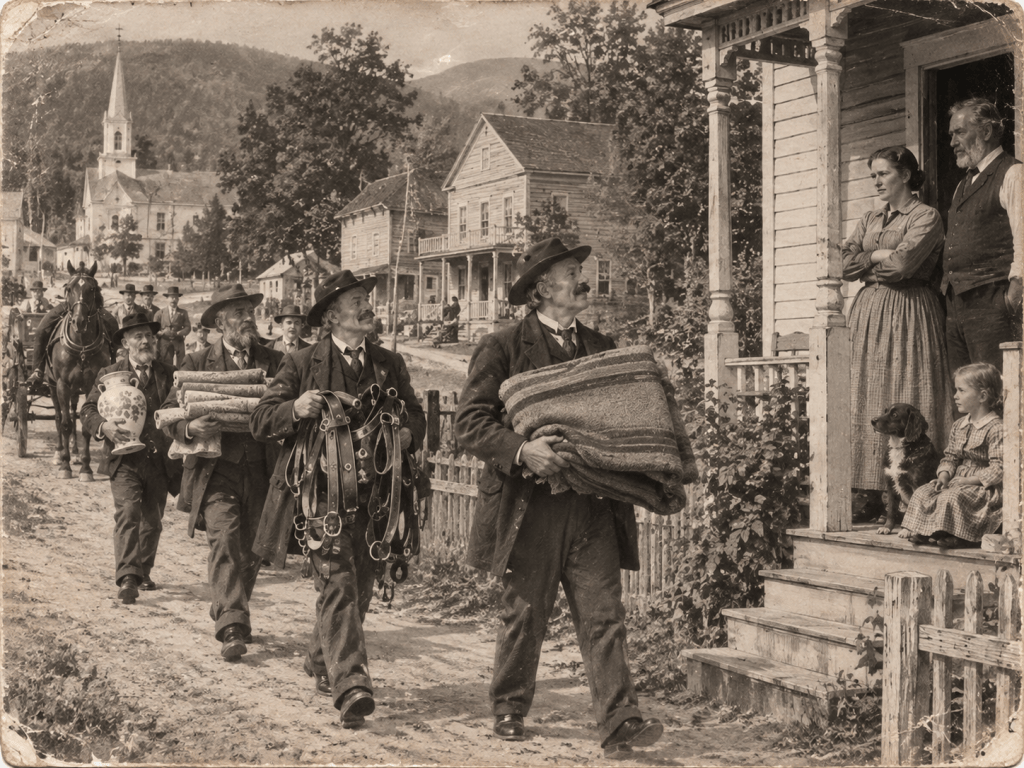
Peake next entered the field with harnesses and blankets.
This was important, because a harness is difficult to treat as a philosophical abstraction after it has been carried into the yard.
A blanket is easier.
Peake, we are informed, took one to a house whose owner declared that no blanket was wanted.
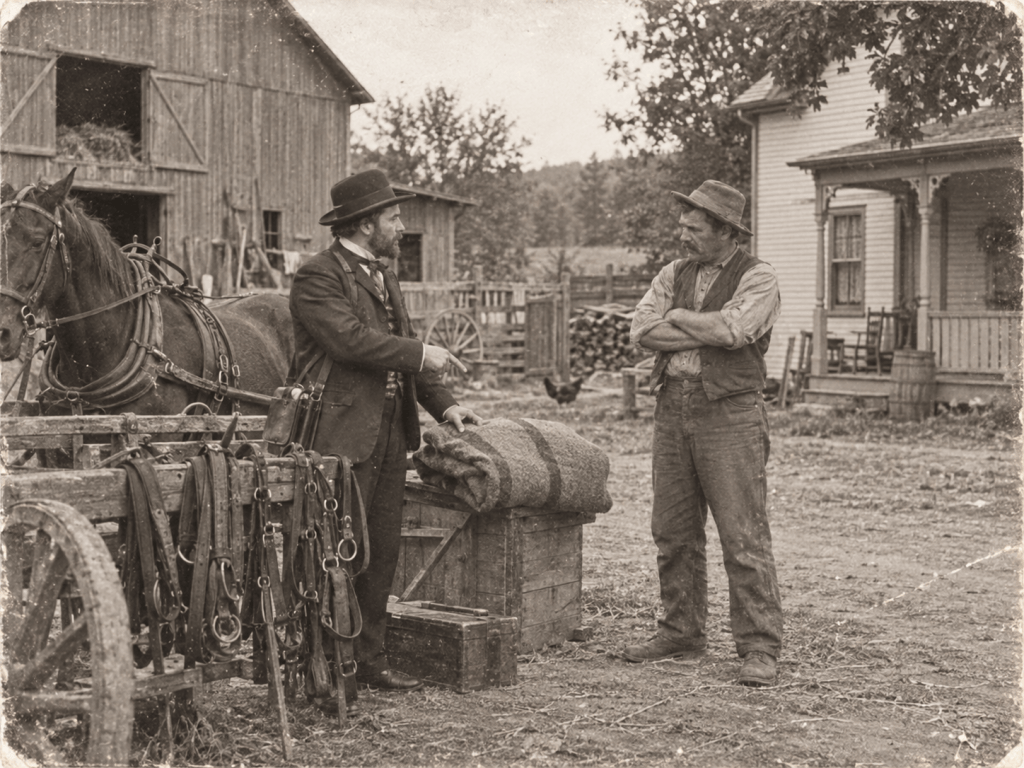
“Then,” said Peake, “there can be no harm in leaving it where you may determine the fact more accurately.”
The householder said the fact was already determined.
Peake replied that determination without examination might be prejudice.
The blanket remained long enough to become evidence.
Thereafter the merchants discovered the weak place in the householders’ agreement.
It was the word real.
A want might come home in search of a man; but how was the man to know whether it was a real want until the goods had been shown?
From that hour our maxim ceased to discourage trade and began to organize it.
Langto & Duffy had dress goods.
Nobody disputed this.
The question was whether the ladies must go to Langto & Duffy before discovering that they wanted dress goods, or whether enough of the commercial argument might be conveyed in the opposite direction.
Presently pieces were being brought for inspection.
A woman who had solemnly promised not to go looking for anything could stand in her own house and examine material at leisure while preserving, in a technical sense, the whole of her virtue.
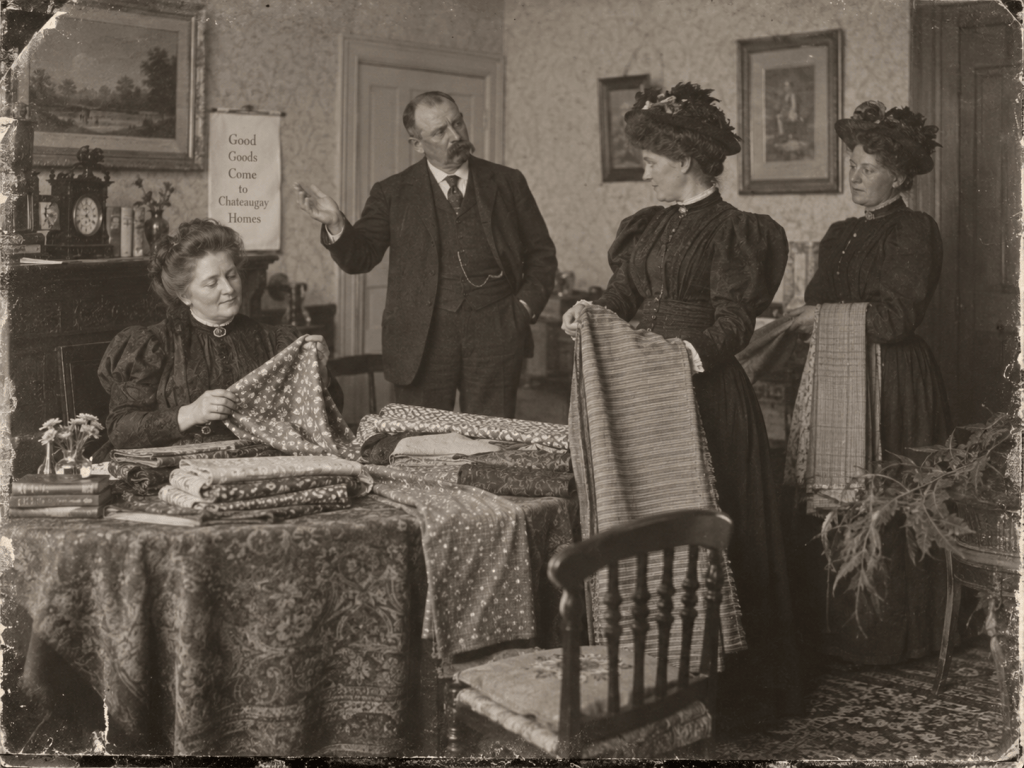
One husband objected that this was shopping.
His wife replied that she had not moved six feet.
He said geography did not alter the transaction.
She answered that geography was the entire point of the rule.
We have not undertaken to decide between them.
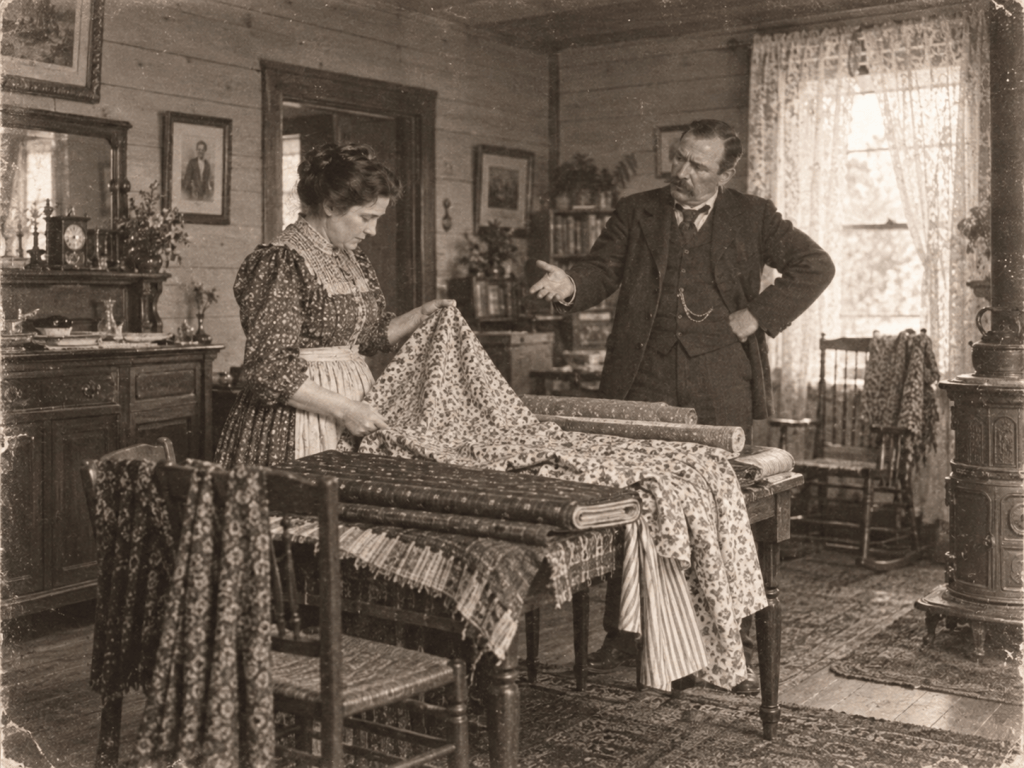
We merely observe that when husband and wife are disputing commercial doctrine from a newspaper maxim, the editor has already lost control of the case.
The crockery interest came next.
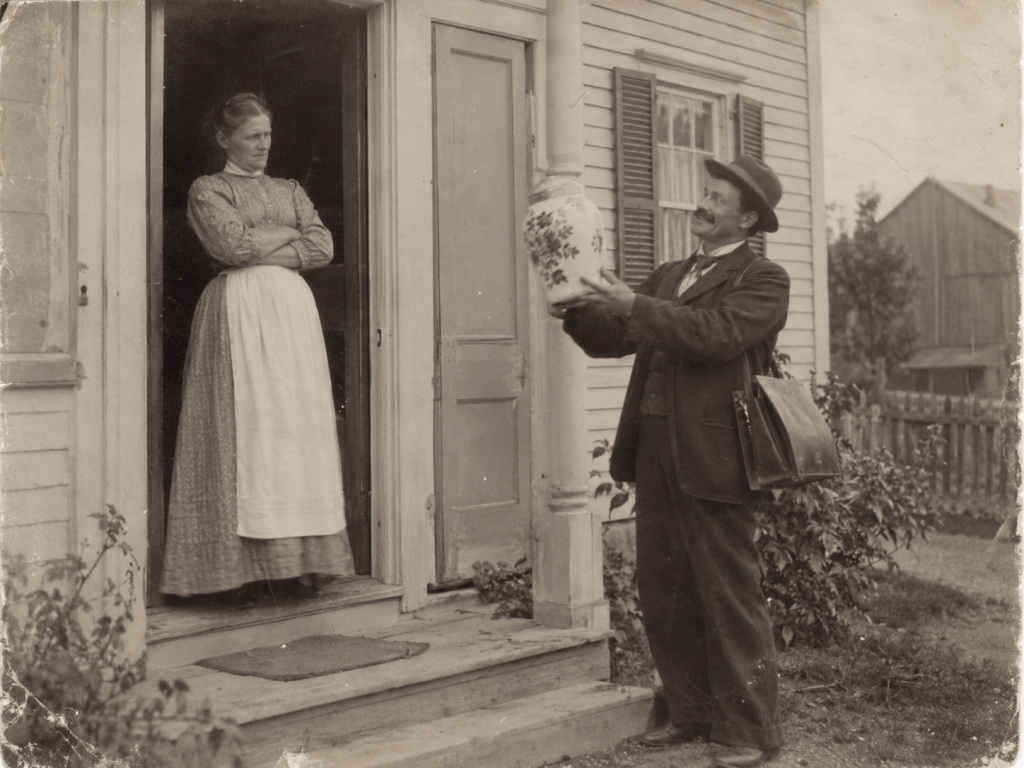
A salesman appeared with a flower jar.
The lady of the house said she had never thought of wanting a flower jar.
He congratulated her.
Here, he explained, was perfect proof that she had not gone abroad in search of the want.
The want had arrived uncontaminated by previous intention.
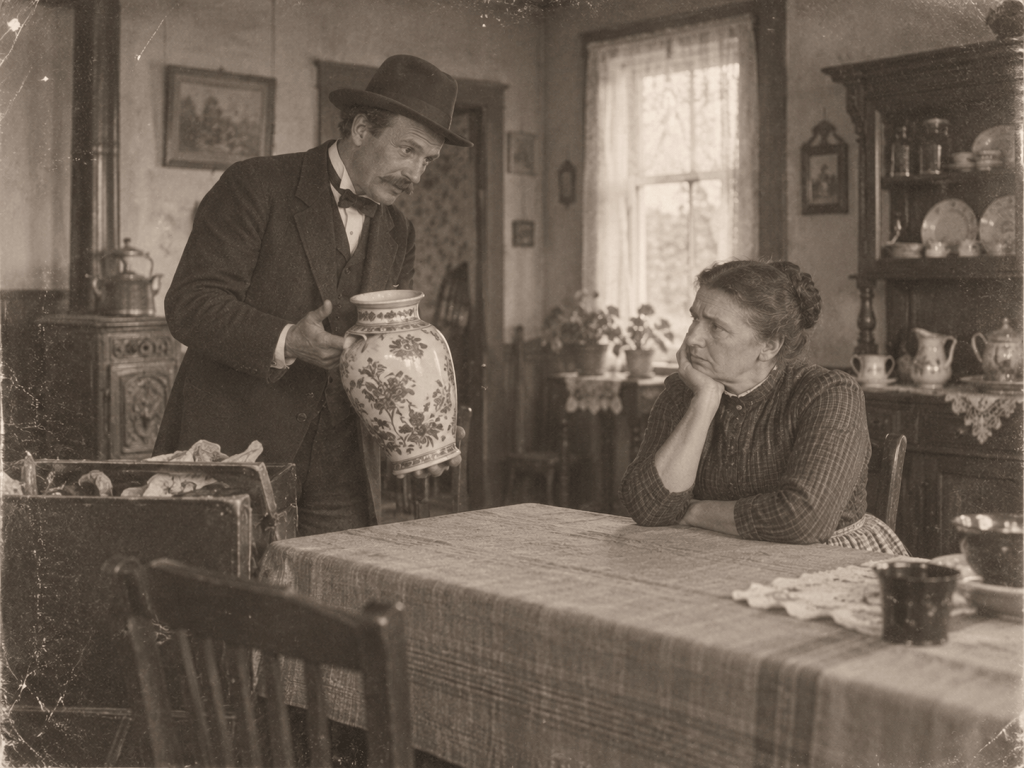
She replied that she did not want it now.
He said this was useful information, but information which could hardly have been obtained without bringing the jar.
Thus even refusal became business.
A rejected article had rendered valuable service by discovering that there was no market for itself at that particular house on that particular afternoon.
It is difficult to defeat an argument which improves when you decline to buy.
By the second week rival wants began arriving.
Two merchants might present different remedies for the same supposed deficiency while the householder denied possessing the deficiency at all.
A widow was offered an article for her henhouse because another merchant had lately sold something to her neighbors for their barn.
She demanded proof that her henhouse wanted it.
The merchant replied that henhouses rarely expressed themselves until after the fox has already left.
This seemed to us dangerous reasoning, and we said so.
We have always favored enterprise, but an editor must draw the line somewhere, preferably before livestock acquire purchasing agents.
Still, nobody can accuse Chateaugay of lacking commercial spirit.
There are towns in which a customer must enter a store, state his business, inquire after the goods, inspect them, and finally ask the price.
Here we were approaching a superior system in which the customer might remain at home while trade investigated him.
The marble people, who solicit correspondence, were peculiarly well situated under the new doctrine. They had already mastered the art of permitting a want to travel without its proprietor. A man need not go anywhere. A letter could do the going.
Indeed, after some consideration, we came to regard correspondence as the purest form of the whole business.
The citizen remains by his stove.
The merchant remains by his stock.
The want alone goes abroad.
This deserves encouragement.
We therefore offer the following modest verse, without charge to any merchant who can find room for it among his advertisements:
Stay by the hearth and bolt the gate,
Your wants know where you dwell;
If one gets lost, a merchant straight
Will bring another as well.
By the third week certain householders, finding themselves surrounded by things they had successfully refrained from seeking, attempted to impose standards.
No article should be admitted, they said, unless the merchant could first prove that it represented a genuine want.
This produced hearings.
“Why do I want this?”
“Because yours is wearing out.”
“It is not.”
“It will.”
“When?”
“That depends upon use.”
“Then I do not want it yet.”
“Not today. But we are discussing a real want, not merely a present one.”
The householders complained that this interpretation permitted a merchant to bring almost anything which might conceivably be useful before the end of a natural lifetime.
The merchants denied asking so broad a privilege.
They wanted only a fair opportunity.
We have observed that “a fair opportunity,” when used in trade, generally means enough room to set down the samples.
It should also be recorded, in justice to our businessmen, that nobody compelled anybody to purchase anything.
No cupboard was stormed.
No purse was seized.
No harness fastened itself upon an unwilling horse.
No dress goods crawled from the counter.
Everything was accomplished by normal human beings acting with perfect North Country sobriety.
That is much more interesting.
By the end of the month the original movement for household economy had become one of the liveliest demonstrations of home trade we have seen.
Families which had resolved to inspect nothing had inspected nearly everything.
Merchants who first regarded the rule as an assault upon business had discovered in it a system of distribution.
And we, who printed one harmless sentence in the belief that it encouraged contentment, found ourselves credited with devising a new commercial principle.
We disclaim the honor.
Still, we cannot deny the advantages of Chateaugay enterprise.
Give some towns a proverb and they will frame it.
Give Chateaugay a proverb and before Saturday somebody will discover the wholesale terms.
One citizen resisted to the last.
He had received samples, demonstrations, arguments, comparisons, and information concerning wants present, future, probable, conditional and expected.
At length he prepared a large notice and fastened it upon his door:
WE WANT NOTHING.
This appeared decisive.
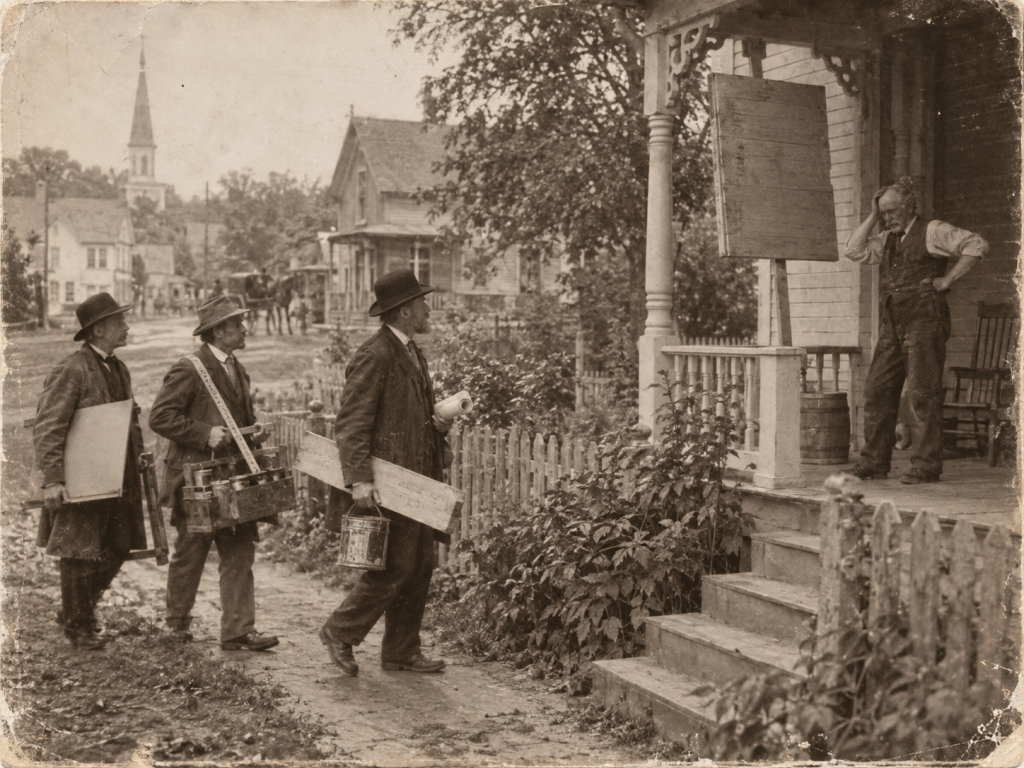
Within an hour three merchants called to ask whether he required a better sign.
#ShatageeWoods #Chateaugay #NorthCountryHistory #AdirondackHistory #HistoricalSatire #NewspaperHumor #VillageCommerce #GeneralStore #GildedAgeHumor #UnnaturalHysteria

What mysteries of Chateaugay Lake haunt you?