
Steamboat Dispatch
A Crime Serial
By Our Special Saranac Lake Correspondent
In Chapter Five of Steamboat Dispatch: A Crime Serial, titled “A Gathering Storm”, seasoned guide Nathaniel Collins grows increasingly uneasy about Quinn, a newcomer whose sleepless eyes and enigmatic comments hint at more than casual interest in Chateaugay Lake. As the two fish Mountain Pond’s tranquil waters, Collins discerns Quinn’s fascination with the Steamboat Pirate Syndicate’s avant-garde music and its effect on the region. Realizing Quinn seeks something buried in the lake’s mysterious depths, Collins vows to uncover his true purpose.
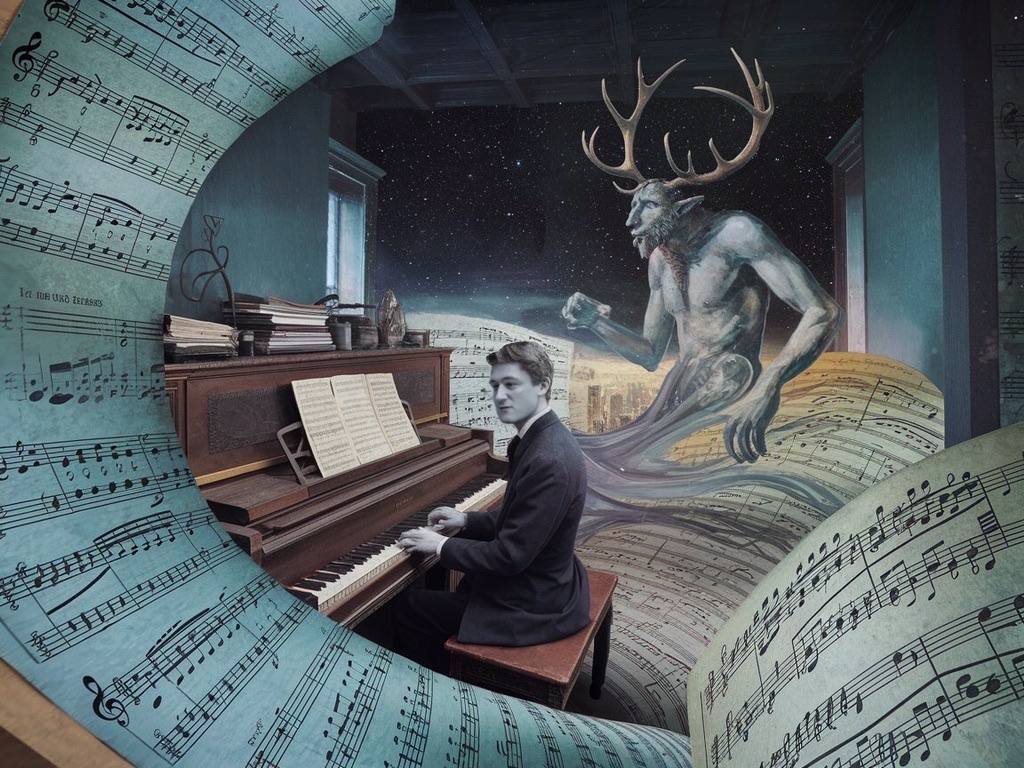
Chapter Six: Echoes from Chateaugay Lake
Two weeks had passed since Charles Ives left the misty shores of Chateaugay Lake, yet the place still lingered in his thoughts like a half-remembered dream. Back at his insurance firm in Manhattan, the city seemed a world away from the raw, untamed wilderness of the Adirondacks. The hustle and bustle of the streets, the constant hum of human activity, felt almost suffocating after the vast, open spaces he’d explored. But it wasn’t just the landscape that haunted him; it was the music, the strange sounds, and the wild, frenzied energy of that night at the tavern.
Ives sat at his piano, his fingers hovering over the keys, unsure where to begin. The familiar sounds of Park Avenue outside his window—the clip-clop of horses’ hooves on cobblestone, the distant murmur of voices—were a far cry from the eerie stillness of the lake or the primal calls that had echoed through the woods. He had come to Chateaugay Lake in search of inspiration, but what he found there had unsettled him, disturbed the very foundations of his understanding of music.
He closed his eyes, trying to summon the memory of that night. The tavern had been a small, cramped space, filled with rough men who smelled of sweat and tobacco. They were far removed from the refined audiences Ives was used to performing for, but there was something authentic about them, something raw and untamed, much like the land they inhabited.
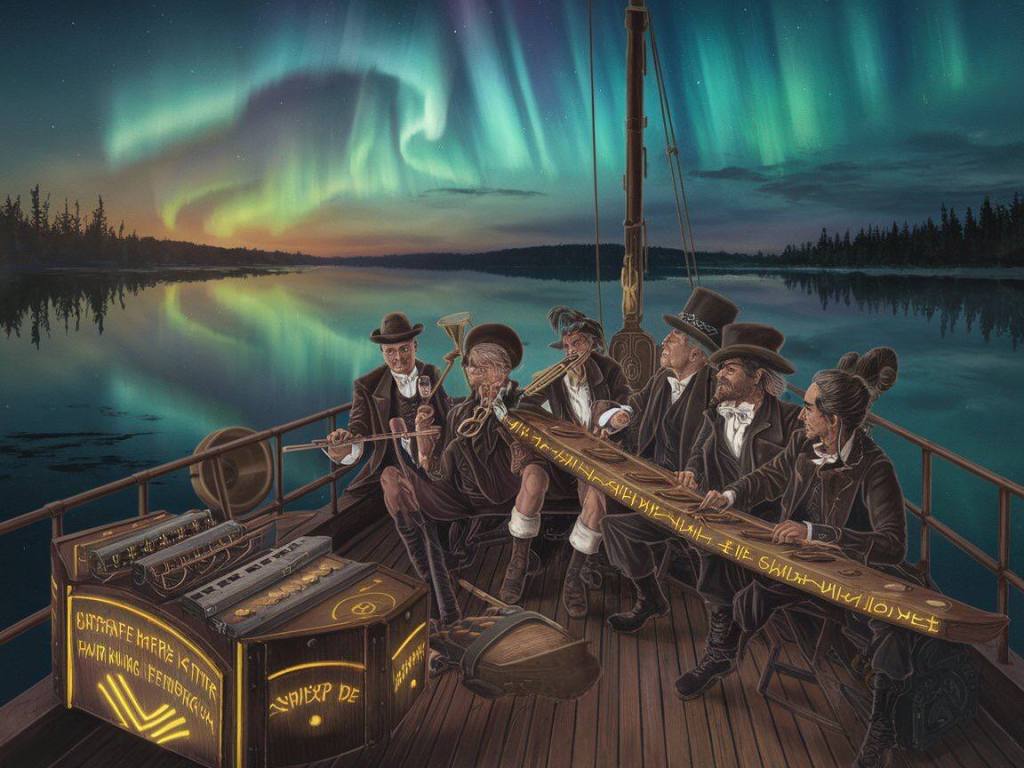
And then there was the music. The Steamboat Pirates, as they called themselves, had no formal training, no understanding of theory or composition. Yet, when they played, it was as if they were channeling some ancient, primal force. The rhythms were erratic, the melodies discordant, yet there was an undeniable energy in the way they played, an intensity that spoke to something deep within Ives.
He remembered the feeling that had taken hold of him that night, the strange sensation that had gripped him as the music swelled around him. It had started as a tingle at the base of his spine, a whisper in his ear that grew louder and more insistent with each passing moment. By the time he had jumped atop that table, wielding the strange contraption he had cobbled together from spare parts—a crude attempt to mimic the sounds he had heard—the sensation had taken hold of him completely.
Ives had no memory of what happened next, only fragments, flashes of images that made little sense: the wide-eyed stares of the tavern-goers as he bellowed strange, guttural sounds; the feel of the rough wooden table beneath his boots; the way the music seemed to swirl around him, lifting him higher and higher until he felt as if he were about to burst.
When he had come to, the tavern was silent, the music had stopped, and all eyes were on him. He remembered the looks of confusion, the whispered conversations, the way they all seemed to back away from him as if he were something other, something dangerous. But most of all, he remembered the feeling of emptiness that had settled in his chest as the last echoes of the music faded away.
Now, sitting in his Park Avenue apartment, Ives struggled to make sense of it all. He had come to Chateaugay Lake seeking a new direction in his work, something to break him free from the constraints of conventional composition. What he had found was something far more profound, something that shook him to his core.
He pressed down on the keys, letting the first few notes ring out in the quiet room. The sound was pure, but it felt hollow compared to what he had heard in that tavern. He tried to replicate the rhythms, the strange dissonances, but it wasn’t the same. Here in New York, in this controlled, civilized environment, the music felt flat, lifeless. It lacked the wild energy, the raw, untamed spirit that had made it so powerful.
Ives sighed and stood up from the piano, pacing the length of his apartment. He couldn’t get the image of Quinn out of his mind—the way the man had watched him that night, his eyes sharp and calculating.
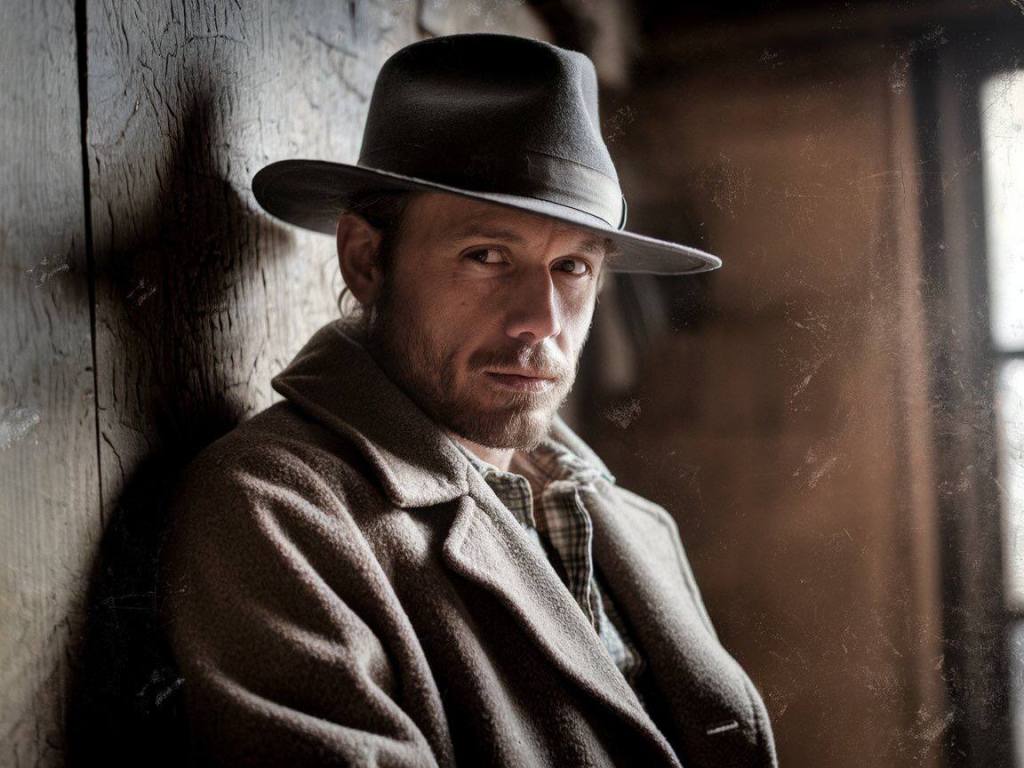
There was something about Quinn, something that didn’t sit right with Ives. The man had claimed to be a sportsman, but there was more to him than that. Ives had seen the way Quinn moved, the way he interacted with the locals. He wasn’t just an observer; he was a player in some larger game, one that Ives couldn’t quite grasp.
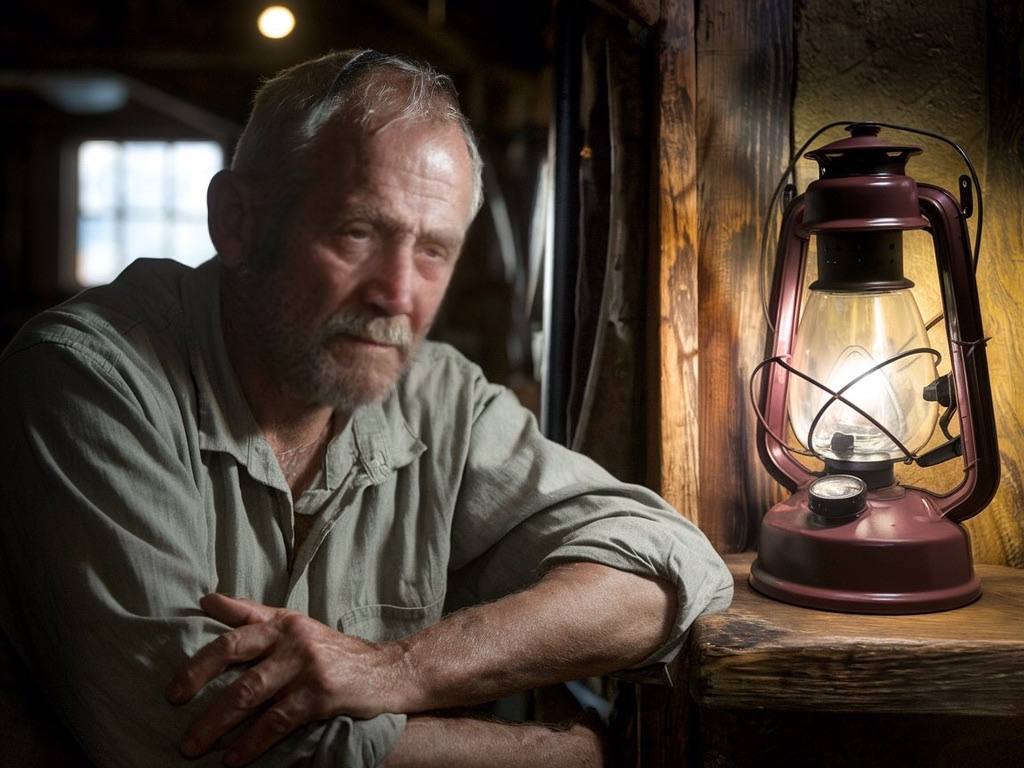
And then there was Nathaniel Collins, the guide who had led Quinn up to Mountain Pond. Collins was a man of the land, a quiet, thoughtful presence who seemed out of place among the rowdy crowd at the tavern. He had watched Ives with a kind of knowing look, as if he understood something that Ives didn’t. When they spoke, there was a weight to Collins’s words, a sense that he was trying to warn Ives of something, though what that was, Ives couldn’t say.
As the days passed, Ives found himself increasingly distracted, unable to focus on his work. The memories of Chateaugay Lake, of Quinn, of Collins, of the music, kept pulling him back, drawing his thoughts away from the present. He knew he had to find a way to channel those experiences, to transform them into something meaningful, something that would push his work to new heights.
But how? How could he capture the essence of that wild, untamed place, the primal energy of the Steamboat Pirates’ music, the strange, otherworldly experience he had undergone? It was like trying to hold water in his hands; the more he tried to grasp it, the more it slipped away.
One night, as he lay in bed, the answer came to him—not in words, but in a feeling, a deep, intuitive understanding. The music he had heard at Chateaugay Lake wasn’t meant to be replicated. It wasn’t something that could be captured or controlled. It was a force of nature, something that had to be allowed to flow freely, to take on a life of its own.
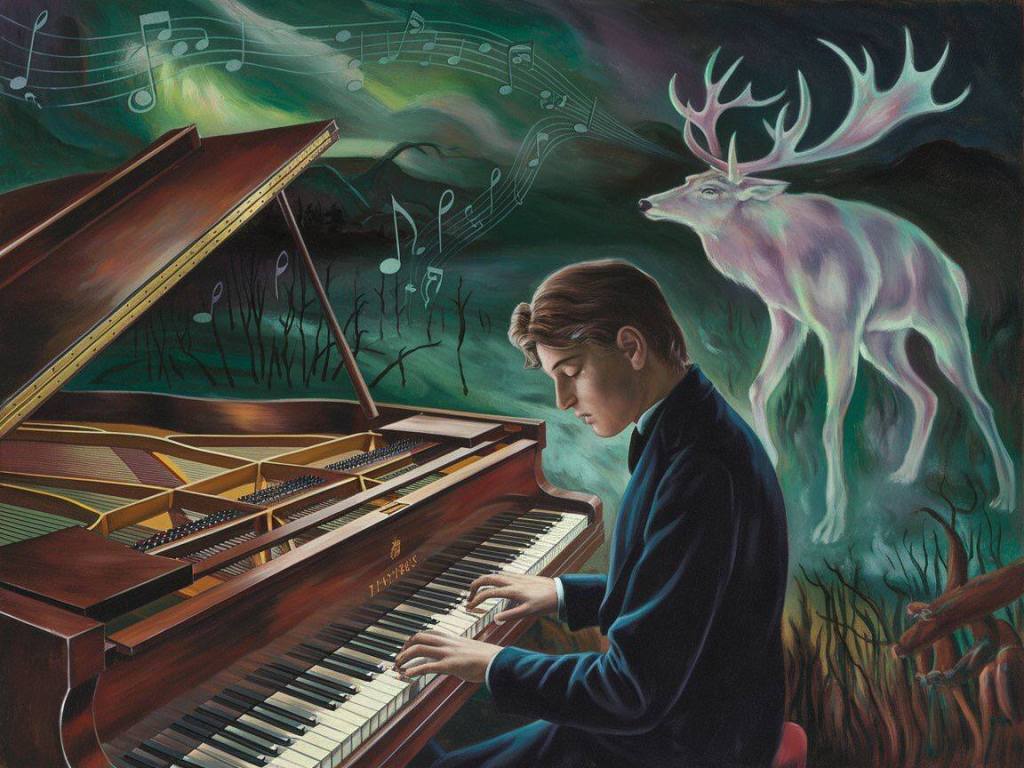
The next morning, Ives sat down at his piano and began to play, not thinking about notes or theory, but letting the music flow through him, as it had that night at the tavern. He closed his eyes and allowed himself to be carried away by the sounds, to let the spirit of the Wendigo take hold once more. The music that emerged was unlike anything he had ever composed before—chaotic, dissonant, yet deeply resonant, as if it were tapping into some primal force deep within the earth.
As he played, Ives felt a sense of clarity, of purpose, that he hadn’t felt in weeks. He wasn’t trying to recreate the music of Chateaugay Lake; he was letting it speak through him, letting it shape itself into something new, something that was both a reflection of his experience and a transcendence of it.
When he finally stopped, the room was filled with the echoes of his playing, a lingering resonance that seemed to hang in the air long after the last note had faded. Ives sat back, breathless, feeling as if he had just touched something profound, something that was far beyond his understanding.
The experience had changed him. He knew that now. Chateaugay Lake, with its wild beauty and its strange, mysterious energies, had left its mark on him, and there was no going back. Whatever he composed from now on would carry a piece of that place, that night, that music within it.
And as he looked out the window, at the busy streets of New York City, Ives knew that this was only the beginning. The echoes of Chateaugay Lake would continue to ripple through his work, shaping it in ways he could never have anticipated, leading him down paths he had never imagined.
The wilderness had spoken to him, and he would spend the rest of his life trying to decipher its message.
To be continued in next week’s edition of the Steamboat Dispatch…


What mysteries of Chateaugay Lake haunt you?