This eerie chronicle of spectral sorrow and uncanny laments, replete with ghostly confessions and nostalgic melancholy, may unsettle sensitive readers. Proceed with caution; its haunting allure might evoke recollections left undisturbed.
The Weeping Strider of Lake Chateaugay
Steamboat Dispatch, Week of March 3, 1891

Horatio—“O, what tempest of tears doth this night summon forth?”
Hamlet—“Anon, my friend, for oft in the gloaming ‘tis not the gentle breeze but sorrow’s spectral echo that doth move.”
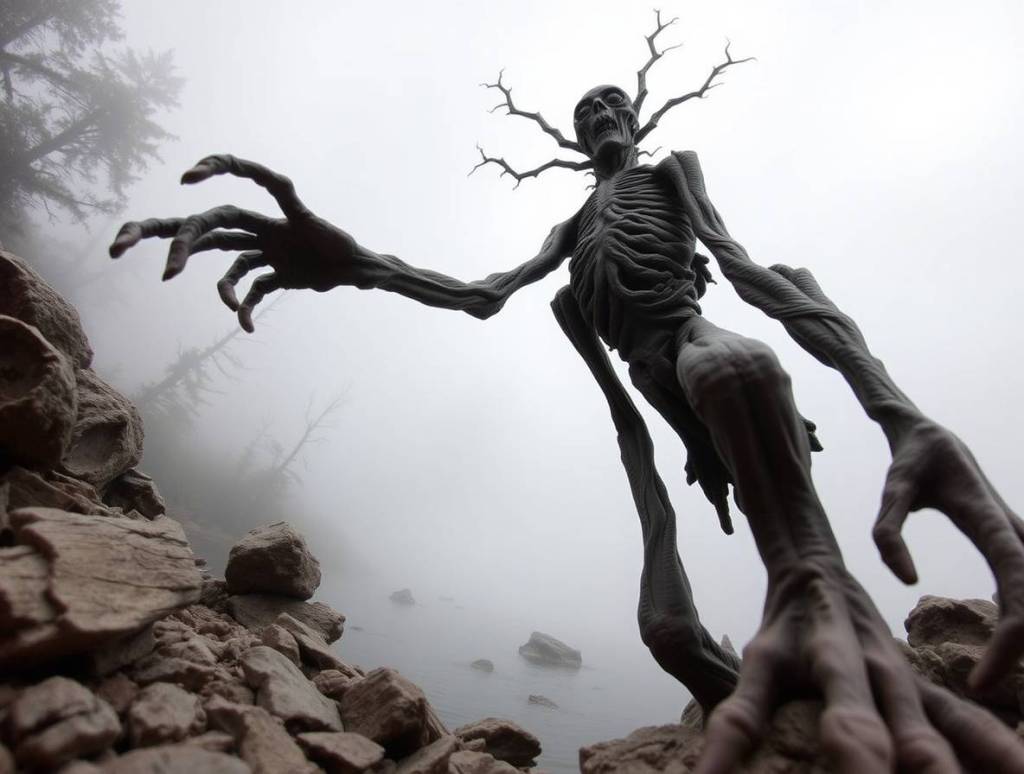
Yes, Mr. Editor, it appears that our fair Chateaugay, that bastion of summer merriment and rustic repose, now finds itself haunted by a figure of ineffable lament—a being so dreadfully doleful that the very stars seem to dim in sympathy. I refer, dear readers, to the Weeping Strider: a tall, emaciated wraith whose limbs, gnarled and unearthly, stretch toward the heavens as if in desperate supplication. Its eyes, two yawning abysses of despair, emit a viscous, inky substance which pools about its feet like the sorrows of a thousand regretful souls.
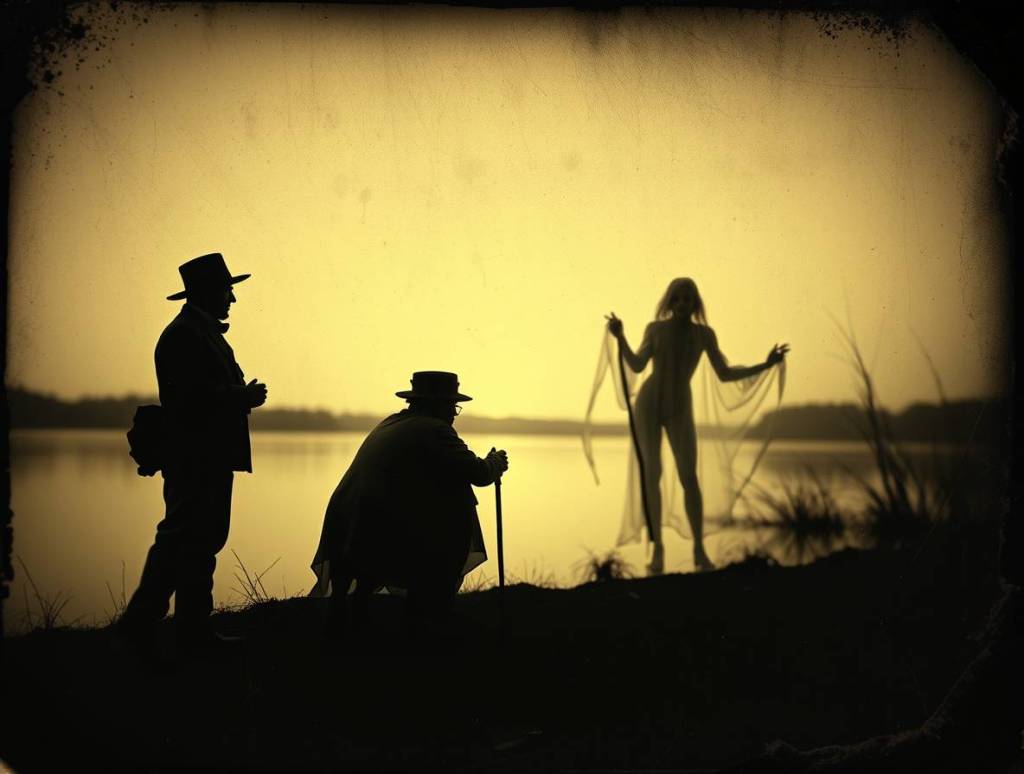
Witnesses of unimpeachable repute have attested to its presence. One Mr. Richard “Uncle Dick” Shutts—esteemed guide and herald of Adirondack lore—claims to have seen the Strider gliding along the shadowed water’s edge near Bellows Bay. Alongside him, scholars of life’s misfortunes such as Horace Bellinger, Esq., and one well-informed fellow, Jonathan Goodfellow, whose credentials in the arcane art of reminiscence are as unquestionable as his penchant for melancholy, all converge in their testimony. They aver that once one’s gaze meets the creature’s hollow stare, a flood of personal remorse ensues, as if the very weight of every past transgression were to cascade upon the hapless observer in a torrent of sorrow.
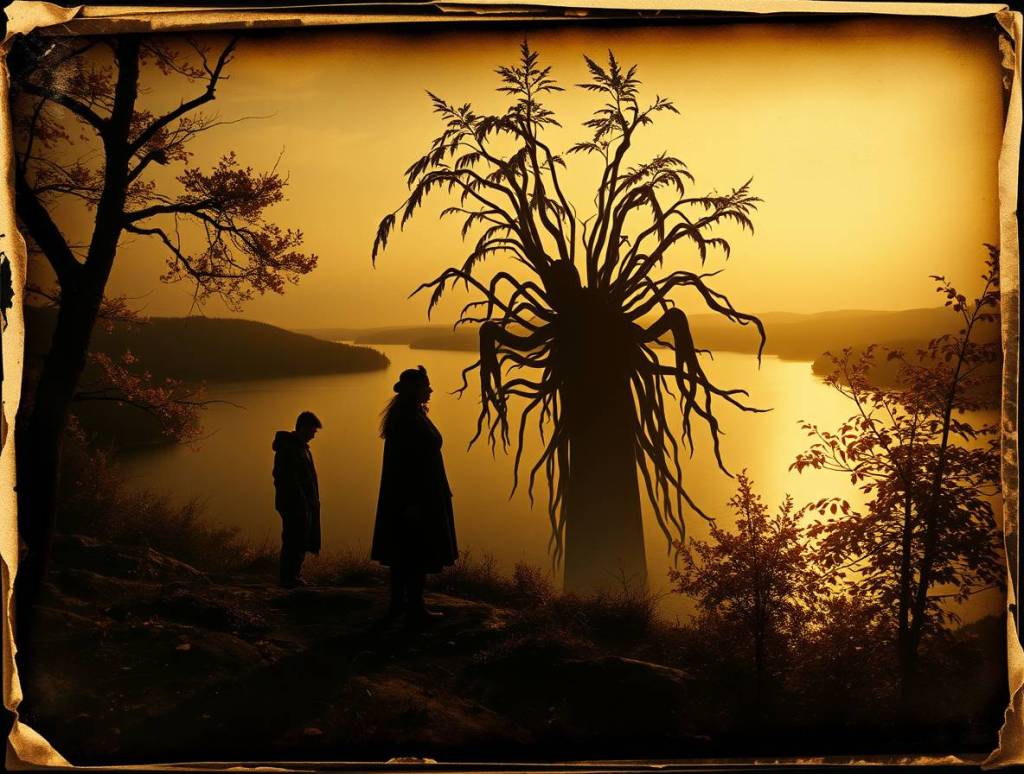
The description is, I fear, too poignant to recount without a trembling hand: a gait so lurching, a visage so marred by ineffable grief, that one might believe the specter to be no less than a physical embodiment of life’s inescapable regrets. Its mournful wails, akin to a mother’s plaintive cry for her lost progeny, reverberate across the lake, curdling the air with a despair so palpable that even the loons fall silent in its wake.
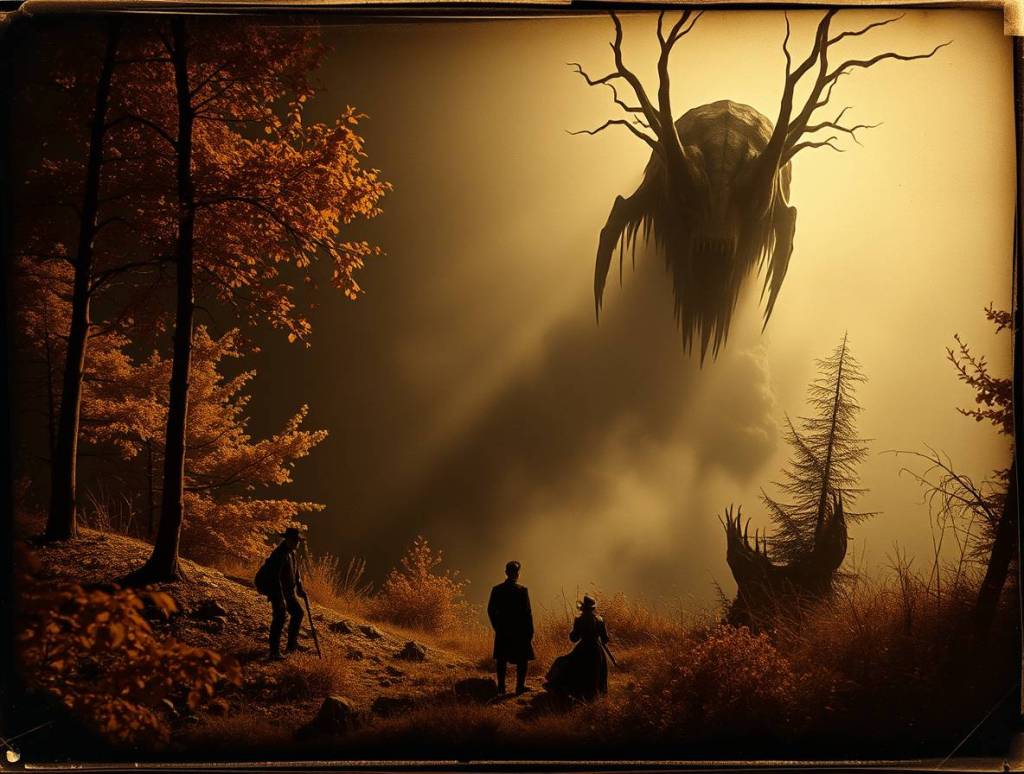
As for the origin of this doleful apparition, conjecture flows as freely as the inky tear-trails at its feet. Some, invoking the high authority of learned men (and a tipple or two at Ralph’s), surmise that the Strider is naught but the restless spirit of a long-forgotten hermit—perhaps one Enoch Young, whose bitter end upon these very shores was as mysterious as it was tragic. Others, with a nod to the venerable musings of Shakespeare and the speculative imaginings of Jules Verne, posit that this melancholy wraith might be a manifestation of nature’s own retribution—a metaphysical auditor exacting a toll for sins committed in the realm of unrepentant vice.
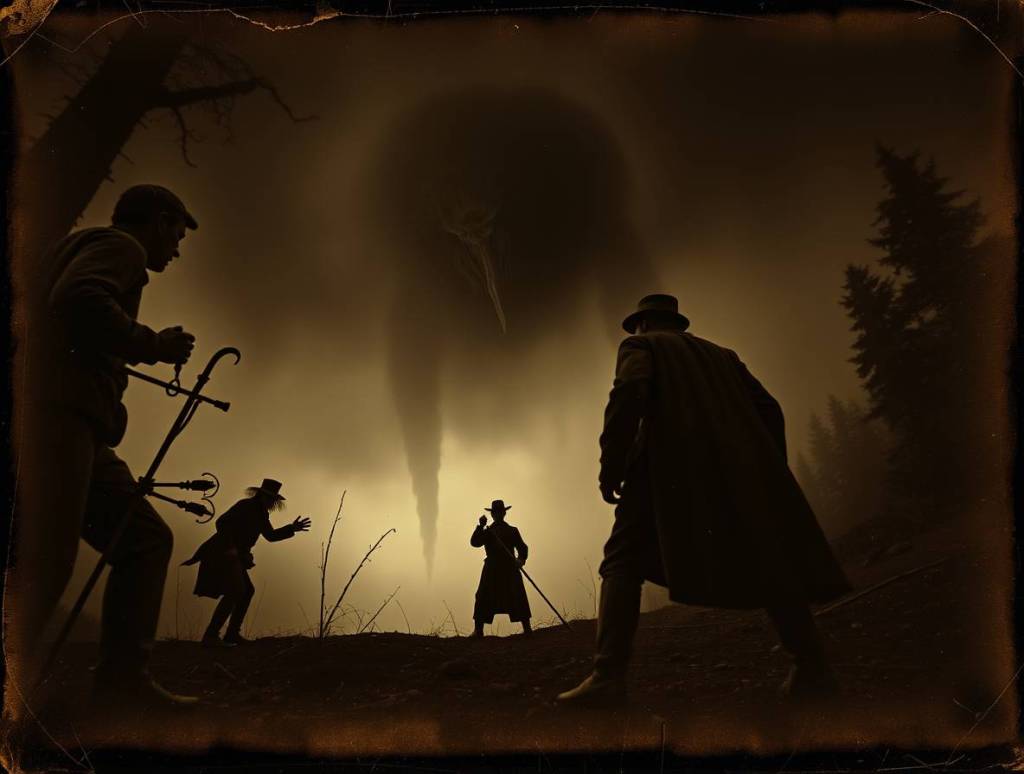
Indeed, if the spectral denizens of Lake Champlain can spawn leviathan legends and eerie maritime myths, why, then, should our cherished Chateaugay Lake be bereft of its own mournful sentinel? I, for one, find the mounting evidence—so eloquently chronicled by our cadre of sober-eyed observers—insufficient to dismiss the Strider as mere fancy or drunken hallucination. Thus, with a flourish of both despair and defiant mirth, we cast down the gauntlet to all skeptics and materialists: present us with incontrovertible proof to the contrary, if you dare!
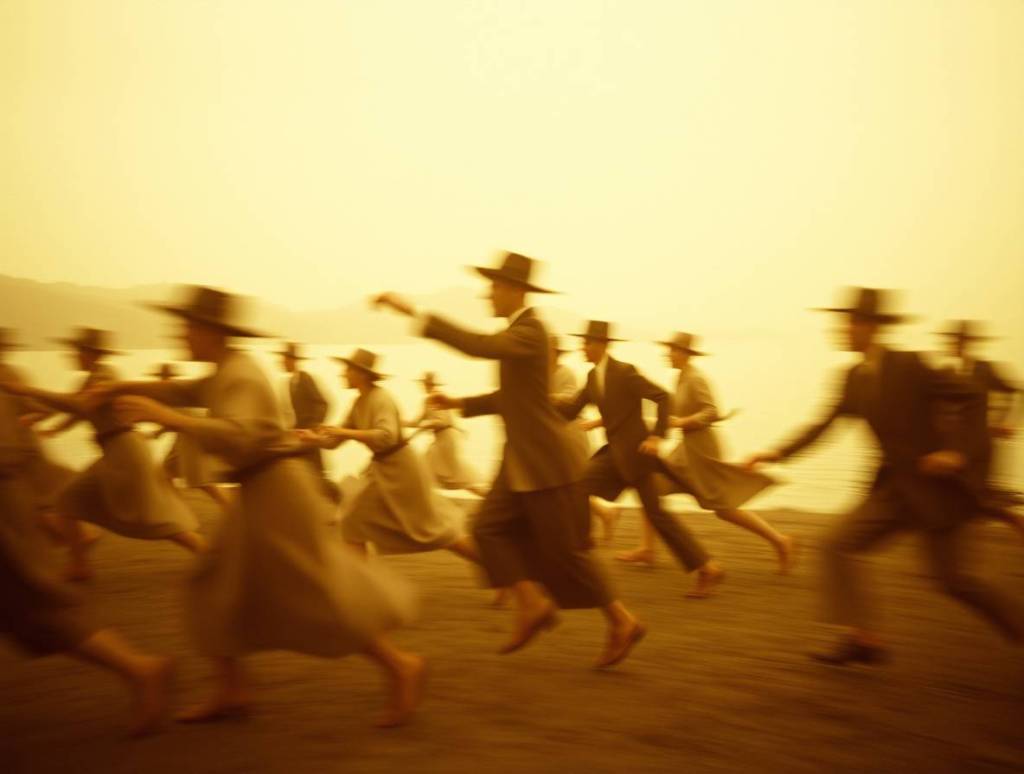
Until such a day of reckoning, let the record resound with this singular truth: the Weeping Strider roams the twilight shores of Chateaugay Lake, a somber harbinger of regrets past and promises unfulfilled!
Steamboat Dispatch, Friday, March 10, 1891


What mysteries of Chateaugay Lake haunt you?