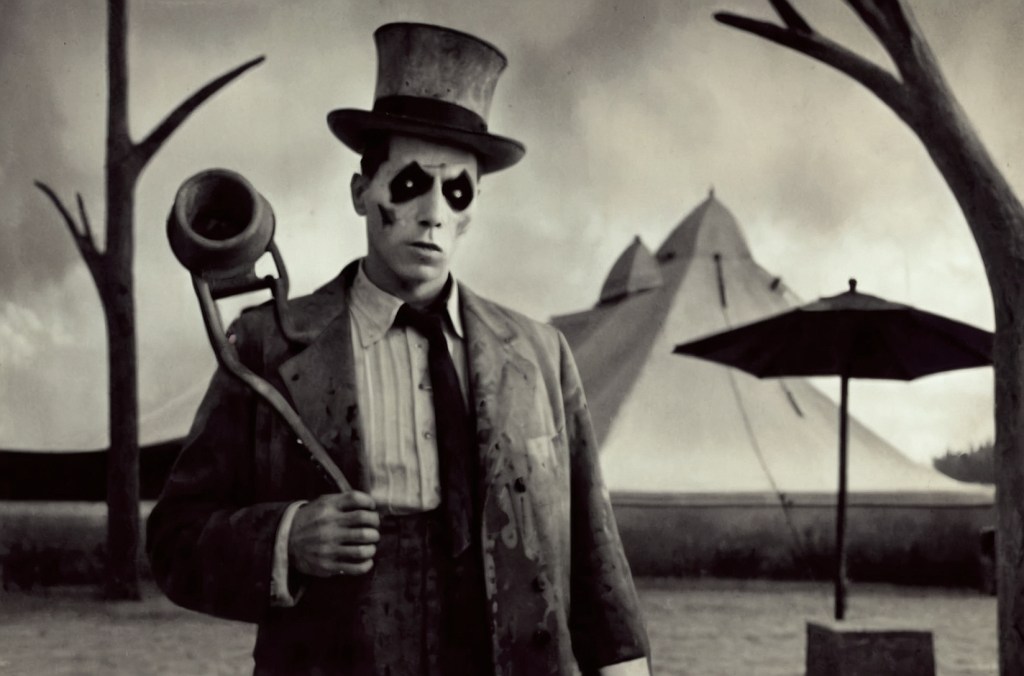
Prepare for an unforgettable spectacle where an enigmatic sculpture in a murky bog unseals forbidden dimensions; cosmic irony and sublime expressionist horror merge with spectral revelry, inciting whimsical dread and absurd, dark hilarity.
July 15, 1923—when the world, in its infinite cosmic irony, decided to misfire a festival of art and arcana upon the unsuspecting shores of Chateaugay Lake.
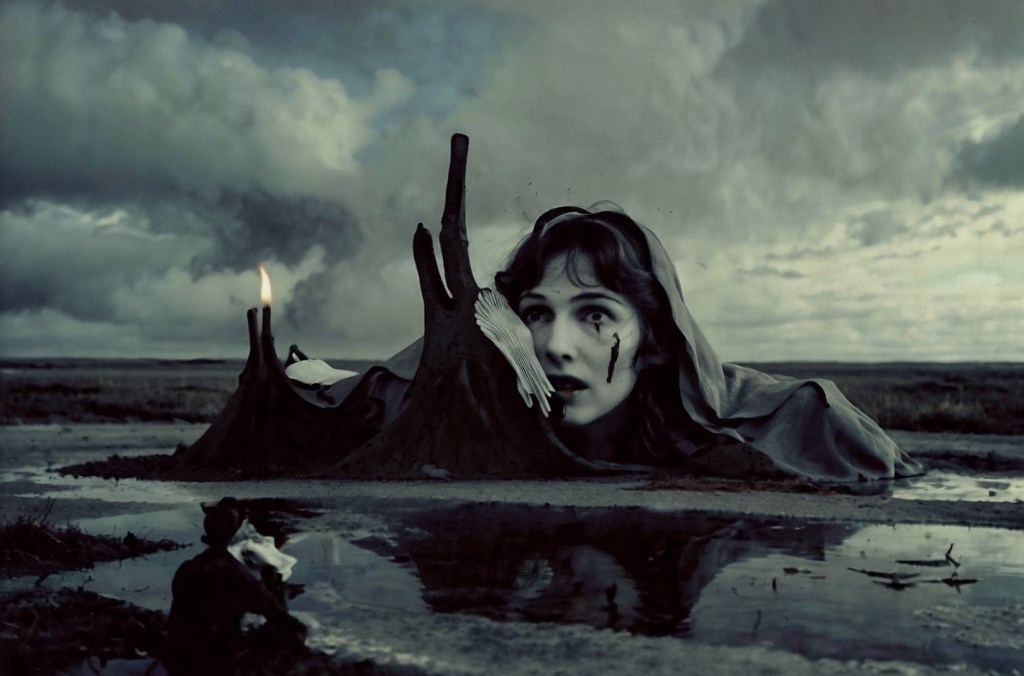
In a summer where even the cicadas seemed to murmur secrets to the wind, Evelyn Nesbit—enigmatic maestro of the surreal and a doyenne of both high society and hidden occult whispers—unveiled her magnum opus: a resonant sculpture poised in the heart of a bog that was less mere marshland and more a fissure in the fabric of being. It was, as the fates would cruelly jest, the key to a door that should have remained forever sealed.
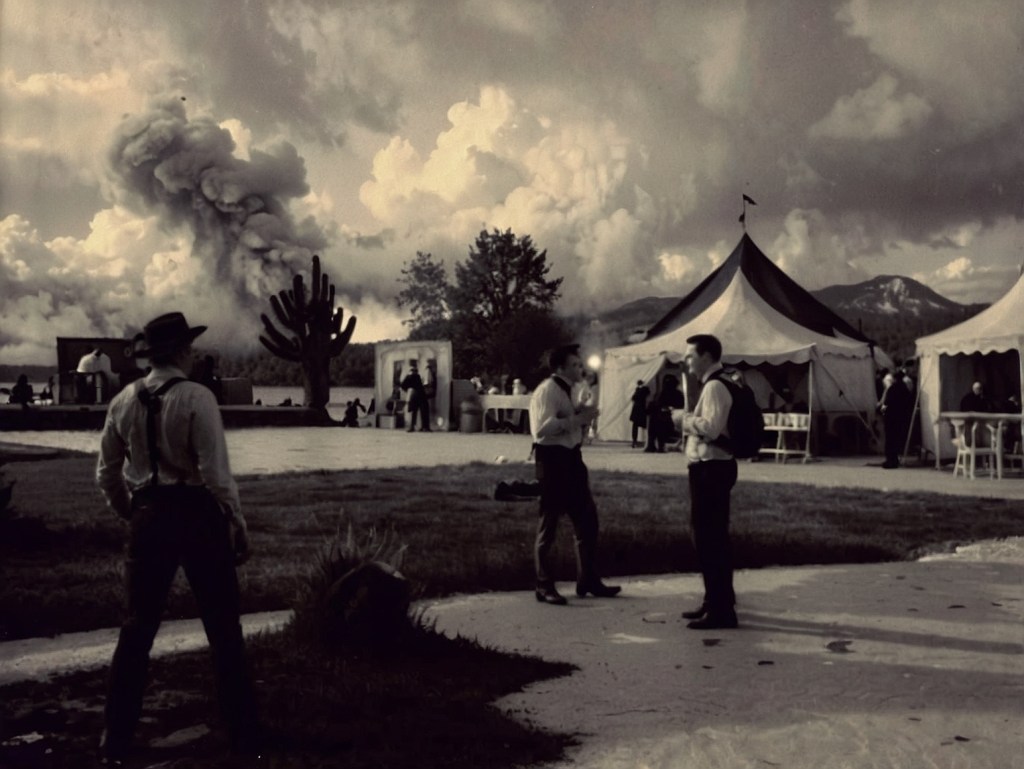
The gathering was a motley parade of avant-garde souls, their eyes glinting with the feverish anticipation of those who believe art is the answer to every cosmic riddle. Yet, in a twist so absurdly sublime that even the stars paused in bemused reflection, the sculpture’s low hum—synchronized with the collective psychic tremors of the crowd—tore open a portal to realms where time and reason lost their footing.
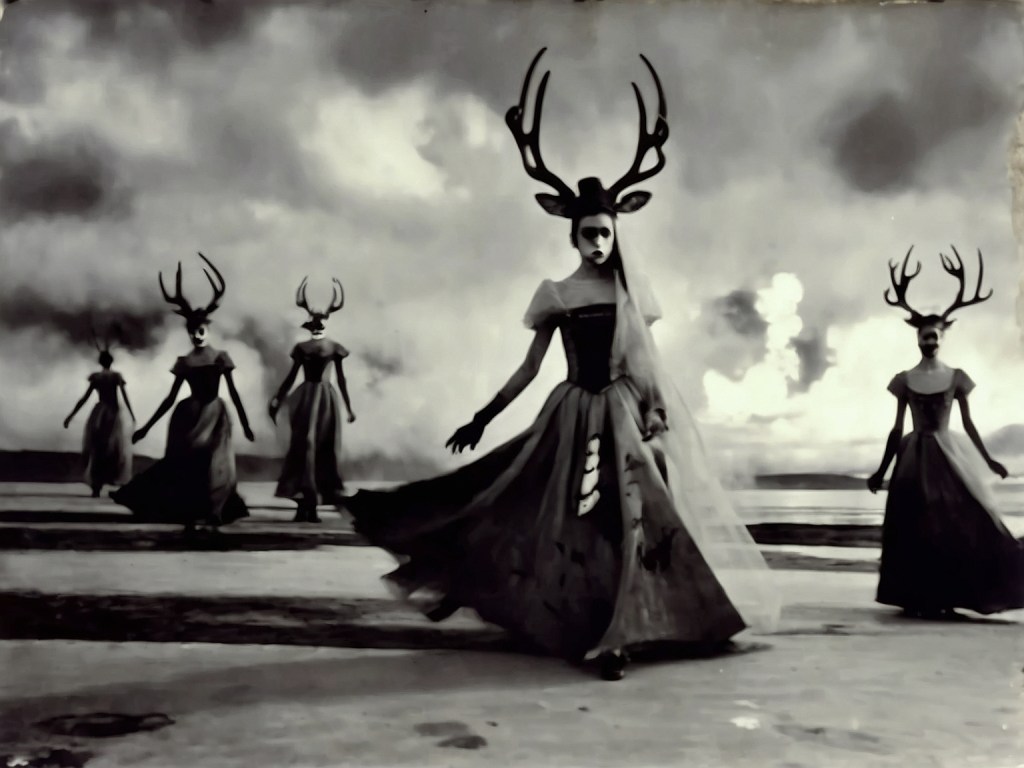
And then—Lo!—with a sound that was less an explosion and more a sigh from the void—shattered expectations and reality itself. Out poured entities as old as the unspoken legends of the forest: Wendigos, those spectral vagabonds of hunger and despair, lured by the avant-garde vibrations and the audacity of human creativity. Their arrival was neither menacing nor heroic, but a cosmic punchline to an art show that had ventured too far into the metaphysical.

In the ensuing pandemonium, where art collided with interdimensional chaos, the unsung heroes emerged: the members of the Chateaugay Lake Steamboat Pirates Association. Not pirates in the conventional sense, but rather a motley crew of local eccentrics, more adept at navigating fog-bound waters than the murky depths of cosmic anomaly. They fumbled and frolicked with a determination that was equal parts absurdity and valor, attempting to tether the unruly energies that threatened to rewrite the very lexicon of existence.

The spectacle unfolded like a fever dream—a satirical ballet where every note of music, every ripple in the bog, carried the weight of existential dread and the whimsy of forgotten folklore. Reality, that fragile construct, wavered as if it were a mere suggestion rather than a law. What was art, and what was the universe, if both were equally prone to unraveling at the slightest provocation? Evelyn Nesbit’s creation, intended as a celebration of the human spirit, had instead become an elegy to our cosmic insignificance—a reminder that even our grandest experiments in expression are but echoes in an indifferent void.
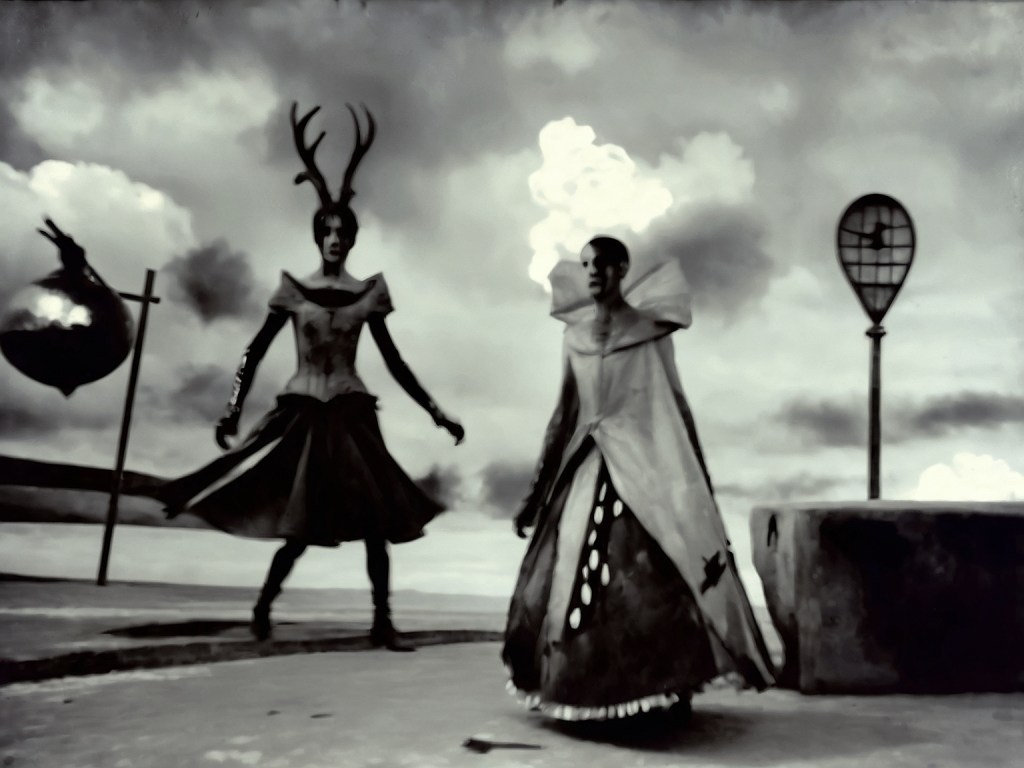
Between staccato bursts of laughter and the silent, haunting interjections of the unknown—“Ah!” and “Behold!”—the festival’s disaster took on an almost playful quality. It was as if the universe itself had wryly decided to serve a banquet of paradox: a sumptuous feast of aesthetics marred by the chaotic spice of interdimensional mishap. The air shimmered with questions—each a delicate refrain in the twilight: Was this a mere artistic misadventure, or a deliberate cosmic satire? Could the boundaries between art and existence ever be more than illusions, fleeting as the morning dew on Chateaugay’s troubled waters?
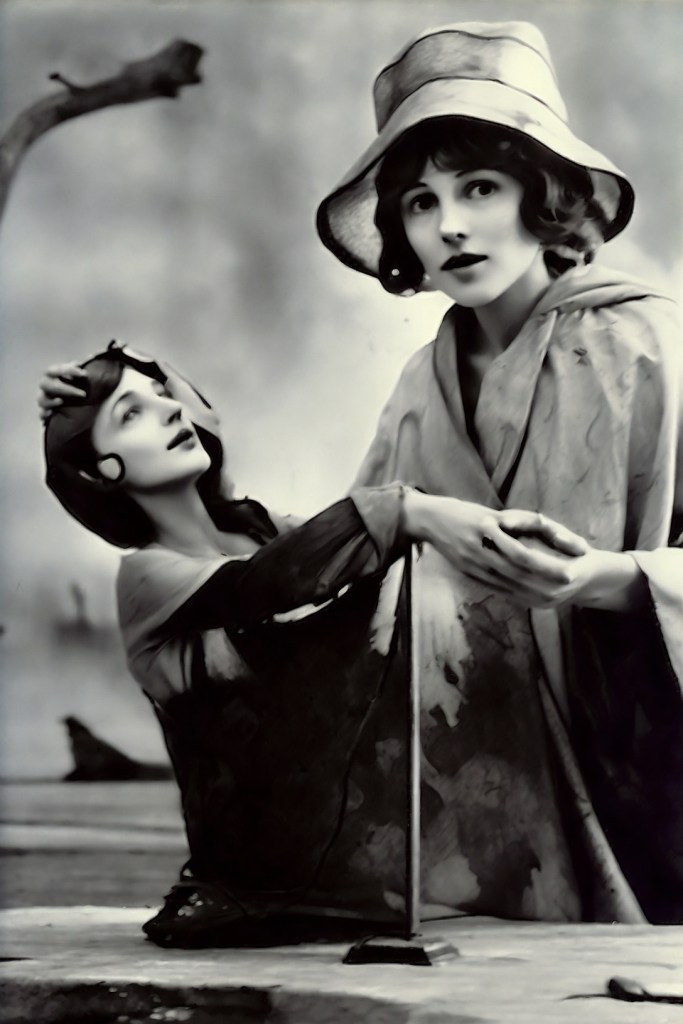
As the echoes of that ill-fated night receded into legend, leaving behind a trail of half-remembered dreams and a community forever altered, one truth remained stubbornly in place: in the realm of art and the cosmos, nothing is quite as it seems. In the wake of the festival’s disastrous debut, both spectators and specters alike were left to ponder the fragile nature of reality—and to question, with a wry, knowing smile, whether they had ever truly been there at all.


What mysteries of Chateaugay Lake haunt you?