
Enter a vortex of dread! A Wendigo’s quantum wrath reshapes existence. Witness impossible horrors in this unsettling tale of temporal distortion and primal fear.
WENDIGO WREAKS QUANTUM HAVOC!
A Chateaugay Chronicle in Three Shuddering Parts
The Map that Sneered

The sun cracked open like a rotten egg on the ridge of Shatagee, and the trapper stumbled through the birches before I’d swallowed my first draught of bark tea. Eyes wild. Beard clotted with frost and something redder. Not blood. Not paint. Something… older.
“Grizz,” he gasped. “Dere’s somethin’ out dere. She call me name—but it’s me, you hear? My voice, but all wrong. All wrong, mon ami.”
He shook like a birch in high wind. His boots were on the wrong feet. His copper spoon still clutched in one hand, bent like a prayer. “She laugh, too. A beeg laugh—like a loon who remember your sins.”
I offered him my stump stool and half a dried eel. He ignored both, unrolled a damp map onto my barrel desk. His hand shook as he pointed: “Dis here—my trapline down river. But… non. Look.”
The ink was moving. I swear it on the King’s teacup, the blasted ink was swimming—curling like a snake, reshaping creeks and contours. His route twisted inward, coiling like a snail’s shell, until the final mark—his camp—sat in the dead center of a spiral with no way in. Or out.
I reached for my chart compass. The needle spun like a harlot’s skirt.
“Well now,” I muttered. “That ain’t cartography—that’s mockery.”
The trapper only laughed—his own laugh, doubled and hollow—before fainting clean off the stool.
—End Dispatch I—
The Lake that Rearranged Itself

Sent out M. Renfrew, my best man with a quill and a sense of direction. Told him to resketch the lake’s bounds from summit to cove. Gave him two guards, three pouches of salted pork, and my old chronometer (which ticks backwards every time the moon wanes).
He returned three days later, babbling. His parchments were soaked in pitch. Not water—pitch.
“The river,” he wheezed, “she run uphill. Cabin gone. Was dere yesterday—my swear, Grizz, dere was a whole post. With fire. Men drinkin’. Now? Nothin’. Not even ash. Just… dampness.”
Across the lake, at the fur-trading post near Iron Tooth Rock, stories bled through faster than rum through a wet cask.
One bark-peeler: “Saw shapes. Gaunt, long-legged. No feet. Drifted ‘tween cabins like smoke, but cold.”
A soldier: “Oh, ho, by golly, me musket she misfire three times—misfire, misfire, misfire proper. On da fourth, she fire afore I even pull da trigger. Dat lead ball? Poof—gone. Not spent, but vanished clean, mon ami.”
A trapper: “Oh, ho, me snares she sprung, but nothin’ she catch—jus’ bent, bent proper like old iron. Me bait? Parbleu, it was older dan when I first lay it—rotten, moldy—three weeks’ rot squeezed into two nights, mon ami.”
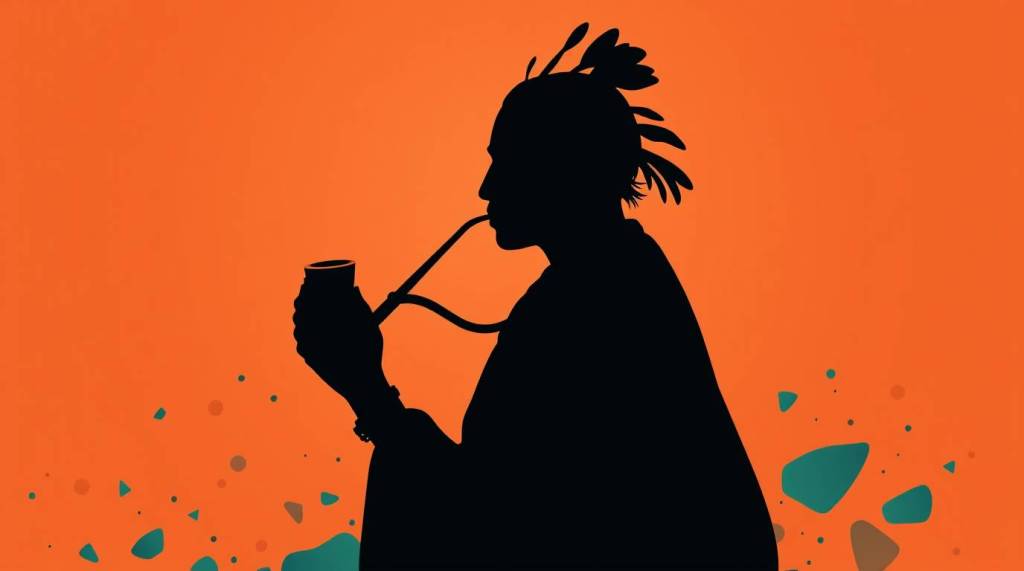
I went to the Abenaki elder, a stonelike woman who’d long stopped giving her name.
She looked up from her pipe. “Wendigo n’est plus beast. Not anymore, mon ami. He no longer claws an’ hunger. Now he famish pour wetkwagana, the reality itself. He mange nibokan, time. He swallow askili, cause, pis spit confusion.”
And with that, the wind turned, and my inkpot shattered.
—End Dispatch II—
Where the River Fought Itself
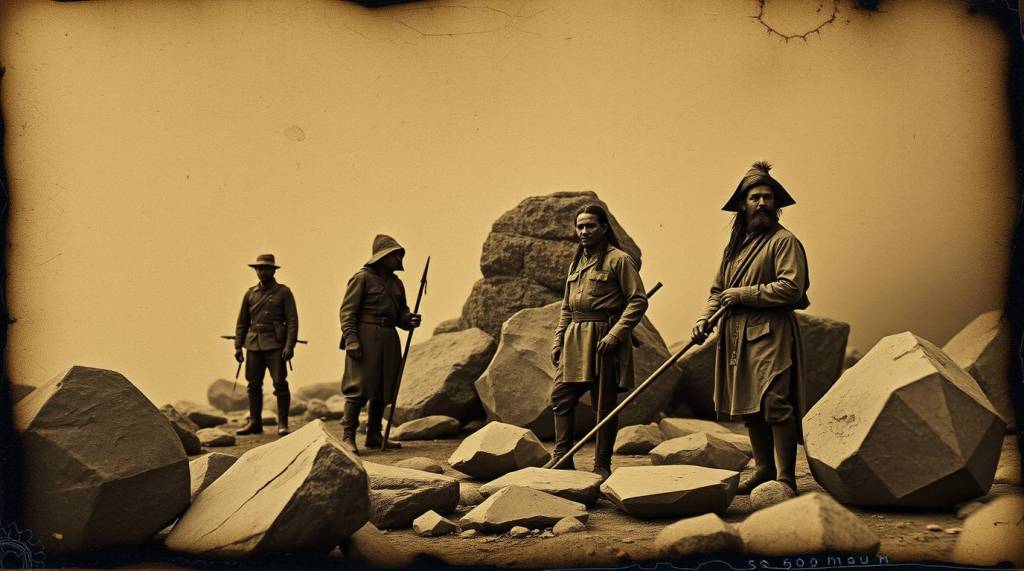
We assembled by torchlight—soldiers, trappers, bark-skinned voyageurs, and the few elders who still remembered. Not the names, nor the shapes, but the rhythm of things. Where flow became fracture. Where fish once gathered and were guided not by hook, but by hand.
The place was north—upriver—where the Chateaugay snarls against a series of stone shoulders spanning the channel. Not built by us. No metal. No mortar. Just cobble laid by logic older than language, tight and rough and resolute.
“They fish here,” muttered the elder, eyes reflecting flame, “long before your King knew his own name. Now it is trap not for fish—but for truth.”
At dusk, the stones began to hum.
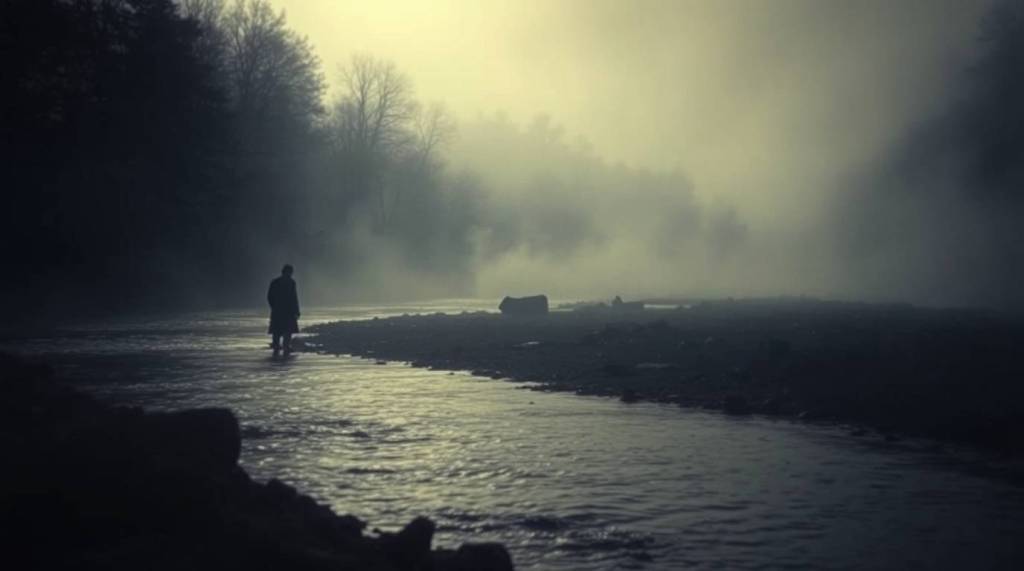
The river pulled against itself. Flow reversed. Mist rose in columns, not clouds—vertical tides trembling with things we weren’t meant to observe. We laid snares. We burned cedar. We shouted prayers, French and English and whispered Algonquin.
Then the Wendigo breached.
No shape. Just absence—a scouring of sight. It moved between heartbeats. Bent reeds before they stood. Its hunger wasn’t for flesh but for sequence. It devoured firsts and left only thens.
A torch flared and was snuffed three minutes earlier. One musket fired two days ago. Another jammed tomorrow. My own journal began to bleed ink across pages I hadn’t written.
The elder threw a copper fishhook into the current and chanted in reverse.
And then—rupture.
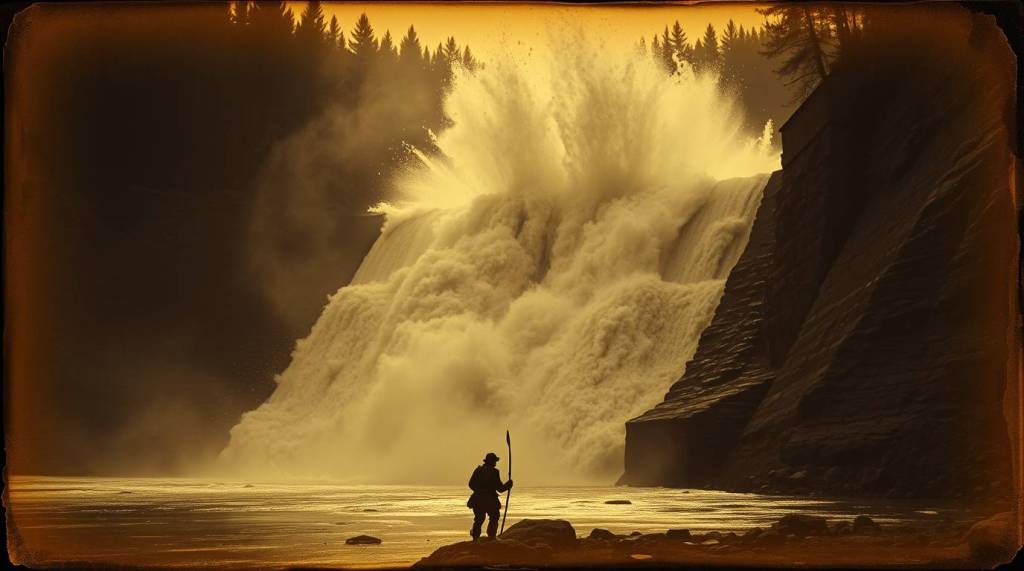
The dam of stones shattered upward. Not fell—rose, spinning like a wheel thrown out of time. The river burst, not downstream, but into the sky, arcing sideways like a fish escaping chronology.
When silence returned, we found no bodies. Just footprints. Leading both directions. And in the mud, one line burned in script I never wrote:
IT FEEDS ON ORDER. AND WE ARE SO VERY TIDY.
I write this dispatch in a cabin that burned last week. My ink dries backwards. My name may be wrong.
Chateaugay bleeds time now. She no longer reflects the sky—she remembers it.
—End Dispatch III—
Filed at Dusk, Possibly Yesterday
– Thaddeus “Grizz” Birchwood, by Whatever Calendar Remains


What mysteries of Chateaugay Lake haunt you?