
Dare ye enter the alder path? Strange fogs, weepin’ ghost-girls, and judgment whispered by cattayles await. Bone-deep folklore and mist-thick terror from the Chateaugay backwoods. Not for the faint.
The Cattayle Tryal
as told by one who ne’er left th’ edge o’ Bellmont Bog Hollow, ‘ceptin once to Plattsburgh—on a bus, fer sins long past recallin’
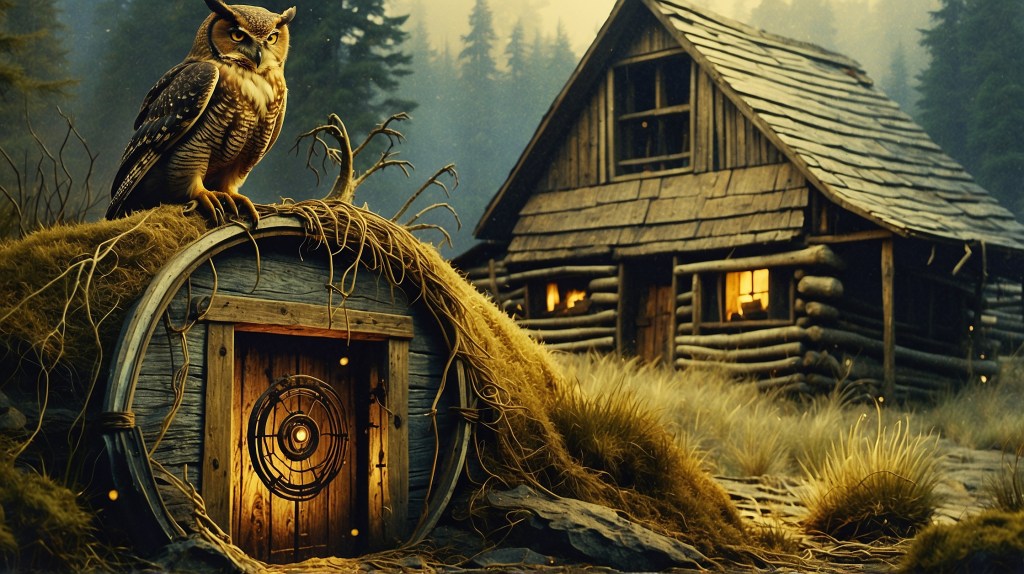
Ay, wel I telleth now as mine memorie clacketh lik a cracked woodpecker o’er tin chimney—o what cam to pass yon Night o’ þe Cattayles, whene þe stars were blinkin’ backward an’ þe frogs sung inward toward theyselves, an’ the wind, aye the wind spake truths no man shuld e’er knoweth.
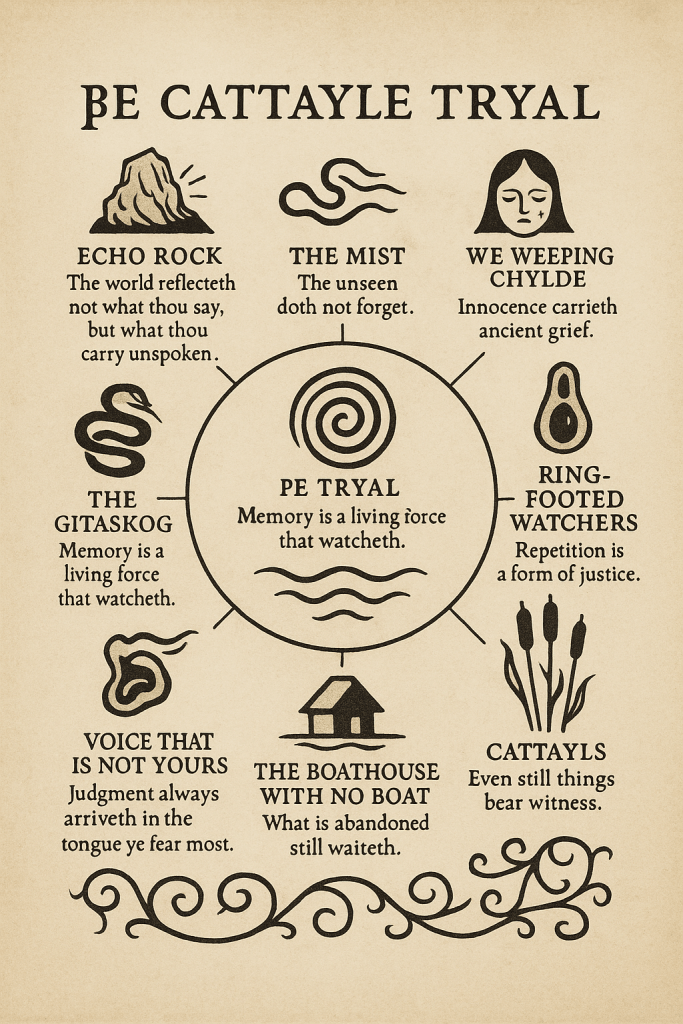
It begineth w’ mist, alwaie doth. I seen it stir out by Echo Rock, aye, yon place what speaketh back in voice not thine own, but thy mama’s—dead ‘r dreamt—and she sayeth, “Why’d ye open þe cellar, boy?”—though mine own mama liveth still, leastways in mine kettle thoughts she doth, rockin’ on her porch in a quilt o’ weeds.
I were settin’ up th’ boathouse, reckonin’ to mend some warpy boards, though I ain’t got no boat. Ain’t had one since that feller fell through in ’91 chasin’ the red canoe what weren’t real. He screamt, not fer help, but fer his brother’s name. Which he ain’t had. Which nobody’d heard. He screamt, “Silas, git back in!” an’ I watched as he sank feet-up like a cattayle root yanked hard back by the lake hersel’.
See, they don’t tell ye but cattayles got trial nights. Nights when they bendeth all one way an’ the alders done splitteth clean like a cracked shinbone, openin’ up yon hidden lane what smell o’ iron and preacher’s fear. Ye can’t see’t by lantern but only by mind’s tilt, like when ye tryeth not to peek down a old privy hole but peeketh all the same.
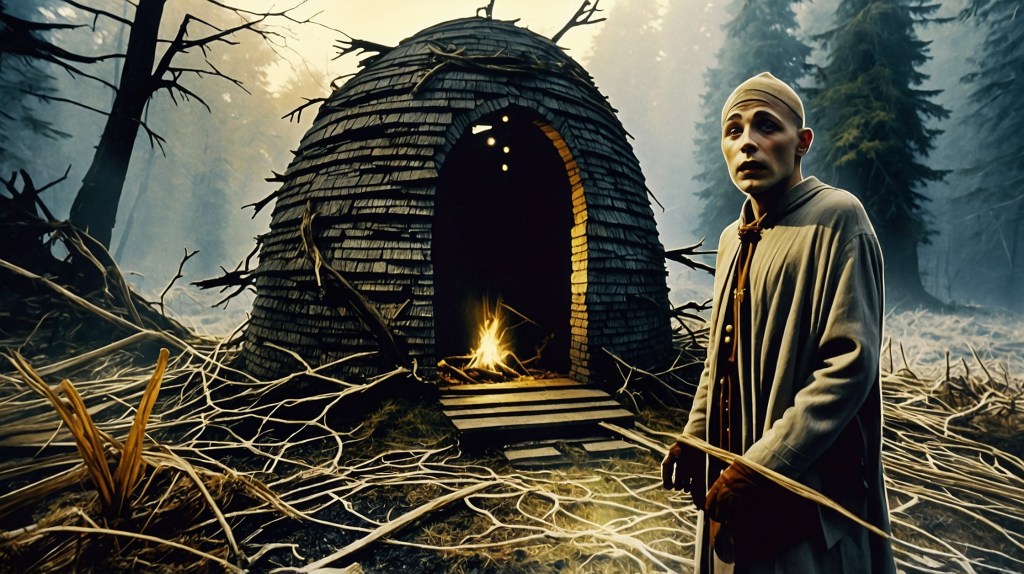
So that night, aye that blessed mad mirk, I heareth voices in fog-form, chantin’ or sobbin’, I ken not. Crows gone wrong. I grabbeth mine field glasses—mine good pair, what I swapped off Jimmer LaPorte fer two quarts maple an’ a mule-bone flute—and I looketh out cross th’ cattayles what by then was rustlin’ like sermon pages in a sweaty preacher’s palm.
There stood a wee chylde.
Not playin’. Not no campfire jest.
She was swaddled in linens y-stained by cellar rot, them kinds o’ cloth what once laid o’er jars what held not jam but curses spoke backwards. Her hands were wee, pale as smelt bellies, and her eyes—oh her eyes—were ain’t eyes at all, but wind-holes, pulled open by voices what wern’t born but stirred.
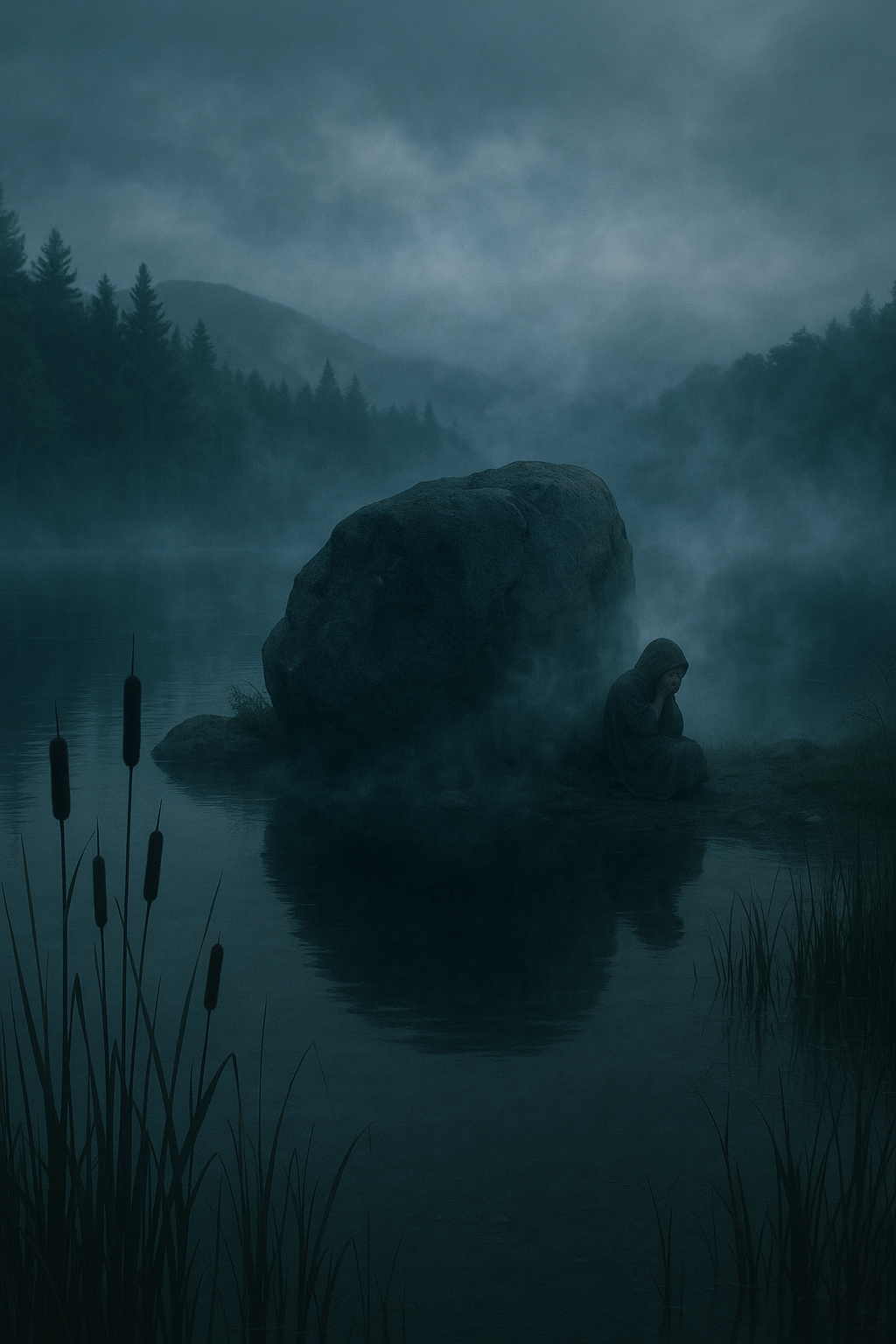
She were weepin’. Like she been told a thing what’ll never un-tell.
Right there by Echo Rock.
I knowed better. But I crept. Soft as wind on birch-skin, soft as dreams afore th’ syrup spoils. Past the stacked wood, past the broken deer-sled, past mine own notion o’ “Don’t do this, boy.”
I says—real polite—“Evenin’, miss.”
She turned not, but the fog did. Bent ‘round like it heard me. It whispered. Not in words but in meanin’. And o God help me, I understood.
Not th’ whole, but enough to rot a rib. I learnt what I weren’t s’posed to. About the Tryal.
Ain’t no courthouse, see. Ain’t no judge ‘cept th’ lake hersel’ and her long-tooth’d kin what live down in th’ sluices where the cold won’t rise. They watch. They watch all who trespass th’ alder path on Tryal Night, an’ if ye ain’t clean in spirit or kin, then they ask ye questions with no words—only feelin’.
An’ one must answer.
Not speakin’. Not gestures.
Ye must weep the answer.
—
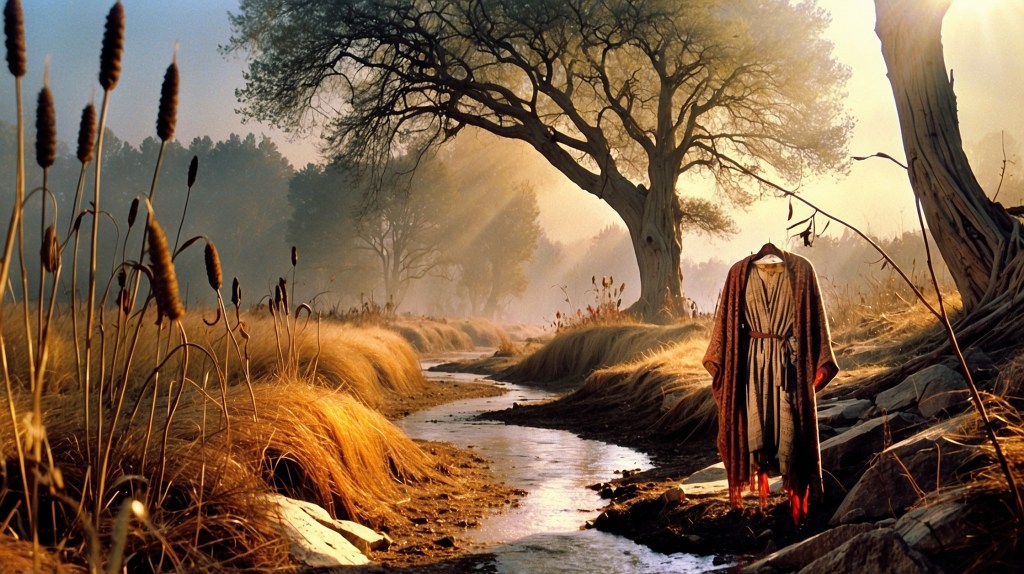
I blinked, an’ the chylde were gone. All but her robe, caught on a thorn by Echo Rock. I dinna touch it. It folded up on its own, neat as a napkin on a pine-cutter’s plate. Tucked itself into the cattayles.
I turned, fast as sin.
Back to th’ boathouse. I shut the door, which wa’n’t shuttable no more, an’ still I tried. Held it tight ‘gainst naught but night, as if that could bar back the truths what come hissin’ through th’ floorboard knots.
That were when I heard the steps.
Not on th’ dock. Not on the pine.
But up in the wall.
Like a lizard man wearin’ boots, clackin’ ‘round behind mine lath. Scritchin’ toward the stovepipe, whereth I always felt the coldest breeze in summer.
I lit no fire.
I blew out the lantern.
Let them come, I thought. Let them ask.
Let me pass mine own Tryal.
But none entered.
—
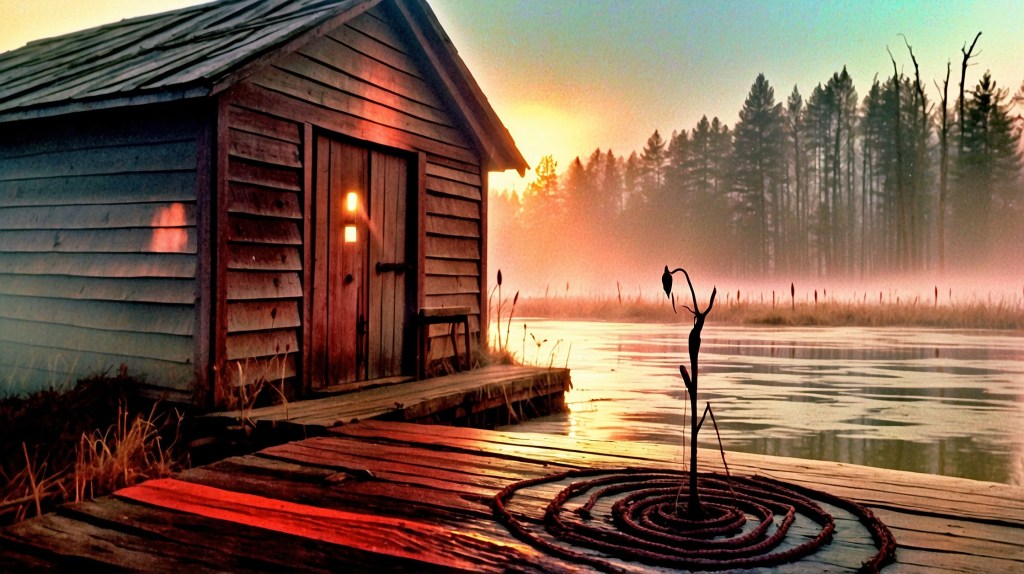
Next morning, I found what I found.
A cattayle stalk—longer than normal, twisted like a snake w’ arthritis—left laid across mine doorstep. It were not cut nor broke. Just placed. And ‘round its base? Three rings burnt in th’ wood, spiraled inward like water-echo.
I fetched Doc Benny.
Doc’s a fool but a brave wan.
He looked at th’ rings. Said, “That ain’t lightning. That’s reckonin’.”
Didn’t explain hisself. Just left me a stone—a flat wan he said came from “the other side o’ Inlet, where no loon dares sing.” Told me to place it under me tongue come sundown, but only if the cattayles rustled backward.
I never did.
But I still got the stone. Keep it in a box of matchbooks and spider bones.
It hums.
—
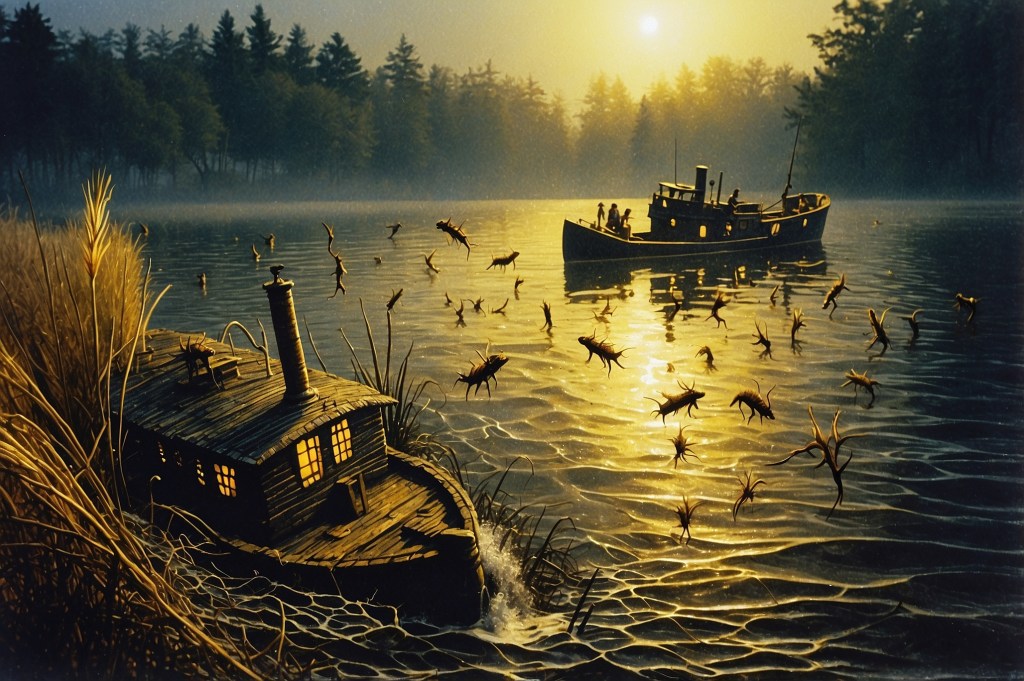
Lately, folks ‘round Chateaugay been speakin’ o’ lights.
Not normal campfire glow or them damn fools w’ drones.
Nah. They say in th’ fog—what clingeth tight o’ evenin’ like a guilty apron—they see letters.
Letters.
Floatin’. Movin’ like fish in sky.
Not English neither.
More like old trapper marks, or Abenaki sewin’ symbols, or notes from a song no human ever did hum. I seen ‘em. Last full moon. They spelled a thing I ain’t tellin’. Fer it ain’t meant fer lips.
But I’ll say this:
The fog remembers.
The cattayles listen.
An’ the Tryal cometh each year—whether or not ye attend.
—

So, if ye wander down toward th’ Narrows ‘round Lammas night, an’ the air smell of tin an’ unbaptized teeth, an’ ye see a path where naught should be, through the alders what lean like men mid-fall, then ye best walk careful.
Speak polite to the fog.
Don’t weep less ye mean it.
An’ above all?
Ne’er, ne’er touch the robe.
For once it’s upon ye, ye’ll hear the verdict hissed straight through the cattayles, an’ the only one what can translate—
Is thee.
And thou wilt not be the same.
Þe Cattayle Tryal
Retold in Homeric-Beat Stream
—
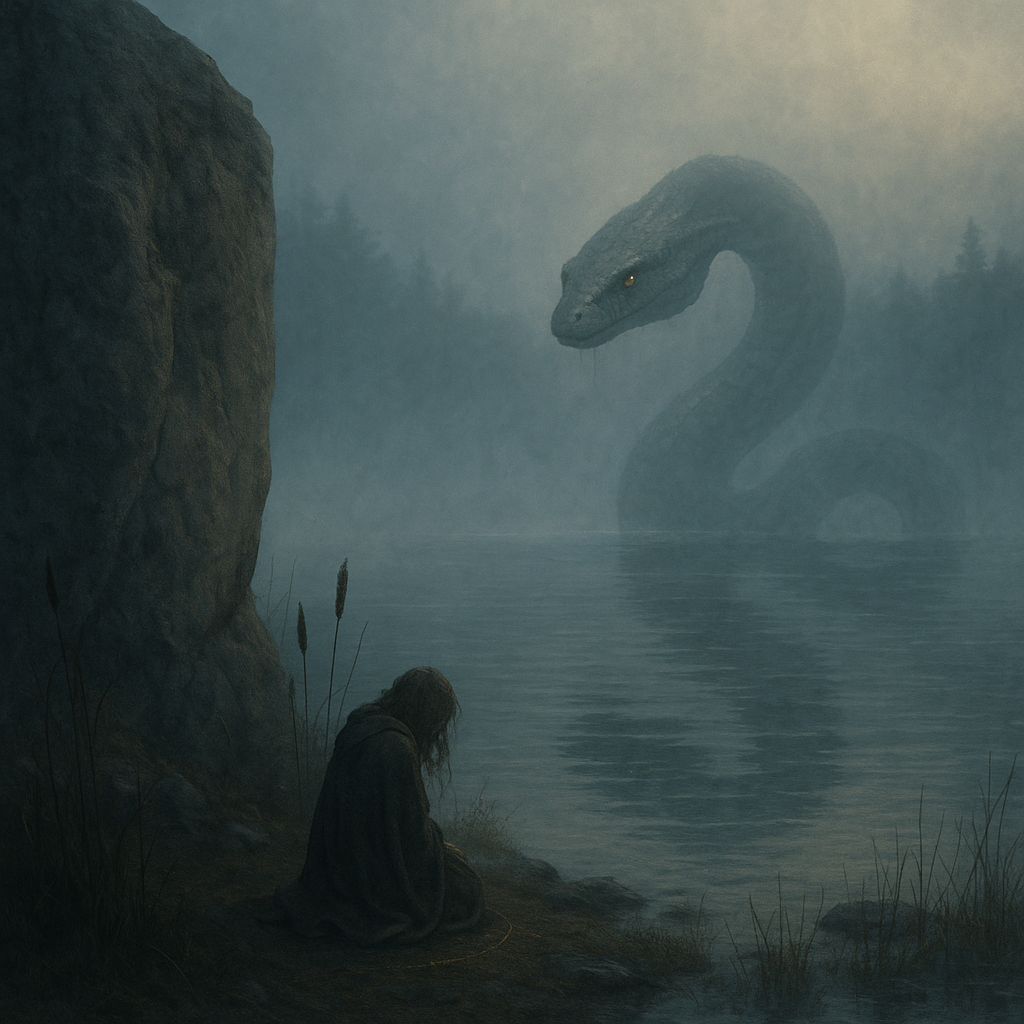
Sing, O wheeze-wind’d spirits o’ Shatagee, sing me them rustle-voiced truths what slide through þe cattayles like a lover’s last breath—
For I be Mordecai Vilecreek’s cousin by fogline, son o’ feverish hollow, I what heard þe alder swamps openin’ when they shouldn’t’ve, I what kept my tongue in vinegar and dust lest th’ mist steal it clean—
Sing me now that night whanne Echo Rock moaned like a priest with his sins exposed, and þe Tryal come low and silver like moonlight through a slashed curtain—
O sing.
Ye trees what groan in secret—ye’ve seen me.
I who hath not stepped past þe timberline since mine senior trip to Plattsburgh, oh that damned tin bus lurchin’ like a drunk moose toward flatland shame, and the glass-walled mall what made me feel lik a tick in church—
Aye, but I didst leave once, and I didst return.
And now I keep my nights nailed shut.
But that night—
That cursed-beautiful, long-tongued night—
She opened.
‘Twas August. No wind, no noise, save th’ far-off grumblin’ of frogs w’ sore throats and the hush-hum of cattayles bendin’ wrong way round.
Wrong way, I said!
And when them brown pikes of lake-weed lean toward th’ shore, ye best kiss thy kin and set your socks afire, for the Tryal is called and the Watchers draw breath.
And I—
I of ruined jaw and fever-heart—
I looked.
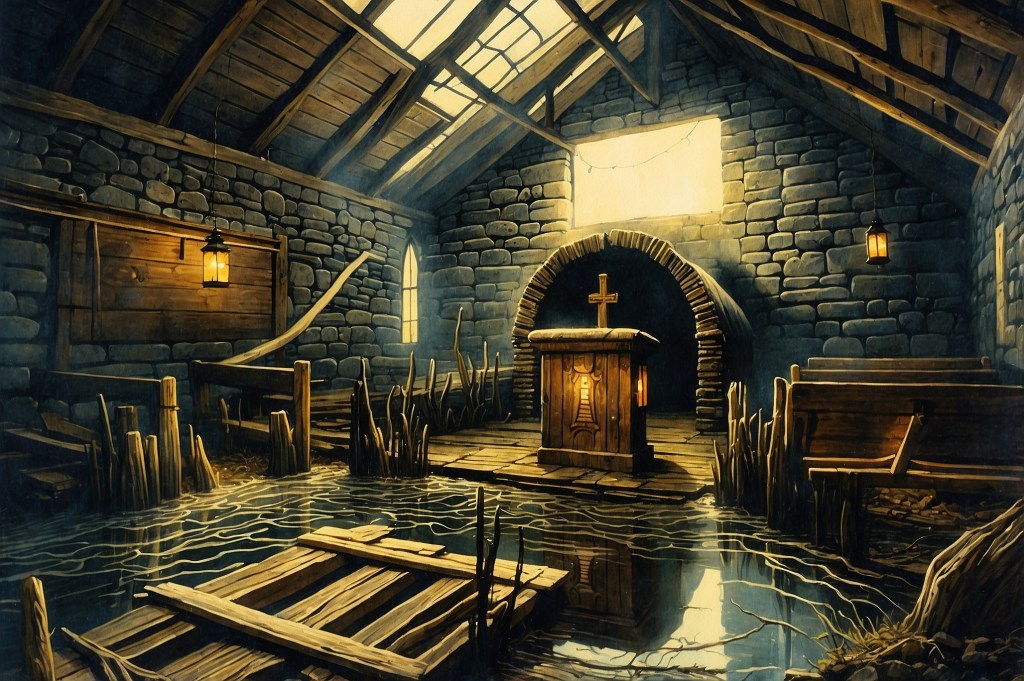
Through th’ fog rolled out like sermon pages from a preacher’s mouth, thick an’ stinkin’ o’ rust and regret, I seen a lane open ‘twixt two alders what ain’t never parted afore.
And in that gap, still as prophecy,
Stood Minta the milfoil chylde.
Small as a cough in winter, standin’ where wind don’t dare go.
She wore cellar robes—cellar robes, I swear it—linens what remembered vinegar, mouse-nest, and secrets kept in pickling jars marked Don’t Open This, Ever.
She cried.
She wept downward, like her tears was droppin’ back into history.
I stepped.
A step through fog, a step through time, a step past warnings writ in loon-ink and birchbark.
And her back turned slow, like syrup poured from th’ sky.
I said, “Miss?”
But my voice weren’t mine.
It was Daddy’s, it was Old Abenaki Pete’s, it was th’ ghost o’ Silas Dumont who drowned in ’91 shoutin’ fer a brother he never had.
It was all them voices stacked lik wood behind a dead cabin door.
An’ the fog?
It answered.
Not in word but in pulse, in feelin’, in marrow-deep reckonin’.
The cattayles hissed in unison,
And I felt th’ question.
Ye don’t get to speak at the Tryal.
Ye get asked.
An’ if ye got no tears left to give, they’ll take breath.
An’ if ye got no breath, they’ll take rememberin’.
I ran.
Back to the boathouse w’ no boat.
Back through th’ moss-wet truth, feelin’ my name peel off me spine lik bark in spring.
I slammed that rotted door shut—what never shut clean—an’ I leaned my head to th’ knot in th’ wall.
Listened.
Not for answer—
For sentence.
And I heard it.
Footsteps in th’ panelin’, clackin’ through my walls like guilt wearin’ boots, crawl-walkin’ up toward th’ stovepipe.
A finger, I swear it, a long root-knuckled finger scritchin’ behind th’ lath—
Drawin’ a symbol I seen once carved in a beaver’s rib on Saranac ice:
ᚷᛁᛏᚨᛋᚴᛟᚷ.
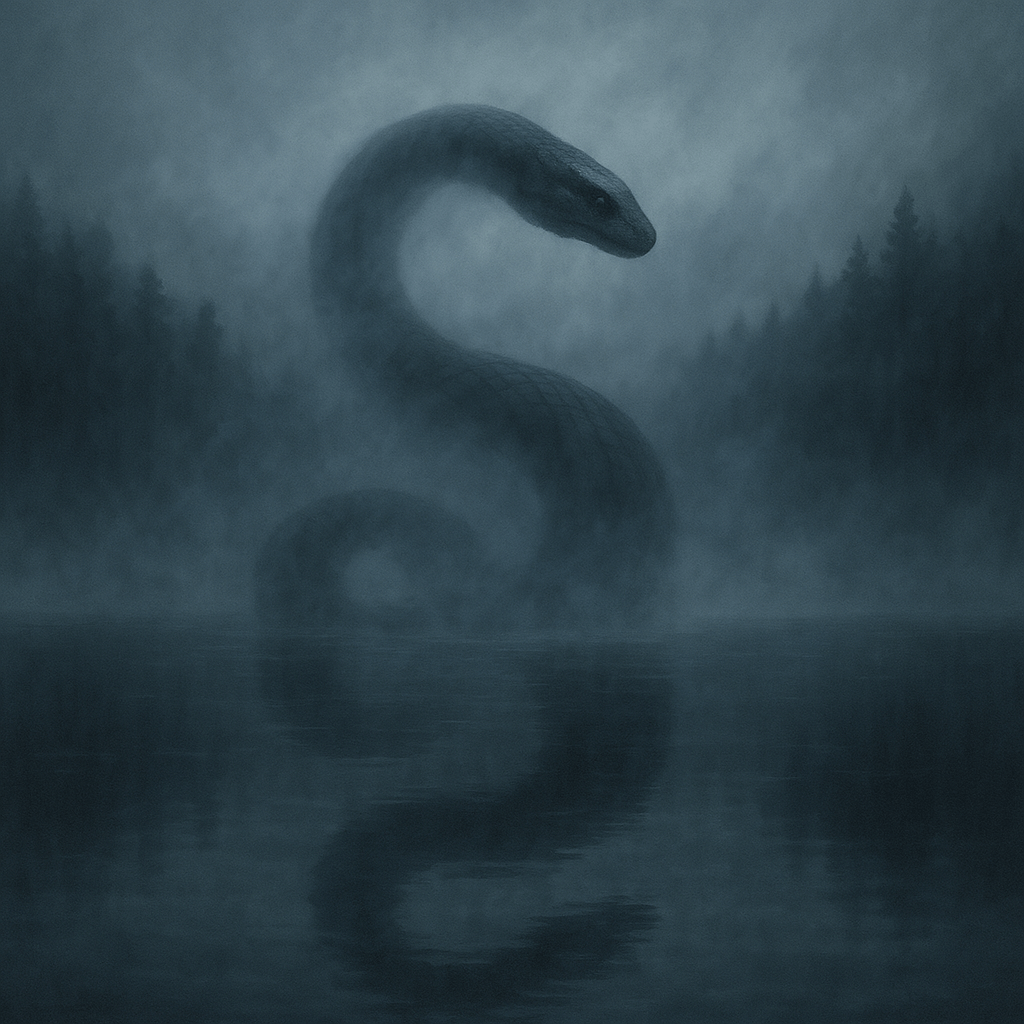
Gitaskog.
The name that names no thing.
I sat cross-legged an’ weepin’, and that weepin’ was th’ answer,
And so th’ Trial passed over me.
Not in mercy.
In record.
Come morning, I found a cattayle stalk laiden like an infant ‘pon my threshold.
Too long, too bent, curled like a question.
At its root?
Three ring-burns in th’ pine, spiralin’ inward lik water dreams, like loons divin’ backward into fog.
Doc Benny come. He seen.
Didn’t touch.
Just placed a stone in my hand an’ said:
“Tongue it, if th’ wind whistles inside your own name.”
I never did.
But the stone hums.
—
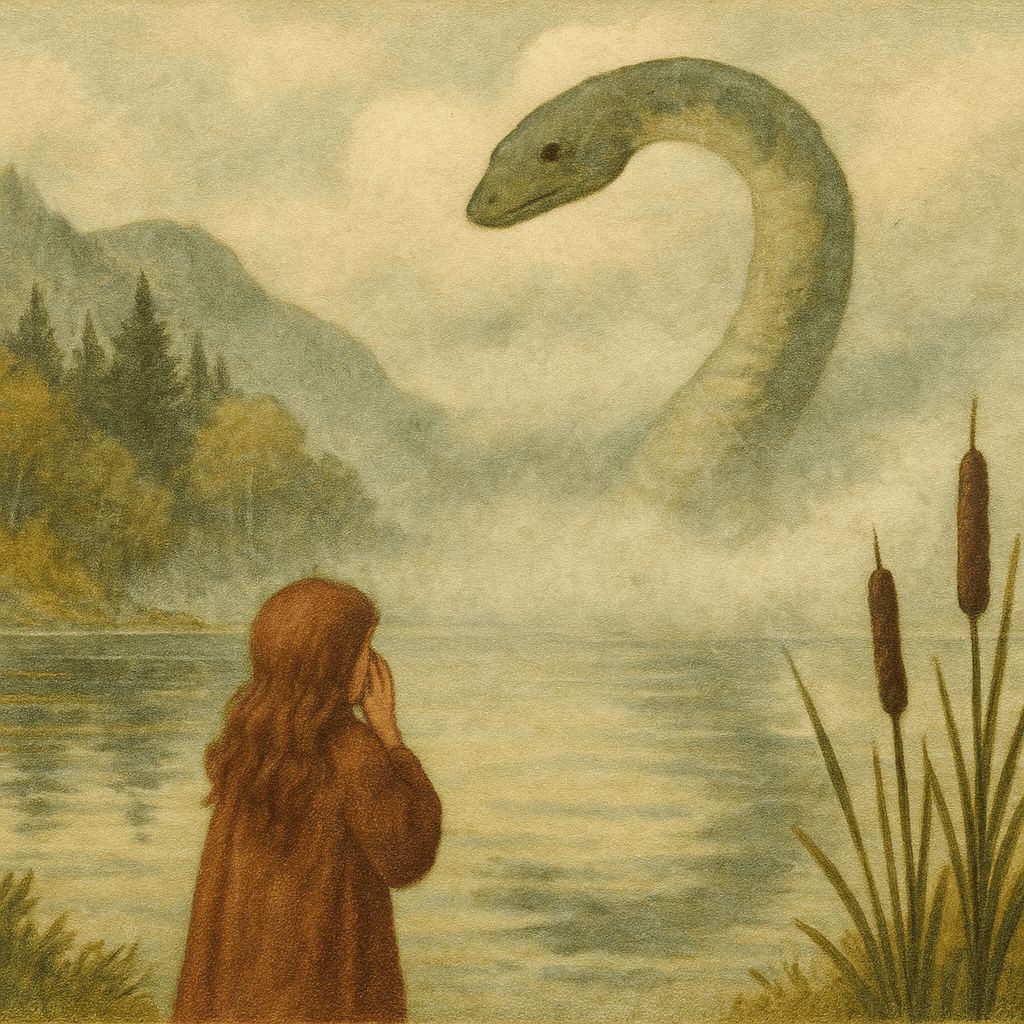
So now, when moon rides wrong and Echo Rock hisses beneath th’ surface o’ th’ lake, I listen.
They still come.
The fog-lettered ones.
The ring-footed watchers.
The unspoken jurors of alder path and cattayle bog.
Ye can walk there too—if ye dare.
But beware.
For whanne the cattayles turn,
And the chylde weeps,
And the robe floats light ‘pon th’ dew like a ghost w’ no waist—
Ye must answer.
And if ye answer wrong?
Ye do not return.
Only thy echo doth.
And it don’t speak thy name.
It speaks th’ verdict.
—
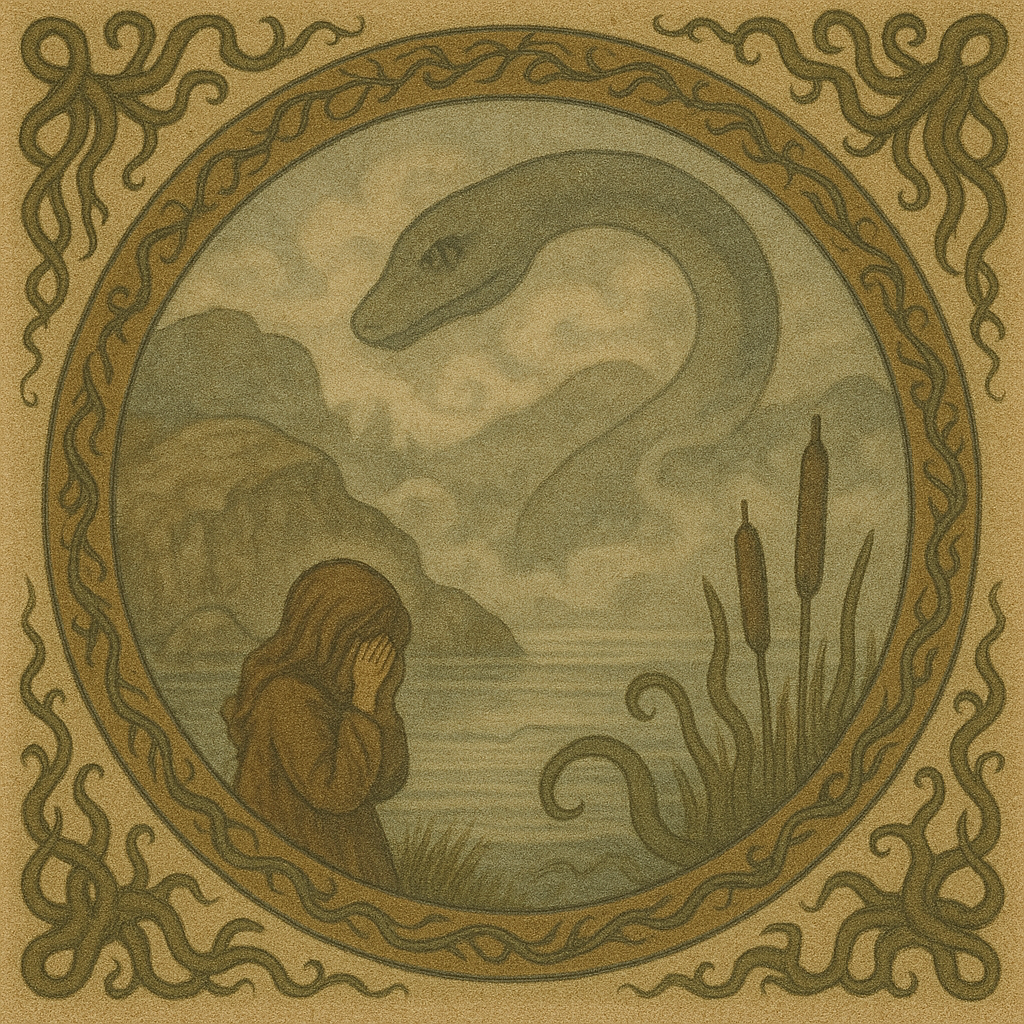
O cattayles, O witness’d reeds!
O alder bogs what remembreth th’ footfall o’ old sins!
O Echo Rock, where the weepin’ returneth backward like a loon cry folded on itself—
Let no soul trespass here without tears to spend.
For the Tryal ne’er endeth.
Only passeth on
To th’ next voice in th’ fog.

What mysteries of Chateaugay Lake haunt you?