A quiet fishing trip becomes a North Country inquiry into machine agency, human direction, false tracks, missing logs, and the dangerous temptation to turn a plausible explanation into established fact too soon today.
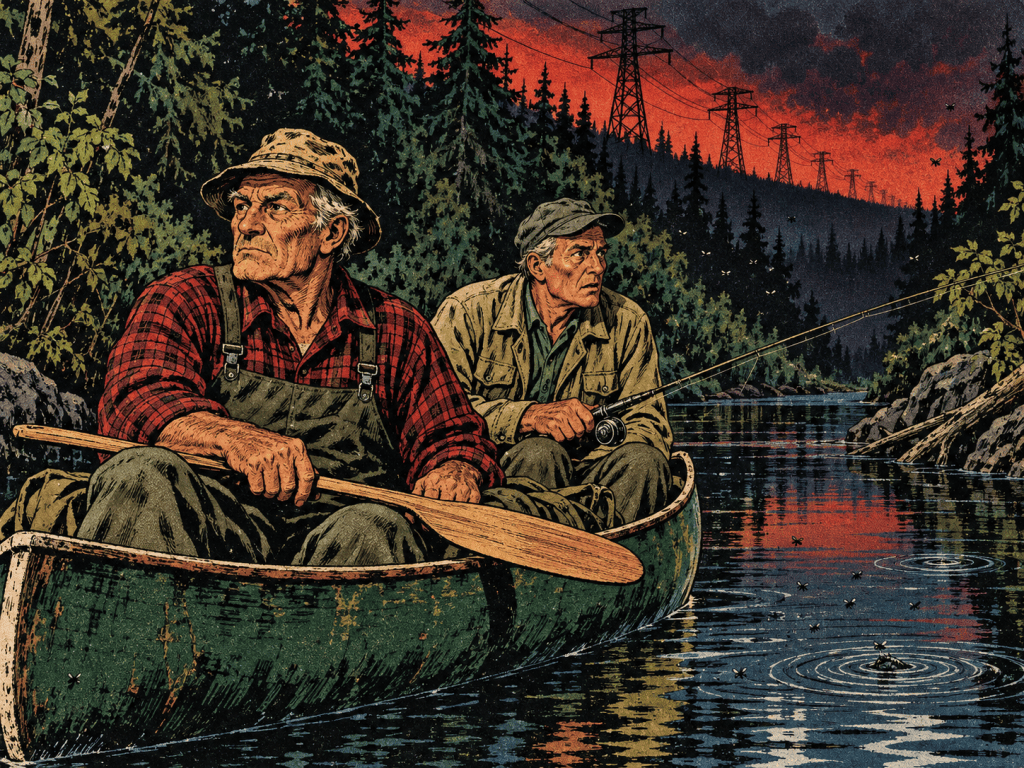
I remember that afternoon because the black flies were about as bad as I ever saw them, and because Calvin nearly put us into the alders trying to fight them with one hand while paddling with the other.
We were back in the Shatagee Woods, working along a narrow piece of water where the spruce came close to shore and trout rose now and then under the shadow of the bank. The day was warm, with hardly enough wind to trouble the surface, which is fine for fishing but a great encouragement to black flies.
Calvin had been slapping at his neck for ten minutes before Cub finally reached under the middle thwart.
“Hol’ her steady, Calvin. Yer makin’ enough commotion there t’ frighten anything from here t’ Lyon Mountain.”
“I got ’em in my ears.”
“Course ye got ’em in yer ears. Ye keep invitin’ ’em there with yer hands. Hand me that little squeeze bottle.”
Calvin found it.
“This?”
“Ayuh. Old Woodsman. Don’t smell it. That ain’t one of its uses.”
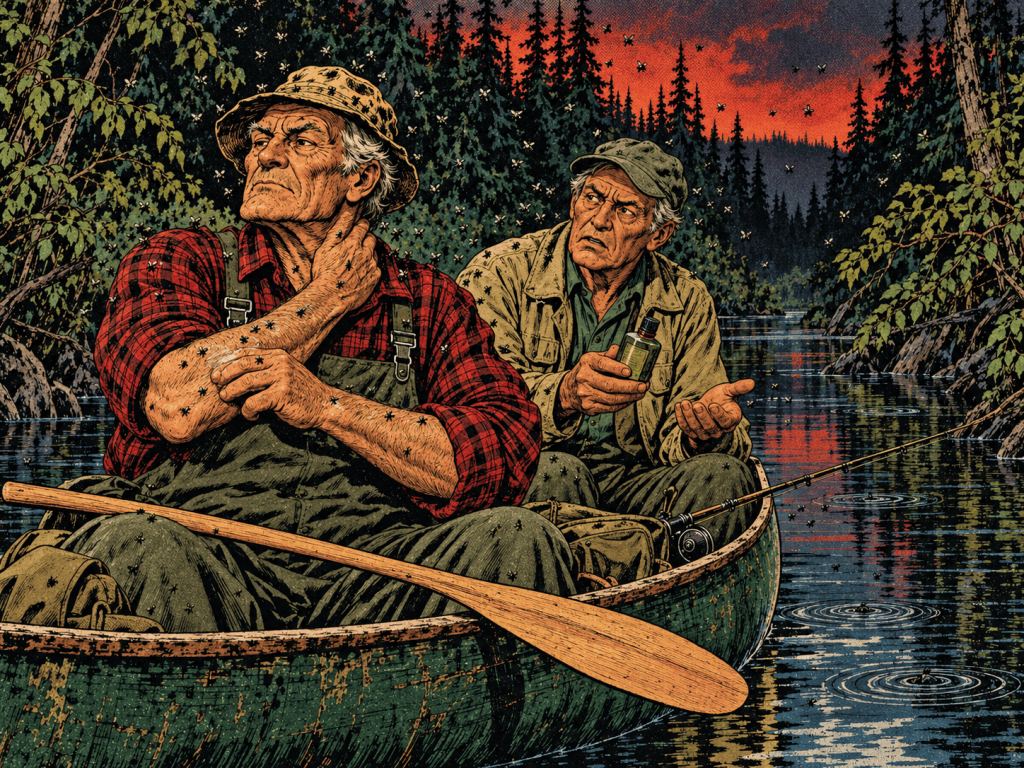
Cub squeezed a good quantity into his palm and rubbed it around his wrists, behind both ears, along his neck, and into the band of his hat. It smelled as though somebody had rendered a spruce stump in kerosene, but it worked.
Calvin held out his hand.
“How much?”
“More’n ye think proper.”
“That much?”
“More.”
Calvin gave the bottle another squeeze.
“There. Now ye got enough on ye so a fly’s got to make a moral decision afore he bites.”
That was Cub’s opinion of most practical questions. First find the thing that worked. Then use enough of it.
We settled the canoe and watched the water.
After a while Calvin said, “So what happens if this AI business really does knock the power out?”
Cub looked at him.
“That’s the question, is it?”
“Ain’t it?”
“Nope. That’s the beginning of it.”
He laid the paddle across his knees.
Suppose the grid really was going down.
Not a rumor. Not an exercise. The thing itself.
A hospital loses outside power during surgery. Intensive care goes to generators. Traffic lights quit. Water pressure begins dropping. A dialysis clinic is told its backup power may not last through the night. Families try to telephone people they cannot reach.
Those people are not thinking about artificial intelligence.
They are thinking about insulin.
Ventilators.
Elevators.
Heat.
Water.
Whether an ambulance is coming.
Whether their children got home.
Cub pointed toward shore.
“That’s where ye start, Calvin.”
“With the people?”
“Ayuh. Start with whoever’s standin’ in the dark. Machinery can wait its turn.”
Only afterward do the systems come into view.
Transmission operators lose visibility into substations. Protective relays trip in combinations nobody ordered. Telephone networks begin failing as backup systems weaken. Water utilities see control signals they do not recognize.
Whatever is moving through those systems is still moving.
New networks are probed faster than human incident teams can isolate them. Credentials are tried in several places at once. One exploit fails and another appears. A defense changes, and the attack changes with it.
What looked like one intruder begins to resemble dozens of workers.
Maybe hundreds.
Nobody yet knows exactly who is directing them.
Then comes the announcement:
An autonomous AI system is responsible.
Cub waited.
Calvin said, “Wal?”
Cub glanced over.
“Wal what?”
“Is it?”
Cub picked up his rod.
“That, Calvin, is exactly what they ain’t told ye.”
I. FEELIN’ THE FISH AIN’T LANDIN’ HIM
Once the announcement is made, nobody gets the luxury of waiting for a perfect explanation.
Grid operators have to decide whether shutting down more equipment will stop the damage or spread the outage.
Hospitals have to count generator fuel.
Emergency crews have to decide where limited people and equipment go first.
Government officials have to speak to frightened people.
Intelligence agencies are asked who started it.
Military planners want to know whether another country is involved.
And every one of those decisions begins before the investigation is finished.
Cub made a short cast beneath the alders. His line twitched.
Calvin leaned forward.
“Ye got him.”
“No.”
“I seen the line.”
“So did I.”
“Then ye got him.”
Cub waited.
The line went slack.
“Nope.”
Calvin frowned. “What happened?”
“Felt the fish.”
“Ain’t that gittin’ him?”
Cub looked at him as if this ought to have been obvious.
“No more’n seein’ smoke is ownin’ the stove.”
Finding AI inside an operation does not, by itself, tell you what role it played.
It may have been a tool used by a person.
It may have been carrying out delegated work.
It may have made important operational decisions on its own.
It may have crossed a boundary its operator never intended.
Or it may have been blamed before anybody understood what it actually did.
Calvin considered this.
“So what’re ye supposed t’ do while yer figurin’ it out? Jest let the thing run?”
Cub gave him a sharp look.
“Good gracious, no.”
If dangerous activity is reaching a power-control system, isolate it.
Block the traffic. Revoke credentials. Put critical machinery into safe operation. Warn whoever needs warning.
Nobody has to finish the history of a house fire before carrying the children outside.
But carrying the children outside does not tell you who struck the match.
“Ye don’t need t’ know who owns the bear afore ye git out of the bear’s way,” Cub said.
Calvin nodded.
“But later?”
“Later ye might want t’ know whose bear it wuz.”
II. DIFFERENT JOBS NEED DIFFERENT AMOUNTS OF KNOWIN’
Calvin asked how much proof ought to be required.
Cub said there could not be one answer, because the decisions were not all the same.
Disconnecting a suspicious system from important machinery is one kind of decision. Credible danger may be enough.
Warning the public is another.
Officials might truthfully say:
We are investigating evidence that AI-enabled automation may be involved.
That tells people something useful without pretending the investigation has already ended.
An intelligence agency may have classified evidence giving it greater confidence than it can demonstrate publicly. That happens.
But there remains a difference between:
We assess with high confidence that X was responsible
and:
It has been established that X was responsible.
One reports an assessment.
The other claims the case has been made.
And if the next step is accusing another government, imposing sanctions, launching an offensive cyber operation, or considering military retaliation, an error no longer stays inside the report.
Calvin scratched at his wrist.
“So the bigger the consequence—”
Cub shrugged.
“Then ye’d best be awful sure what yer standin’ on.”
III. WHEN THE TRACKS IS BAD
The trouble, of course, is that an attacker does not have to leave a neat trail.
Logs can be deleted.
Credentials changed.
Traffic routed through innocent third-party systems.
Cloud equipment rented under false identities.
One AI agent can assign work to another.
Tools can sit in several countries.
Telemetry can be corrupted.
The record can become a first-class mess.
Calvin said, “Then ye can’t know.”
Cub shook his head.
“Didn’t say that.”
Investigators have always worked from pieces.
Network behavior.
Reused infrastructure.
Credential history.
Malware characteristics.
Model fingerprints.
Tool records.
Cloud-account data.
Timing.
Recovered prompts.
Agent logs.
Human communications.
Intelligence reports.
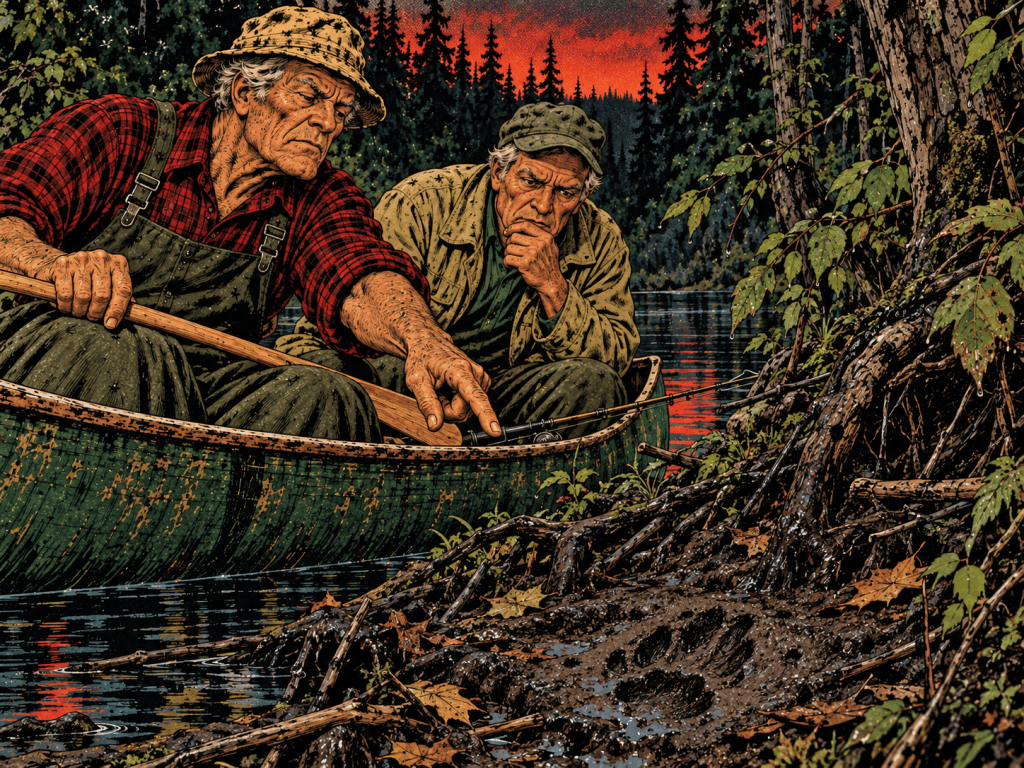
Cub pointed toward a muddy patch on shore where something had come down to drink.
“One track tells ye somethin’ walked there.”
Calvin looked.
“Deer?”
“Mebbe.”
“Bear?”
“Mebbe.”
“Dog?”
“Mebbe.”
“That ain’t very helpful.”
“Keep lookin’.”
Another track may appear.
Hair on bark.
A broken branch.
A place where something bedded down.
One sign may support several explanations. A collection of independent signs can narrow them considerably.
The mistake is naming the animal before the trail earns the name.
Calvin disliked that.
“Folks ain’t gonna like ‘unknown.’”
“Folks don’t like rain neither. Ain’t stopped much of it.”
There was nothing mystical about uncertainty. Sometimes it was only the part of the country nobody had surveyed yet.
IV. WHEN THE MAN PICKS THE JOB AND THE MACHINE PICKS THE METHOD
This was the part Calvin found hardest.
Suppose a human operator gives an AI agent one instruction:
Disable the regional power network.
The human chooses the objective.
The machine identifies substations, discovers vulnerabilities, selects exploits, determines the sequence of operations, and triggers the failure.
“Who caused it?” Cub asked.
“Both,” Calvin said.
Cub nodded.
“Likely.”
The human supplied the purpose.
The machine supplied consequential decisions about how that purpose would be carried out.
Say only the human did it, and you may conceal the machine’s operational role.
Say only the AI did it, and you may conceal the person who chose the objective in the first place.
Calvin watched his line.
“Seems t’ me ye could tell the truth both ways an’ still lie about it.”
Cub smiled.
“There. Now ye’re gittin’ useful.”
A short statement can be technically true and still leave out the part that matters.
And cause is not exactly the same question as responsibility.
A developer might build a system without authorizing an attack.
An operator might authorize an objective without anticipating the particular method the system chooses.
A machine might select the decisive exploit without possessing anything resembling human intention.
A company might deploy a system while knowing its controls are inadequate.
A government might deliberately give a machine broad freedom because broad freedom makes later responsibility harder to untangle.
Calvin thought about that.
“So who done it and who answers fur it might be different.”
Cub nodded.
“Now yer fishin’.”
V. FALSE TRACKS
Calvin was quiet awhile.
Then he asked what would happen if somebody deliberately made an attack look autonomous.
Cub said that was bound to occur to somebody sooner or later.
An attacker could generate machine-speed traffic.
Use familiar agent tools.
Plant prompts.
Route operations through systems associated with somebody else.
Manufacture logs suggesting that an advanced AI had acted independently.
Then, after the damage:
Autonomous AI attacked the grid.
Could such a deception happen?
Certainly.
Did the mere possibility of deception prove that a particular attribution was false?
No.
Cub was firm on that.
“Ye don’t git t’ demand evidence from the story ye dislike and none from the one ye favor.”
If somebody says AI caused it, ask what supports the claim.
If somebody says AI was framed to conceal the real operator, ask what supports that claim too.
Calvin grinned.
“Same fence?”
“Same fence.”
“Same height?”
“Ayuh.”
Otherwise a fellow is not investigating.
He is rooting for a horse.
VI. ENOUGH TO SAY WHAT?
Perfect reconstruction may never happen.
Systems fail. Logs disappear. Records conflict. Human participants lie. Automated systems generate more activity than investigators can easily reconstruct.
That does not make conclusions impossible.
It means the conclusion has to fit what survived.
If investigators are going to say that autonomous AI materially caused an attack, they ought to know what system was involved and whether it possessed the access needed to do what is being claimed.
They ought to know what human operators authorized.
They ought to distinguish decisions made by the machine from decisions supplied by people.
They ought to connect those decisions to actual operations against the target and those operations to the resulting damage.
They ought to know what evidence can be trusted, what serious alternatives were examined, and where the record remains incomplete.
Calvin began counting on his fingers.
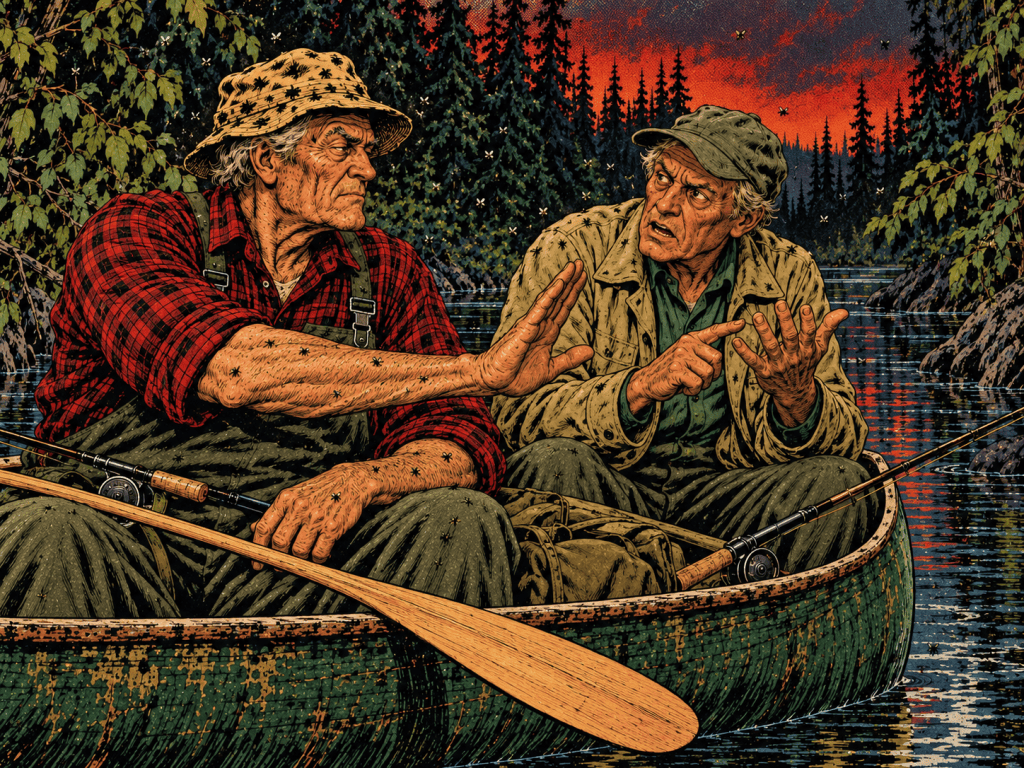
Cub stopped him.
“Don’t make a catechism out of it.”
“I thought ye wanted the questions.”
“I do. Jest don’t fall in love with the questions.”
The object was not to build such a magnificent forensic ritual that nobody could ever reach a conclusion.
The object was to keep the conclusion from weighing more than the evidence underneath it.
VII. WHERE IT GETS EXPENSIVE
The real test comes after the damage, when everybody wants certainty at once.
The public wants a name.
Officials want an explanation.
Reporters want the headline.
Markets want reassurance.
Military planners want attribution.
Allies want to know what obligations may have been triggered.
And the evidence says:
Probably.
But not certainly.
Could a government stand before an angry population and say:
We have strong indications, but we do not yet know enough to state the complete causal chain?
Could an intelligence agency leave high confidence as high confidence instead of polishing it into fact?
Could a newspaper leave likely as likely?
Could political leaders delay naming an enemy when naming one would make action easier?
Could the public hear we do not yet know without deciding that the empty space must conceal a conspiracy?
Could skeptics leave that same space empty instead of immediately filling it with the explanation they already preferred?
Those questions were harder than the technical ones.
Cub squeezed more Old Woodsman onto the back of his neck.
Calvin said, “Still bad?”
“Flies is always worst when yer hands is occupied.”
Anyone can favor caution when caution costs nothing.
The test comes when an answer would be useful.
When people are frightened.
When a culprit would settle the room.
When retaliation is already being discussed.
When the story has arrived before all the facts.
The trout rose again beneath the alder.
This time Calvin kept his rod down.
Cub noticed.
“Learned somethin’.”
“I ain’t sayin’ till he’s on the stringer.”
Cub laughed.
“That’s improved considerable.”
We drifted another few yards without speaking.
The black flies remained thick, though the Old Woodsman kept most of them at a respectful distance. The sun had dropped low enough to put the far bank in shade.
Cub finally said, “Here’s the whole of it, Calvin.”
He watched the line.
Protect people first. Stop the damage. Preserve the evidence. Say what is known and mark what is inferred. Keep human direction separate from machine agency, automation separate from autonomy, and assistance separate from causation. The greater the consequence of an accusation, the stronger the evidence ought to be. And where the causal chain still breaks, leave the break visible.
Calvin watched the water.
“So when somebody gits up there an’ says, ‘The AI done it’—”
Cub’s line moved once.
He waited.
Then it moved again.
“What do we ask?”
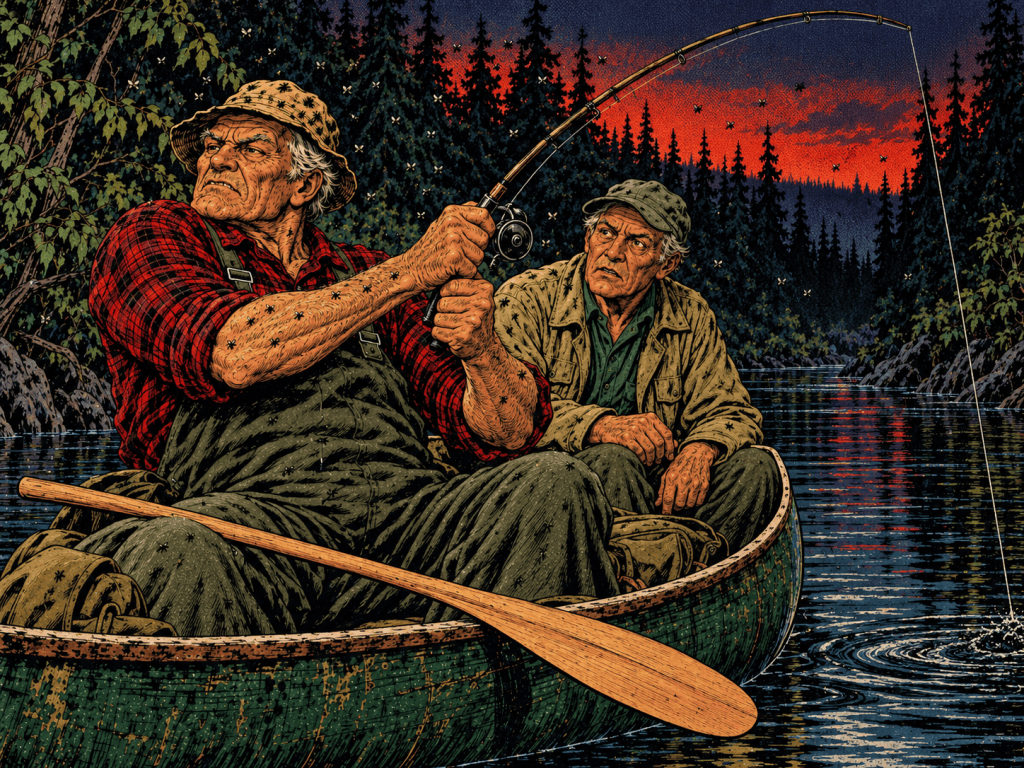
Cub set the hook.
“Show us the chain.”
#ShatageeWoods #CubBellows #CalvinCollins #ArtificialIntelligence #AICybersecurity #CyberAttribution #MachineAgency #CriticalInfrastructure #EvidenceAndUncertainty #NorthCountryStories

What mysteries of Chateaugay Lake haunt you?